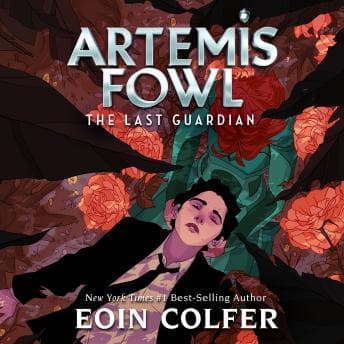

What happens when a genius has to outsmart himself — literally?
I was chopping onions for a chana masala at 10 PM on a Wednesday (don't ask why, the answer is "stress") when Artemis Fowl essentially became his own antagonist, and I had to put the knife down. Not because it was scary. Because Eoin Colfer did something psychologically fascinating that I wasn't expecting from book six of a kids' series.
The Kid Who Meets His Own Shadow Self
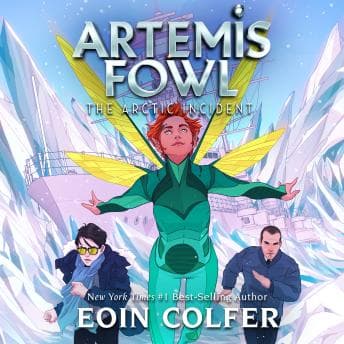
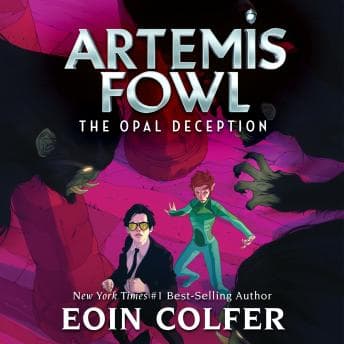
Here's what got me: The Time Paradox is structured around a premise that is, at its core, a psychological case study in moral development. Present-day Artemis — fourteen, somewhat reformed, capable of genuine attachment — has to travel back in time and confront ten-year-old Artemis, who is essentially a tiny sociopath in a tailored suit. The protagonist exhibits classic splitting: he literally cannot reconcile who he was with who he's becoming. And Colfer doesn't cheat this. Ten-year-old Artemis is smart, ruthless, and completely unburdened by empathy. He's not a caricature of villainy — he's a kid who hasn't yet learned that other people are real.
The emotional engine driving all of this is Artemis's mother's illness. And I found myself asking: why does Artemis really go back in time? Yes, to save her. But the subtext is guilt. He caused the extinction of the silky sifaka lemur through his own greed as a child. His mother's cure depends on undoing his damage. That's not just a plot device — that's a story about whether you can outrun the consequences of who you used to be. The research actually shows that adolescents in the process of moral identity formation experience intense distress when confronted with evidence of their earlier selves. Colfer may not have read Kohlberg, but he understands this instinctively.
Psychologically, a few things don't quite track — the time-travel rules get hand-wavy in the middle act, and there's a stretch around hour five where the pacing sags because the plot needs characters to wait around for things to happen. But the character work holds.
Nathaniel Parker and the Art of Vocal Class Warfare
Nathaniel Parker narrates this one, and here's what surprised me: his Butler voice carries this thick Irish brogue that grounds the character in something earthy and working-class, while his Artemis is all clipped precision and controlled superiority. The class divide between these two characters — employer and employee, child and protector — comes through in the sound before you even register the words. That's good audio storytelling.
And then there's Foaly with an Australian accent. Which sounds absurd on paper. A centaur tech genius from the fairy underworld speaking like he's from Melbourne? But it works because it makes Foaly sound like the irreverent outsider he is. Parker commits to the bit with enough sarcasm baked in that Foaly's scenes became my favorite parts to listen to while stirring that chana masala.
Where Parker is less convincing: distinguishing between Holly Short and some of the secondary fairy characters. There were moments — particularly in group scenes with multiple fairies talking — where I lost track of who was speaking. It's not a dealbreaker, but if you're coming from a different narrator in earlier books, the transition might feel bumpy. Some fans swear by Parker; some miss the old voice cast. I get both sides.
Who Should (and Shouldn't) Bother
If you've been following the Artemis Fowl series, this is a satisfying entry — maybe not the strongest, but one of the most psychologically interesting. The younger-self-as-villain conceit gives Colfer room to explore identity in a way the earlier books only hinted at. If you're picking this up cold without reading the previous five? Psychologically, this doesn't track as a standalone. You need the accumulated history to feel the weight of Artemis's transformation.
Kids who are into heist stories and time travel will eat this up. The same is true of Percy Jackson and the Titan's Curse, which also sneaks genuine emotional stakes about identity and growing up into what looks on the surface like a romp. Adults who secretly enjoy middle-grade fiction (hi, that's me, I have a PhD and I don't care) will appreciate the character psychology more than they expect to.
And if a book with unrealistic character motivations annoys you — it mostly passes the test here. Mostly. My therapist would have thoughts about the fact that ten-year-old Artemis shows zero attachment behavior toward his own mother, but then again, the whole point is that he hasn't developed that capacity yet. So maybe Colfer is smarter than I'm giving him credit for.
My Case Notes, Closing Remarks
At almost nine hours, this is a solid listen that earns its runtime even when the pacing dips. Parker's narration is warm and specific enough to carry you through the softer stretches. And Colfer — whether he knows it or not — wrote a pretty compelling exploration of what it means to confront the worst version of yourself and choose differently. That's not just good kids' fiction. That's just good fiction.
The chana masala turned out great, by the way. The onions were perfect.