
The "Sunk Cost" Commute
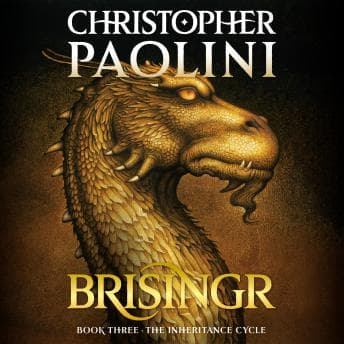
Okay, let's be real. I'm deep in the Inheritance Cycle hole now. I started this series because my boyfriend Kevin insisted it gets better after the first book (which, let's be honest, was basically Star Wars with scales), and now I've just spent 30 hours—literally two full weeks of Caltrain rides—listening to Brisingr.
30 hours. That is a serious amount of bandwidth.
I finished this somewhere between the Palo Alto stop and a merge conflict I was trying to resolve in my head. And here's the Bottom Line: This audiobook is the definition of "feature creep." But thanks to Gerard Doyle, it's a feature creep I actually enjoyed debugging.
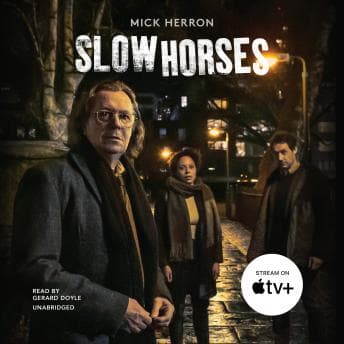
Gerard Doyle is Carrying This Team
If Christopher Paolini is the backend developer writing complex, slightly bloated code, Gerard Doyle is the frontend framework making it look pretty and usable.
I cannot stress this enough: Doyle is doing heavy lifting here.
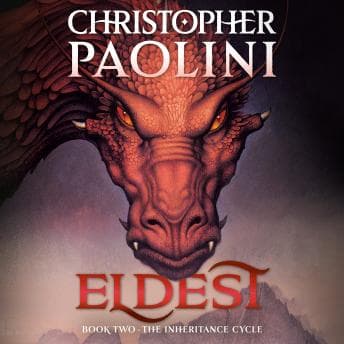
His voice for Saphira (the dragon, for the uninitiated) is... a choice. It's this guttural, gravelly growl that sounds like a chain-smoker who just woke up. The first time I heard it in Book 1, I almost dropped my coffee. (That was back in Eldest, when I was still getting used to Doyle's whole vibe.) But by Book 3? It's iconic. It separates the telepathic dragon dialogue from the prose so clearly that I never lost track of who was speaking, even when I was half-asleep on the 6 AM train.
He switches between Eragon's whiny teenage angst (sorry, but it's true) and the ancient, weary tones of the elves without missing a beat. The man has range. If he narrated the Kubernetes documentation, I'd probably listen to it. He brought that same energy to Eldest, which is why I'm still here for Book 3 despite the bloat.
The "Refactoring" Phase (a.k.a. The Middle)
Here's where we need to talk about pacing. Brisingr suffers from serious middle-book syndrome.
There are long—and I mean long—sections about dwarf politics. It felt like sitting through a sprint planning meeting that should've been an email. Paolini loves his world-building, and I respect the hustle, but do we need twenty minutes on the specific metallurgy of a sword?
(Okay, the engineer in me actually kind of liked the sword-making part. The science... sort of holds up? Magic notwithstanding.)
But seriously, there were moments where I checked my player to see if I'd accidentally slowed it down to 1.0x. I hadn't. The plot just moves at the speed of a legacy monolith deployment. I actually bumped this up to 2.0x during the election scenes. No regrets.
The ROI on Your Time
Is it worth the credit? Yes, if you're already invested.
The production value is clean (though the intro music is weirdly jarring—why do audiobooks still do that?). And despite the bloat, the payoff scenes—the battles, the big reveals—are delivered with such intensity by Doyle that you forgive the slow parts.
It's perfect for the commute because you can zone out for five minutes, miss a description of a tree, and not miss any critical plot points. It's comforting. It's a massive, sprawling fantasy world that wraps you up like a warm blanket while you ignore the guy eating a tuna sandwich across the aisle.
Who Should Listen (And Who Should Skip)
If you're already two books deep in the Inheritance Cycle, keep going—the sunk cost is real and Doyle makes it worth it. Skip this if you haven't read the first two books, or if 30-hour audiobooks with extensive dwarf politics sound like a nightmare rather than a feature.
Just be prepared. It's a marathon, not a sprint. And you're going to hear the word "Eragon" pronounced about fifty thousand times.