
I was walking the Chicago lakefront with Denise—wind whipping off the water so hard I could barely feel my face—when I decided to finally tackle this beast. Twenty-three hours. That's not an audiobook; that's a part-time job.
My students have been badgering me to read Paolini for years. "Mr. Williams, it's basically Star Wars but with dragons," they say. And look, I usually stick to the classics. Give me Dickens. Give me the crushing existential weight of Dostoevsky. But after grading sixty-four essays on The Catcher in the Rye (if I read the word "phony" one more time, I might scream), I needed an escape. I needed elves. I needed magic swords. I needed to not think about comma splices.
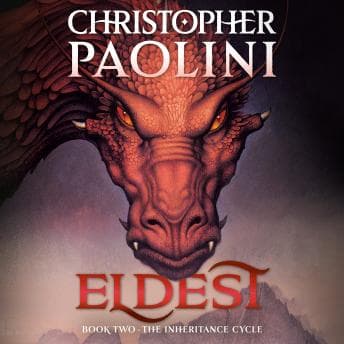
So, Eldest. Book two.
The "Cookie Monster" in the Room
Let's just rip the band-aid off right now. We have to talk about the dragon.
Gerard Doyle is a professional. He's got this rich, textured Irish(ish?) brogue that sounds exactly like what you want a fantasy narrator to sound like. He sounds like he should be sitting by a hearth in a tavern, recounting legends for a pint of ale. It's comforting. It's authoritative.
But then Saphira speaks.
(I actually stopped walking. Denise asked if I was okay.)
When Doyle voices the dragon—a majestic, female, telepathic creature—he chooses a voice that sounds like a chain-smoking gargoyle. It is guttural. It is raspy. It is... aggressive. Imagine Yoda with a severe throat infection and a bad attitude.
At first? I hated it. Viscerally. I almost returned the credit. It felt jarring against the smooth, melodic narration of the elves and the humans. But—and maybe this is the English teacher in me over-analyzing—about five hours in, it started to click. She's a dragon. She's a thousand-pound reptile with scales. Why would she sound like a Disney princess? The voice is telepathic, sure, but Doyle makes it feel ancient and alien. It's a bold choice. A weird choice. But eventually, I stopped cringing and started respecting the audacity of it.
The "Middle Book" Syndrome
Here's the thing about second books in trilogies (or cycles, in this case). They're the training montage. Remember in Empire Strikes Back when Luke goes to the swamp to lift rocks? That's this whole book.
Eragon goes to the elves. He learns verbs in the Ancient Language. He struggles with his back injury. He pines after Arya (which, honestly, is painfully realistic teenage angst—Paolini nailed the awkwardness there).
If you're reading the physical book, I suspect these sections might drag. Paolini loves his descriptions. He loves them a lot. But on audio? Doyle's pacing actually saves it. He treats the slow, expository passages with the same gravity as the battle scenes. He gives the prose a rhythm that keeps you moving forward even when the plot is basically just "Eragon sits under a tree and thinks hard."
(Though, fair warning: There were moments during the elf-training chapters where I definitely zoned out and started mentally planning my grocery list. Sorry, Christopher.)
Where It Actually Shines
Ironically, the best parts of this audiobook aren't about the main character. It's the cousin, Roran.
While Eragon is off having a spiritual awakening in the woods, Roran is dealing with a gritty, desperate siege back home. Doyle shifts gears here beautifully. The narration gets tighter, more urgent. The stakes feel real. When the hammer comes down (literally), you feel it. It's less "high fantasy philosophy" and more "survival horror," and honestly? It's the best writing in the book.
A quick note on the technical side: Doyle does this thing where he distinguishes between the peasants and the nobility through accent work that's subtle but effective. I'll admit, sometimes the male and female peasant voices bleed together a bit. There were a few dialogue exchanges where I lost track of who was talking until a "he said" or "she said" tag popped up.
Final Grade
Is it perfect? No. The prose can be purple, and the dragon voice is going to be a dealbreaker for some people. My mom would hate it. She'd think her headphones were broken.
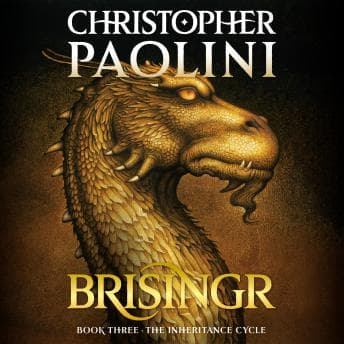
But for a commute? For walking the lakefront while trying to forget that you have a faculty meeting at 8 AM tomorrow? It works. It's immersive. It's a massive, sprawling world that you can just live in for a few weeks. If you end up hooked, Brisingr: Inheritance, Book III picks up right where this one leaves off—same narrator, same commitment, same twenty-plus hours of your life.
Who should listen: Fantasy fans who loved Eragon and want the full saga experience, plus anyone who needs a long-haul audiobook for commutes or road trips. Who should skip: If you need fast-paced plots or can't handle unconventional voice choices, sample that dragon first. Don't say I didn't warn you.