
"The time has come for you to learn the ways of the Dragon Riders."
I'm paraphrasing, but somewhere around hour three, deep into Eragon's journey to Ellesméra, Gerard Doyle delivers that line with such weight that I actually stopped mid-dice-roll during our Thursday D&D session. My party was fighting a young green dragon (ironic, I know), and I had to pause the audiobook because Doyle's voice had more gravitas than our DM's attempts at draconic intimidation. Sorry, Marcus.
The Training Arc We All Deserve
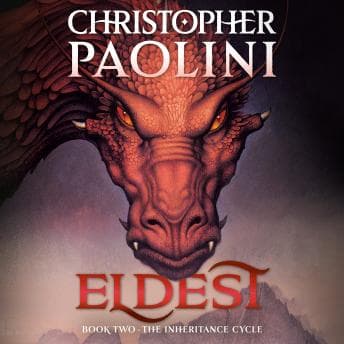
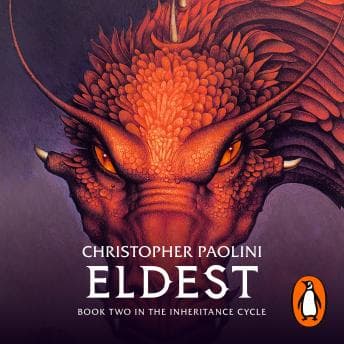
Look, I need to address something: Eldest is essentially a 23-hour training montage. And I mean that as a compliment. Paolini wrote this at like, seventeen? Eighteen? And he understood something that took me years of consuming fantasy to articulate—the progression is satisfying. Eragon goes from "I have a dragon and a magic sword" to "I understand the fundamental nature of magic and the ancient language" and you feel every step of that journey.
The elven training sections are where this book absolutely sings. Doyle handles the invented languages—the Elvish, the Dwarvish, all of it—with this careful precision that makes them feel real. Like he studied pronunciation guides. Like these are actual languages with actual rules. My D&D group would eat this up; we've spent literal hours debating the phonetics of Draconic, and here's Doyle making Paolini's constructed languages sound like they've existed for millennia.
About That Irish Accent...
Okay, so. Gerard Doyle has a thick Irish accent. Some folks apparently couldn't make it past chapter one because of this, and I genuinely don't understand those people. Is it noticeable? Sure. Does it occasionally make certain fantasy names sound a bit... unexpected? Yeah, "Saphira" gets a particular lilt that took me an hour to adjust to. But once you're in, you're in.
Here's where I'll be honest though—his dragon voices are... a choice. Saphira sometimes sounds like she's got a head cold, or like Yoda after a pack of cigarettes. It's not bad, exactly, but when you've got this majestic sapphire dragon in your head and she comes out sounding vaguely congested, there's cognitive dissonance. I got used to it. Some listeners apparently never did. Your mileage may vary.
Roran's Parallel Quest (The Sleeper Hit)
The dual storyline structure here is Sanderson-level world-building ambition from a teenage author. While Eragon's off learning to be a proper Rider, his cousin Roran is back in Carvahall dealing with the consequences of Eragon's choices. And Doyle differentiates them beautifully—Roran's sections feel grittier, more grounded, while the elven chapters have this ethereal quality to his delivery.
Roran's arc is honestly the surprise MVP of this book. It's not the flashy magic training; it's a farmer's son trying to protect his village and the woman he loves. The stakes feel personal in a way that Eragon's "chosen one" narrative sometimes doesn't. When Roran picks up that hammer... look, I'm a sucker for a good underdog-becomes-legend story. This is that.
The Middle Book Problem (Or Is It?)
Yes, this is book two of four. Yes, it has some middle-book syndrome. The pacing drags in places—there are sections in Ellesméra where you're getting the fantasy equivalent of a philosophy lecture. If you don't like info-dumps, this isn't for you (but you're wrong). I personally ate it up. The magic system is chef's kiss—Paolini really thought through the limitations and costs of the ancient language, and Doyle's delivery of those explanations kept me engaged through what could've been dry exposition. That same careful attention to world-building rules shows up in Journey of Crazy Horse: A Lakota History, though obviously in a very different context—both narrators treat their material with real reverence.
At 23 and a half hours, this is a commitment. I listened over about two weeks—during coding sessions, during my commute, during one memorable 4 AM insomnia spiral where I was supposed to be outlining my thesis chapter. (Dr. Patel, if you're reading this, I was absolutely working on procedural generation. The dragon training was... research. Into progression systems. Obviously.)
Who's This Quest For?
Perfect for: fantasy fans who appreciate world-building over action, anyone who loved Eragon and wants more, listeners who don't mind a thick accent once they adjust, and people who understand that training arcs are valid narrative choices.
Skip it if: you need constant action to stay engaged, thick accents genuinely impair your comprehension (no judgment, auditory processing is real), or you're looking for a standalone experience. This is firmly book two of a series that expects you to know book one.
Roll for Initiative
Gerard Doyle earned that AudioFile Earphones Award. His handling of Paolini's constructed languages alone deserves recognition—the Elvish flows, the Dwarvish grinds, and the ancient language of magic feels appropriately weighty. The dragon voice thing is a legitimate criticism, but it's maybe 10% of the audiobook, and the other 90% is genuinely excellent character work.
Yes, it's 23 hours. Yes, it's worth it. Especially for long road trips or those days when you need to disappear into another world for a while. Just maybe adjust your expectations for what Saphira sounds like, and you'll be fine.
Now if you'll excuse me, I need to explain to my advisor why my thesis progress notes include "dragon training pacing analysis."