
Okay, let's be real for a second. I started this audiobook while frantically trying to finish a branding package for a gluten-free bakery that demanded their logo look "rustic but futuristic" (whatever that means). I was stressed. My cat Diego was sitting directly on my keyboard. I needed something to ground me.
I didn't expect to be completely swept away. Like, stopped-working-and-stared-at-the-wall swept away.
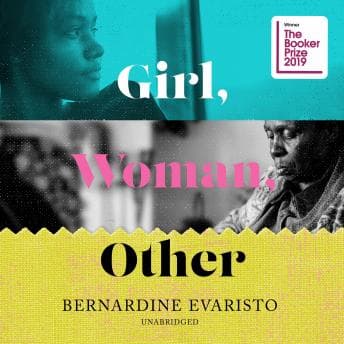
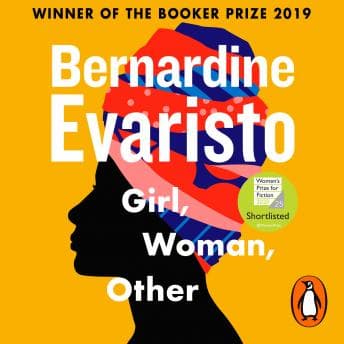
Girl, Woman, Other isn't just a book. It's a whole mood. A vibe. A chorus.
Organized Chaos (In the Best Way)
Here's the thing—it won the Booker Prize, which usually makes me nervous. Testaments also won major awards, and while I loved it, I get that wariness about prize-winners. Sometimes "award-winning" is code for "dry, pretentious, and requires a PhD to enjoy." (Don't tell my old art history professors I said that.)
But this? This is alive.
Bernardine Evaristo wrote this in what she calls "fusion fiction"—basically prose that flows like poetry, with hardly any periods. On the page, that might look intimidating. But in your ears? Oh my god. It's rhythm. It's a heartbeat. It flows like water.
We follow twelve distinct characters—mostly Black British women—across generations. Sounds like it should be confusing, right? Jumping from a lesbian playwright in London to a non-binary social media influencer to a 93-year-old farmer in the countryside. But the way these stories connect... it's immaculate. Felt like sitting in a busy café, eavesdropping on the most fascinating, messy, heartbreaking conversations of your life.
And yes, I kept a mental spreadsheet of who was related to whom. But even if you get lost, it doesn't matter. The feeling is what sticks.
Anna-Maria Nabirye's Voice: Velvet and Gravel
I hadn't listened to her before, but five minutes in, I was ready to have her narrate my internal monologue. Her voice has this deep, warm timbre—rhythmic and incredibly direct. It's not a "performer" voice that feels fake; it feels like a friend telling you the tea.
Because the writing lacks traditional punctuation, the narrator has to do a lot of heavy lifting to make sense of the sentences. Nabirye nails it. She rides the rhythm of the text perfectly—knows exactly when to pause, when to speed up, when to let a line hang in the air so it punches you right in the gut.
She does distinct voices for all twelve characters, which is a massive flex. Her Hattie (the 93-year-old) sounded so much like an elder who has zero time for your nonsense that I instinctively sat up straighter in my chair.
Now, I did see some people online complaining that some of the accents felt a bit forced or even bordering on caricature. I'm not British, so I can't vet the authenticity of a Newcastle vs. London accent. To my American ears, it sounded rich and distinct, but if you're super sensitive to regional dialects, maybe sample it first? For me, the emotional truth in her delivery outweighed any technical wobbles.
Why It Hit Me (And Might Hit You)
This book is messy. The characters are messy. They cheat, they lie, they have egos, they make terrible decisions. And I loved every single one of them.
It reminded me so much of the stories my Abuela used to tell—how one person's choice ripples down through three generations. There's a specific storyline about a mother and daughter that had me ugly-crying into my drafting tablet. (Frida, my other cat, was very concerned. Or maybe she just wanted treats. Hard to tell.)
It tackles everything—identity, feminism, gender, race—but it never feels like a lecture. It feels like life.
Who's This For?
Skip this if you need a polished, linear plot where everything ties up with a bow. Perfect is boring anyway.
But if you want to feel like you've just lived twelve different lives? If you want to be challenged and hugged at the same time? Listen to this. It's a rainy Sunday book. It's a "drive around the block because you can't stop listening" book.
Diego Approves (And So Do I)
Just... prepare your heart. And maybe keep some tissues handy.