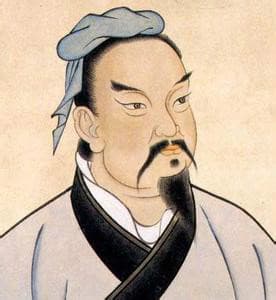

"All warfare is based on deception."
I was chopping onions for a chana masala at 10 PM on a Tuesday — already crying, so the perfect emotional state for absorbing 2,500-year-old military strategy. And here's the thing about Sun Tzu: the man was basically a behavioral psychologist who happened to run armies. Every maxim in The Art of War is, at its foundation, about reading people. Predicting what they'll do when cornered, when desperate, when arrogant. I found myself asking: why does this text, written for chariot warfare in ancient China, still make my brain light up like I'm reading a clinical case study?
Because Sun Tzu understood human nature the way a predator understands prey. Not cruelly — clinically.
The Original Dark Psychologist
The research actually shows that most enduring strategic texts survive not because of their tactical advice (chariots, anyone?) but because they nail the psychology underneath. Sun Tzu's genius is that every chapter is essentially about exploiting cognitive biases before anyone had a name for them. "Pretend to be weak, that he may grow arrogant" — that's a manipulation of the overconfidence bias, written six centuries before the Common Era. "If your opponent is quick to anger, seek to irritate him" — that's emotional dysregulation as a tactical vulnerability. My therapist would have thoughts about this character.
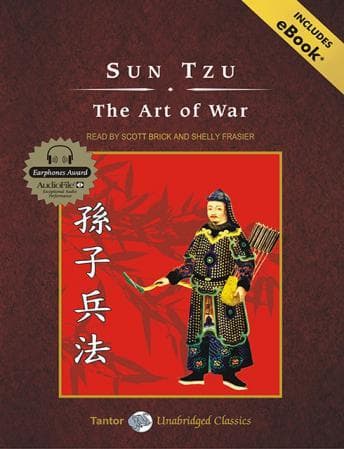
This particular audiobook version includes ancient Chinese commentaries alongside Sun Tzu's core text, and that's where the dual narration earns its keep. Scott Brick reads Sun Tzu's aphorisms with this steady, imperative tone — no emotion, no theatrical inflection, just pronouncement after pronouncement like a general who's never been wrong and knows it. Then Shelly Frasier comes in with the historical commentary, providing context and examples from Chinese military history. Her delivery is smoother, more conversational, and it creates this interesting rhythm — decree, then explanation. Decree, then illustration. It's like having a professor and a textbook take turns.
The transitions between the two narrators are genuinely clean. No awkward pauses, no tonal whiplash. You always know who's speaking and why.
Where the Battleplan Gets Tedious
But — and this is the uncomfortable truth about a 3-hour-and-16-minute treatise — Sun Tzu repeats himself. A lot. The text cycles through variations on the same principles (adapt to terrain, know your enemy, don't fight unnecessary battles), and when Brick delivers each maxim with the same measured, unvarying cadence, it starts to feel like being lectured by someone who won't let you interrupt. I get why some listeners call the pacing tedious. There's no narrative arc here, no character development, no protagonist to root for. It's a series of assertions punctuated by historical footnotes.
Psychologically, this doesn't track as a straight-through listen for most people. Your brain wants story. It wants cause and effect, tension and release. Sun Tzu gives you thesis after thesis, and by hour two, you're either deeply engaged with the ideas or you're mentally reorganizing your kitchen cabinets. I was somewhere in between — genuinely fascinated by certain passages (the chapter on espionage is a masterclass in understanding loyalty as transactional), slightly glazed during others (terrain classification is... fine).
I'd honestly recommend bumping the speed to 1.25x. Not because Brick is slow, exactly, but because the material is dense enough that a slightly faster tempo keeps your attention from wandering without losing comprehension.
Who This Is Really For (And Who Should Retreat)
If you're the kind of person who reads management books and self-help strategy guides, this is the ur-text. The original. Every business metaphor about "picking your battles" traces back to this. And hearing it spoken aloud — with that authoritative, almost ritualistic delivery — does add something the page doesn't give you. It feels ancient. Deliberate. Like receiving doctrine.
But if you're looking for the most engaging version of The Art of War, know that some listeners swear by Clavell's translation, and this particular audiobook won't convert skeptics. If you need narrative momentum in your audiobooks, this will test your patience.
This is a fascinating case study in how a text survives millennia not because of what it says about war, but because of what it says about us. We're still the same creatures Sun Tzu studied — still governed by ego, fear, impatience, and the desperate need to believe we're smarter than the person across the table. That same unflinching portrait of human beings under pressure — what we do when survival is on the line — is exactly what makes Unbroken such a compelling companion piece: different millennium, same psychological specimen.
The Diagnosis
At 3 hours and change, it's a short commitment for a book that's shaped military and corporate strategy for 2,500 years. Brick and Frasier do solid, professional work — nothing flashy, nothing distracting, which is exactly right for this material. But the format is inherently repetitive, and no narrator can fix that. Worth hearing once. Probably not something you'll replay unless you're prepping for a board meeting or, I don't know, an actual siege.