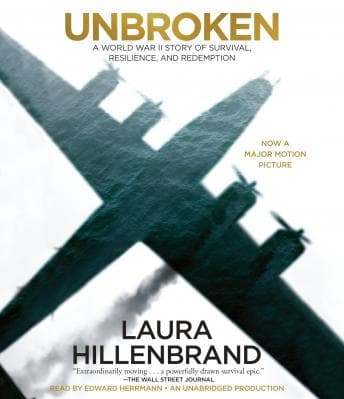

The Weight of History, One Walk at a Time
I finished this one on the lakefront last week. Denise had given up on me about a mile back - she wanted to talk about her sister's wedding drama, and I was too deep in a Japanese POW camp to care about seating arrangements. (Sorry, Denise. I'll make it up to you.) But that's the thing about Unbroken - it grabs you by the collar and doesn't let go, even when you desperately need it to.
Laura Hillenbrand does something here that I try to teach my students every year: she makes history urgent. Bury My Heart at Wounded Knee does the same thing with Native American history—makes you feel the weight of what happened instead of just cataloging dates. Louis Zamperini's story - Olympic runner, Army Air Forces bombardier, crash survivor, POW - reads like fiction. The kind of fiction where you'd say "that's too much, no one would believe this." Except it happened. All of it. And Hillenbrand writes with such cinematic precision that you can taste the salt water, feel the shark skin bumping against the raft.
This reminds me of what Hemingway said about writing - that you should write one true sentence, then another. Hillenbrand stacks true sentences like bricks, building something massive without ever feeling heavy. Well. Almost never.
Edward Herrmann Understands the Assignment
Here's the thing about narrating nonfiction like this: you can go two ways. You can be a news anchor - detached, professional, forgettable. Or you can be a storyteller who trusts the material enough to get out of its way while still being there. Edward Herrmann chose door number two, and it was the right call.
His voice has this warm authority to it. Like a favorite professor who's seen some things. He doesn't oversell the dramatic moments - and there are so many dramatic moments - because he doesn't need to. When Zamperini is drifting on that raft for forty-seven days, Herrmann's steady delivery makes the horror more real, not less. He understands that pause is punctuation. He knows when to let silence do the work.
What really got me was how he handled the POW sections. The brutality Zamperini faced under "The Bird" - a sadistic guard whose cruelty defies comprehension - could have been narrated with theatrical menace. Herrmann doesn't do that. He reads it straight, with just enough gravity to honor what happened without turning it into performance. The restraint is devastating.
I sat in my car after one chapter, engine off, just... sitting. My students would hate this. I love it.
Where It Drags (And Why That's Okay)
I'm not going to pretend this is a perfect audiobook. At nearly fourteen hours, there are stretches - particularly in the post-war sections - where the pacing slows. Zamperini's struggle with PTSD and alcoholism is important, essential even, but Hillenbrand's thoroughness becomes a bit exhausting here. I found myself checking how much time was left during a faculty meeting. (Principal Martinez was talking about parking lot logistics. I regret nothing.)
But honestly? The slower sections serve a purpose. If you loved the survival story and want to bail once he's rescued, you'd miss the point entirely. The prose deserves to be savored, even when it's documenting the long, unglamorous work of healing. Hillenbrand is saying something about what survival actually costs - that the war didn't end when the war ended. That's worth sitting with, even if your attention wanders.
I listened at 1.0x because the author chose those words. Speeding through Zamperini's suffering felt wrong. Your mileage may vary.
Who This Is For (And Who Should Skip)
If you're a history person - and I mean someone who wants to feel history, not just learn dates - this is essential. If you loved Seabiscuit (Hillenbrand's other triumph), you already know what you're getting. If you're teaching WWII to teenagers who think everything before 2010 is ancient history, play them the raft chapters. They'll shut up. I guarantee it.
But fair warning: this isn't light listening. The violence is real. The suffering is prolonged. Bury My Heart at Wounded Knee carries that same emotional brutality—it's not something you put on for background noise. I wouldn't recommend this for bedtime unless you want dreams about sharks and starvation. It's commute material, long-drive material, "I need something substantial" material.
Skip if: you need constant action, you're sensitive to graphic depictions of torture, or you want something you can half-listen to while scrolling your phone. This demands attention.
Final Thoughts
Unbroken isn't just a war story. It's a story about what humans can endure and what that endurance costs. Edward Herrmann's narration honors that weight without buckling under it.
I've recommended this to exactly three of my 47 podcast listeners. My mom said she'd "get to it." She won't. But you should.
Worth pausing the faculty meeting for. Worth the tears in the parking lot. Worth every one of those fourteen hours.