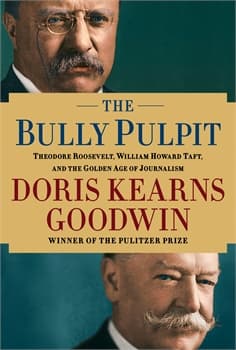

"The President is the bully pulpit."
That line hit me somewhere around hour six, driving home after a particularly brutal night shift. Three codes, two traumas, and a patient who reminded me so much of my lola that I had to take a minute in the supply closet. And here's Teddy Roosevelt, over a century ago, understanding something I see every single day: the power of showing up, speaking truth, and using whatever platform you've got.
Look, 36 hours is a commitment. That's basically a full work week of audiobook. But here's the thing—I burned through this over about two months of post-shift drives, and honestly? It never felt like homework. Doris Kearns Goodwin does something I rarely see in historical biographies: she makes dead presidents feel like people you'd actually want to grab coffee with. Or in TR's case, people who'd probably challenge you to a boxing match and then discuss policy while you're still catching your breath.
The Friendship That Broke Everything
The heart of this book isn't really about politics. It's about two men who loved each other—genuinely, deeply—and how ambition and ego and circumstance tore that apart. Roosevelt and Taft. The dynamic reformer and the reluctant successor. Reading about their 400+ letters, watching their friendship strengthen and then shatter in 1912... honestly, Carlos asked why I was crying in the car. I blamed allergies. I was lying.
As someone who's actually worked a code, who's seen families fall apart over decisions made under pressure, there's something painfully familiar about watching these two men destroy each other. Their wives got dragged in. Their kids. Their closest friends had to pick sides. It's the kind of slow-motion tragedy that makes you want to reach through time and shake them both.
Goodwin doesn't take sides, which I appreciate. She shows you Roosevelt's brilliance AND his ego. Taft's decency AND his stubbornness. These weren't villains or heroes. They were complicated humans who made choices they couldn't take back. That same moral complexity runs through Prince, where power and principle collide in ways that feel uncomfortably real. (My mom would love this. She's always saying I judge people too quickly. Maybe she's right. Don't tell her I said that.)
Edward Herrmann: The Voice That Carried 36 Hours
Okay, so. Edward Herrmann. I'd listen to this man read a medication guide. His voice has this warm authority that makes dense historical content feel like a really good conversation. He doesn't rush, but he doesn't drag either—there's a rhythm that matches Goodwin's writing perfectly.
The character differentiation is subtle but effective. You can tell when he's channeling Roosevelt's energy versus Taft's more measured personality. And the muckrakers—Ida Tarbell, Lincoln Steffens, that whole McClure's Magazine crew—they each get their own flavor. For 36 hours, that consistency is remarkable. No weird pronunciation shifts, no energy drops. The man was a professional.
I couldn't find much about Herrmann's specific preparation for this one, but based on the final product? He understood the assignment. This won the Audie for History/Biography, and yeah. Earned.
When Journalism Actually Changed Things
Here's where my night shift brain started making connections. The muckrakers—these journalists who exposed corporate corruption, political scandals, the exploitation of workers—they didn't have Twitter or 24-hour news cycles. They had magazines and months of research and editors who let them dig deep. The same kind of unflinching documentation shows up in Thirty Years A Slave, where the truth gets told without the benefit of a sympathetic audience.
And they changed things. Actually changed things. Roosevelt used their work to push reforms that seemed impossible. Reading about Ida Tarbell taking down Standard Oil with nothing but facts and persistence... I mean. There's something both inspiring and depressing about that, given where we are now.
Goodwin frames this as a "golden age" and I get why. The combination of a president willing to use his platform, journalists willing to do the work, and a public willing to pay attention—that's rare. Maybe once-in-a-century rare.
Who This Is For (And Who Should Skip)
Perfect for commuters with long drives. Night shift approved—the pacing keeps you alert without being jarring. If you loved Team of Rivals (same author, same narrator), this is the obvious next listen. But if you need quick payoffs, if 36 hours sounds like a prison sentence, if detailed political history makes your eyes glaze... maybe start with something shorter. No shame in that. Know thyself.
For me? This became one of those audiobooks I was almost sad to finish. The kind where you sit in your driveway for an extra ten minutes because you need to hear how this chapter ends. The kind that makes you text your sister random facts about Taft's bathtub. (It was huge. The man got stuck in a regular one. I have questions about the historical accuracy of this story but I choose to believe it.)
Clocking Out
We're living through our own fractured moment. Reform is in the air again, or at least the need for it. Listening to how it happened before—the friendships, the failures, the journalism that actually mattered—it doesn't give you answers. But it gives you context. And sometimes that's enough to get through another shift.








![Steve Jobs [unabridged audiobook] audiobook cover](/_next/image?url=https%3A%2F%2Fcovers.audiobooks.com%2Fimages%2Fcovers%2Ffull%2F9788499923406.jpg&w=1920&q=75)