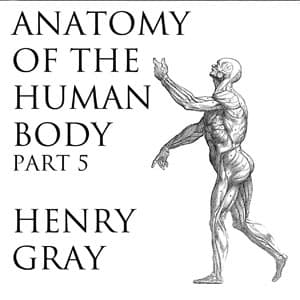

Look, I need to be upfront about something: when I tell people I listen to 50+ audiobooks a year, nobody pictures this. A 13.5-hour LibriVox recording of a 1918 anatomy textbook. Part 5 of 5. Splanchnology and surface markings. But here's the thing — I didn't pick this up because I'm secretly studying for the MCATs. I picked it up because I couldn't sleep after a Wednesday night deploy went sideways, and I'd already burned through my Audible queue. Sometimes you just need something dense enough to shut your brain off from replaying error logs.
And you know what? I have feelings about this. Complicated ones.
A 106-Year-Old Textbook With No Diagrams Is Exactly As Wild As It Sounds
Let's get the obvious out of the way: this is Gray's Anatomy — the actual 1858 textbook (1918 edition), not the TV show. Henry Gray wrote this thing before dying at 34 from smallpox, which is both tragic and somehow on-brand for a Victorian anatomist. There's a similar "doomed expert in the field" energy in Man-Eaters of Tsavo, where the obsessive firsthand documentation of something lethal is also kind of the whole point. The content here covers splanchnology (that's the study of visceral organs — I had to look it up, and I have a CS degree, not a medical one) and surface anatomy markings. So you're getting chapters on the alimentary canal, the respiratory organs, the urogenital system, and then a final section on how all of this maps to what you can actually see and feel on the body's surface.
The prose is... 1918 medical writing. Precise, exhaustive, zero hand-holding. Sentences like descriptions of the exact peritoneal folds around the duodenum that go on for what feels like geological time. There's a strange beauty to it if you're in the right headspace — the language is so methodical it becomes almost meditative. But let's be real: this is a reference text. It was designed to be read alongside anatomical illustrations (which are available at bartleby.com, for what that's worth when you're on a packed Caltrain at 6AM). Without visuals, you're basically running a distributed system with no monitoring dashboard. You can infer what's happening, but you're missing critical context.
The LibriVox Volunteer Narrator Experience
This is a LibriVox recording, which means volunteer readers. Multiple of them. And this is where I have to be honest: the experience is... variable. You get readers who are clearly enunciating every Latin anatomical term with genuine care, and then the next chapter switches to someone with a completely different mic setup, room tone, and reading pace. It's like a microservice architecture where each service was built by a different team with no shared style guide.
None of the narrators are bad, exactly. They're volunteers reading dense medical text, and that deserves respect. But the inconsistency between readers means your brain has to re-calibrate every time a new voice comes in. Some readers lean into the clinical cadence naturally — you can almost picture them at a lectern. Others sound like they're reading aloud for the first time and discovering the word "pharyngolaryngeal" in real time. (Honestly, relatable.) The audio quality varies too: some chapters are clean, others have that slightly hollow LibriVox room-echo thing going on.
At 1.5x speed, some readers become perfectly listenable background material. Others get mushy. I ended up adjusting speed per chapter, which — if you know me — is annoying. I like to set it and forget it.
Who Actually Needs This In Their Ears
Here's my honest take: if you're a medical student or anatomy nerd who wants supplemental audio while studying with the actual illustrated text open, this could work. It's basically a very thorough, very dry podcast about your insides. The splanchnology sections on the digestive and respiratory systems are genuinely detailed — Gray was meticulous about describing spatial relationships between organs, vascular supply, nerve innervation, all of it.
But as a standalone audio experience? Without the diagrams? It's like reading API documentation out loud. You'll get the general architecture, but the specifics won't stick without visual reference. And at 13.5 hours for just Part 5, the commitment is real.
Perfect for: falling asleep, background while doing something mindless. Skip for: commuting (you will zone out and miss 3 chapters), anything requiring retention.
The ROI on this audiobook is basically zero unless you have a very specific use case. But it's free. It's LibriVox. And at 3AM when your production systems are stable and your brain won't stop spinning, there's something weirdly grounding about listening to a Victorian surgeon describe the exact position of your spleen.
The Commit Message: "Works As Intended, Not As Expected"
TL;DR: This is a free LibriVox recording of a 1918 anatomy textbook with no illustrations and rotating volunteer narrators. It exists for completionists, medical history buffs, and insomniacs. It does exactly what it says on the tin. I can't rate it like a normal audiobook because it isn't one — it's a public domain reference text read aloud. Respect the project. Manage your expectations.





![Steve Jobs [unabridged audiobook] audiobook cover](/_next/image?url=https%3A%2F%2Fcovers.audiobooks.com%2Fimages%2Fcovers%2Ffull%2F9788499923406.jpg&w=1920&q=75)