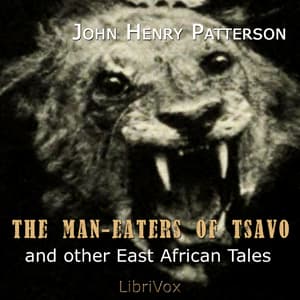

Look, I'm going to be honest with you: I listened to this entire audiobook out of pure spite. Not spite toward the book itself - the story of two lions systematically terrorizing a railway construction camp in 1898 is genuinely wild. I mean, 135 workers potentially eaten? Patterson hunting these things in the dark with a rifle while they literally circled his camp? This is the kind of historical insanity that makes you realize Victorian-era people were built different.
No, my spite was directed at the narration. And I finished it anyway.
The Story That Deserves Better
Here's the thing about Man-Eaters of Tsavo - it's basically a survival horror story, but it actually happened. Patterson, this British engineer just trying to build a bridge, suddenly becomes the designated monster hunter for an entire railway operation because two lions decided that humans were easier prey than zebras. The tension should be unbearable. Workers refusing to sleep. Makeshift defenses that fail. Night after night of waiting for something to drag you out of your tent.
And the writing itself? Surprisingly accessible for something from 1907. Patterson wasn't trying to be literary - he was documenting what happened, and that straightforward approach works. You get the logistics, the fear, the frustration of watching traps fail and baits go untouched. The lions were smart in ways that feel almost supernatural, which is probably why they made that movie about it (The Ghost and the Darkness, if you're curious).
I finished this in about 4 commutes, and despite everything working against it, I kept coming back. That's how compelling the source material is.
The LibriVox Problem (Yes, We Need to Talk About It)
Okay, so. LibriVox. Free audiobooks recorded by volunteers. Noble mission. I respect it. But this particular recording... ugh.
Multiple narrators, which isn't inherently bad, except some of them sound like they're reading a grocery list while half-asleep. I had the exact same issue with Survivors' Tales of Famous Crimes - LibriVox recordings are a gamble, and sometimes you lose. The monotone delivery flattens every moment of tension. Patterson is describing a lion literally dragging a man from his tent, and the narrator sounds like he's reading terms of service. The pronunciation of Kenyan place names and tribal names is rough - I'm no expert, but even I could tell some of these were just guesses.
One reviewer said they were "seriously considering volunteering to re-narrate the entire book but with actual enthusiasm," and honestly? Same energy. Story of Mankind had similar pacing issues with its LibriVox recording - great content, frustrating delivery. The story deserves someone who understands pacing, who can differentiate between "routine camp logistics" and "there is a man-eating lion ten feet away from me right now."
I bumped the speed to 1.5x, which actually helped a bit - it masked some of the flatness and kept things moving. But I shouldn't have to hack the listening experience to make it tolerable.
The Colonial Elephant in the Room
I'd be doing you a disservice if I didn't mention this: the book is very much a product of its time. Patterson's attitudes toward the local workers, the casual racism baked into the narrative, the gleeful descriptions of hunting every animal that moved - it's all there. Some chapters basically devolve into "and then I shot this thing, and then I shot that thing," which, look, I get it was 1898, but it's hard to listen to extended hunting sequences without feeling a bit queasy.
If you can contextualize it as a historical document - understanding that this was the colonial mindset of the era - there's value here. But if that's going to pull you out of the experience entirely, this probably isn't your audiobook.
The Commute Verdict
Bottom Line: The story is legitimately fascinating. The narration is legitimately painful. It's free, so the ROI calculation is weird.
Perfect for: History buffs who can tolerate rough production, anyone curious about the real events behind The Ghost and the Darkness, listeners who want something to keep them awake on early morning commutes through sheer frustration.
Skip if: You value professional narration, you're sensitive to colonial-era attitudes, or you need consistent audio quality.
The science actually holds up - modern researchers have studied the Tsavo lions (their skulls are at the Field Museum in Chicago), and Patterson's account, while dramatic, isn't exaggerated. These lions really were anomalies.
Would I recommend paying for this specific recording? No. Would I recommend the story itself? Absolutely. Just... maybe read it instead. Or find a different audio version if one exists. This one gets points for preservation and accessibility, but the execution makes a gripping survival story feel like a chore.
Ray Porter, if you're reading this, please record this book. I'm begging.



![Steve Jobs [unabridged audiobook] audiobook cover](/_next/image?url=https%3A%2F%2Fcovers.audiobooks.com%2Fimages%2Fcovers%2Ffull%2F9788499923406.jpg&w=1920&q=75)