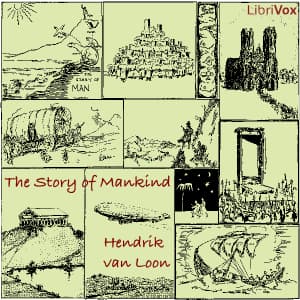

I usually stick to military history written by guys who've actually smelled cordite. But sometimes, when I'm walking Ranger late at night and don't want to think about modern geopolitics, I go for the classics. The Story of Mankind popped up on my radar because it was the first-ever Newbery Medal winner. 1922. That's a century of dust on this intel.
Let me cut to the chase: This is a free production (LibriVox), and you get exactly what you pay for.
The Volunteer Squad Behind the Mic
Here's the deal with LibriVox—it's an army of volunteers. I respect the service. Truly. But from a command and control perspective? It's chaos. You don't get one consistent voice guiding you through the centuries. You get a rotation.
Some of these readers are fantastic—warm, engaging, sounding like a grandfather reading by a fire. Others? Well, let's just say they sound like they're reading a supply requisition form in a basement. It breaks the immersion. Just when you're getting settled into the fall of Rome, the narrator switches, and the audio quality shifts from "studio" to "tin can." (Ranger actually tilted his head at one particularly harsh transition).
If you're like me and listen at 1.25x or 1.5x, it smooths out some of the rough edges. But don't expect a polished, Hollywood-style production. This is raw field work.
The "Public Domain" Torture
Okay, I have to address this because it nearly made me quit the mission. Since this is a volunteer project for the public domain, every single chapter starts with a disclaimer: "This is a LibriVox recording. All LibriVox recordings are in the public domain..."
The chapters in this book are short. Sometimes only a few minutes. So you're hearing that disclaimer over and over and over again. It's like a psychological psy-op. By the tenth time, I was gritting my teeth. I understand the legal necessity, but strictly as a listener? It kills the momentum. Dead.
A 1922 Intel Report
Now, the book itself. Van Loon wrote this right after WWI, and you can feel it. Speaking of WWI-era military stories, Sergeant York and His People captures that same post-war perspective, though with boots-on-the-ground authenticity. The tone isn't dry academic text; it's conversational. Witty, even. He treats history like a story—hence the title—which I appreciate. It reminds me of how we debrief after a mission; less about the dates, more about the why.
But—and this is a big but—it's Eurocentric as hell. It's a product of its time. If you're looking for a balanced, modern view of global history, this isn't it. This is the Western World's highlight reel as seen from 1920.
Who Should Listen (And Who Should Skip)
History buffs who want to hear how we used to talk about the past? You'll find this a fascinating time capsule. Skip it if you need consistent audio quality or can't stomach hearing the same legal disclaimer forty-plus times. The casual listener might find the shifting narrators and repetitive intros a bridge too far.
Personally? I finished it. Mission accomplished. But I'll probably stick to single-narrator books for a while. My blood pressure can't take another disclaimer.




![Steve Jobs [unabridged audiobook] audiobook cover](/_next/image?url=https%3A%2F%2Fcovers.audiobooks.com%2Fimages%2Fcovers%2Ffull%2F9788499923406.jpg&w=1920&q=75)