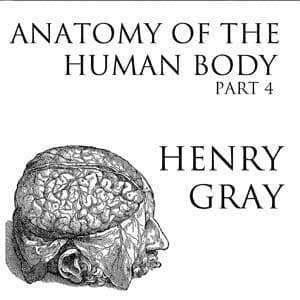

I'm going to be honest with you. I started this audiobook because I was debugging a particularly nasty memory leak at 6:47 AM on the Caltrain and thought, "You know what? If I'm going to suffer, I might as well learn something." Sixteen hours of 1918 anatomy textbook later, I have... thoughts.
Bottom Line: This is basically a LibriVox passion project meets medical school flashback. Worth it if you're a very specific type of nerd. Skip if you need narrative momentum to stay awake.
Why Would Anyone Listen to This on Purpose?
Here's the thing. I actually have a weird fondness for vintage science texts. There's something fascinating about hearing how people understood the human body before we had MRIs and electron microscopes. Short History of Nearly Everything gave me that same thrill of watching scientific understanding evolve over time. The 1918 edition of Gray's Anatomy—and yes, this is basically that, despite the slightly different author credit—is a time capsule. The language is dense, formal, and occasionally poetic in that old-school academic way.
Part 4 covers neurology, the senses, and skin. Sounds straightforward until you realize you're getting 16+ hours of detailed nerve pathway descriptions without any visual aids. The book literally tells you to check bartleby.com for the illustrations. In audio form. While you're on a train. (I did not check bartleby.com. I was too busy trying not to fall asleep standing up.)
The science holds up... mostly. Some terminology is outdated, and there are definitely concepts that have been refined since 1918. Disappearing Spoon does something similar with chemistry—showing how the fundamentals remain even as our understanding gets sharper. But the core anatomy? Your optic nerve is still your optic nerve. The descriptions of neural structures are surprisingly detailed and, honestly, kind of impressive for the era.
The Voice(s) in My Head
This is a LibriVox recording, which means volunteer readers. Multiple of them. And this is where things get interesting.
The quality varies. A lot. Some readers are clear, measured, and actually make the dense medical terminology feel manageable. Others... well, let's just say I could tell when someone was reading a section they weren't super comfortable with. The pacing shifts between readers, the accents vary, and there's no consistent audio production tying it all together.
I couldn't find detailed info on specific narrators online, but based on what I heard, this is clearly a labor of love from people who cared about making this text accessible. Is it Ray Porter quality? Absolutely not. (Ray Porter narrating anatomy would be incredible though. Someone make that happen.) But for a free public domain recording, it's... fine? Serviceable? It gets the job done.
The bigger issue: anatomy textbooks were never meant to be consumed aurally. You're hearing descriptions of structures that really, really need diagrams. "The nerve passes posterior to the lateral pterygoid muscle and enters the infratemporal fossa" means nothing without a picture. I found myself rewinding constantly, trying to build mental models of things I couldn't visualize.
Who This Is Actually For (And Who Should Run)
Perfect for: Medical students who want passive review while doing laundry. Anatomy nerds who've already read the text and want reinforcement. People who fall asleep to dense academic content (no judgment, I've been there).
Skip if: You're expecting a narrative. You haven't already studied anatomy. You're listening at 6 AM on a packed train and need to stay alert. Definitely skip for deep work—this requires too much active mental effort to be background noise, but not enough engagement to be truly absorbing.
I listened at 1.25x, which helped with the slower readers but made the faster ones slightly frantic. Your mileage will vary depending on which section you're in.
The ROI Calculation
Here's my honest assessment: the return on this audiobook is low unless you're using it for a very specific purpose. It's free (LibriVox), which is great. It's comprehensive, which is also great. But the format fundamentally doesn't serve the content well.
If you're genuinely interested in vintage medical texts, read the actual book with the illustrations. If you want to learn anatomy, there are modern audiobooks designed for audio consumption. If you want something to fall asleep to that makes you feel productive, well... okay, this works for that.
I finished it across maybe 12 commutes, mostly out of stubbornness. Did I retain much? Honestly, not a ton. But I can now tell you way more about the structure of the retina than I could before, so there's that.
Would I recommend it? Only if you already know exactly why you want it. This is a niche tool for niche purposes. Meh for general listening, surprisingly solid for what it is.





![Steve Jobs [unabridged audiobook] audiobook cover](/_next/image?url=https%3A%2F%2Fcovers.audiobooks.com%2Fimages%2Fcovers%2Ffull%2F9788499923406.jpg&w=1920&q=75)