
Look, I need to rant for a second. Why did I think downloading a 1918 anatomy textbook would be a good idea for my commute? I'm a software engineer, not a med student. But here's the thing - I've been having weird shoulder pain from hunching over my laptop for 12 hours a day, and I thought maybe understanding the actual muscles involved would help me, I don't know, debug my own body?
Spoiler: I now know way too much about syndesmology (that's joints, for the uninitiated) and myology (muscles). Way. Too. Much.
When Your Commute Becomes Anatomy Lab
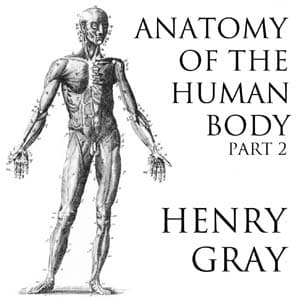
So this is Part 2 of Gray's Anatomy - the actual medical textbook, not the TV show with all the drama and hot doctors. This section covers joints and muscles, which sounds straightforward until you're 45 minutes into the detailed description of the metacarpophalangeal articulations and you realize you've missed your stop. I had a similar experience getting lost in The Great Influenza - another dense medical history that made me miss my stop because I was too absorbed in learning about respiratory systems during the 1918 pandemic. Twice.
The LibriVox production uses various volunteer readers, and honestly? They're doing the Lord's work here. Laurie Anne Walden, MorganScorpion, Lee Ann Howlett, and others tackle what is essentially a 13-hour technical manual with remarkable clarity. The enunciation is precise - critical when you're dealing with terms like "sternocleidomastoid" - and the pacing is measured enough that you can actually follow along.
But let's be real: this is a textbook. From 1918. The narrators aren't going to suddenly break into dramatic readings about the fascinating drama of the biceps brachii. It's monotone because the material is monotone. That's not a bug, it's a feature. (Okay, it's kind of a bug.)
The Technical Debt of a Century-Old Textbook
Here's where my engineer brain kicks in. This is essentially legacy documentation. The 1918 edition means some information is outdated - medical science has, you know, advanced a bit in the last hundred years. But the fundamental architecture of the human body hasn't changed (thankfully), so the core content holds up surprisingly well.
The problem is the format. Gray's original text was designed to be read alongside detailed illustrations. The audiobook acknowledges this - they point you to bartleby.com for the diagrams - but listening to descriptions of anatomical structures without visual reference is like trying to understand a complex system architecture through a phone call. You can do it, but you're working harder than you need to.
I found myself pausing constantly to look things up on my phone, which defeats the purpose of audiobook multitasking. This isn't really a "listen while coding" situation. It's more of a "sit down and study" situation that happens to be in audio format.
Who This Is Actually For (And Who Should Run)
Perfect for: Medical students who want to reinforce textbook learning during their commute. Massage therapists or physical therapists reviewing muscle groups. Anatomy nerds (they exist, I've met them). People who fall asleep to educational content - this will knock you out in the best way.
Skip if: You want entertainment. You don't have a specific reason to learn anatomy. You're not willing to supplement with visual materials. You need something you can half-listen to at 6 AM - this requires actual attention.
The production quality is clean. No weird audio artifacts, consistent volume levels across different readers, professional enough that you forget it's a volunteer project. LibriVox gets a lot of flak, but they did this one right.
Closing the Loop on My Shoulder Pain
Did this help my shoulder pain? Marginally. I now know it's probably my trapezius and rhomboids staging a revolt against my posture. Did I need 13 hours of 1918 anatomy content to figure that out? Absolutely not. Could've been a YouTube video.
But here's the weird thing - I don't regret it. There's something oddly satisfying about understanding the machinery you're walking around in. It's like finally reading the documentation for a system you've been using for decades.
If you're in the target audience - someone who genuinely needs or wants detailed anatomical knowledge - this is a solid, free resource. The narration is competent, the content is thorough (if dated), and it's the kind of thing you can return to for reference. For everyone else? Maybe just Google your specific muscle pain like a normal person. I finished this in about 6 commutes, and I'm pretty sure my fellow Caltrain passengers thought I was studying for the MCATs. I was not. I was just being weird.





![Steve Jobs [unabridged audiobook] audiobook cover](/_next/image?url=https%3A%2F%2Fcovers.audiobooks.com%2Fimages%2Fcovers%2Ffull%2F9788499923406.jpg&w=1920&q=75)