
I was shelving returns at the library last Tuesday — one of those rare slow evenings where the branch is empty and the fluorescent lights are doing that barely perceptible flicker thing that makes every aisle feel like a set piece from a horror film. Perfect atmosphere for horror. Less perfect for a Patterson thriller collection, but I'd committed to finishing this one, so I popped my earbuds in and let the narrators take me through the last few hours.
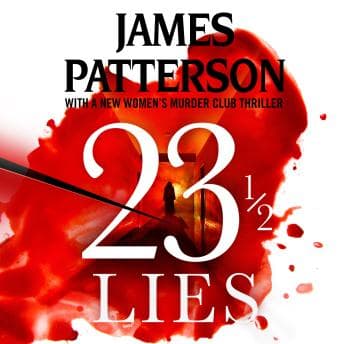
Here's where I landed: 23 1/2 Lies is three stories stapled together, and like most anthologies, the seams show.
Patterson's tried this format before with mixed results—Confessions of a Murder Suspect had a similar patchwork feel, though that one leaned harder into the family dysfunction angle.One Narrator Showed Up to Work, Two Clocked In
Let me start with what actually kept me listening. January LaVoy — AudioFile Golden Voice, and she earns that distinction here. Her work on the Lindsay Boxer story ("23 1/2 Lies") carries the weight of a character who's processing the execution-style murder of her estranged father while simultaneously investigating it. LaVoy doesn't oversell the grief. She lets Boxer's cop instincts sit in tension with her emotional fractures, and the restraint is what makes it land. When Boxer discovers truths about her father's past that reframe her entire childhood, LaVoy shifts her register — not dramatically, but enough that you feel the ground moving under the character.
Christopher Ryan Grant handles the Texas Ranger story ("Fallen Ranger"), and he's solid. His narration has a dry, sun-baked quality that fits Rory Yates's world — the armored car robbery, the loyalty conflicts, the ex-Ranger gone rogue. Grant commits to the tension. That's rare. There's a moment where Yates is weighing his badge against his gut, and Grant lets the silence do some of the heavy lifting. Smart choice.
I'd heard Grant in a completely different register before—House Next Door—and the guy's got range when the material gives him something to work with.Kenneth Fuentes narrates "Watch Your Back," and — look, he's professional. Nothing technically wrong. But this is the story about a starving artist hired to expose a cheating wife, and Fuentes reads it like he's narrating a cable procedural recap. The premise is the most noir-adjacent of the three, the one with the most atmospheric potential, and the narration just... doesn't go there. It's flat where it should be smoky. Background noise territory.
The Patterson Paradox (Three Stories, Two Worth Your Time)
Here's the thing about Patterson collections: they're engineered for speed. Short chapters, clipped prose, momentum over atmosphere. And that works — mostly — for the first two stories. The Boxer investigation has genuine stakes because it's personal. It's not just another case file; it's Lindsay pulling at threads that unravel her own history. If you're a Women's Murder Club reader, this hits different because you're watching a character you know get destabilized.
The Rory Yates story is probably the tightest of the three. Loyalty tested, moral lines blurred, and a pace that doesn't let up. It's lean and mean in the way Patterson does best. The ending landed for me, though I know some listeners found it unsatisfying — I think whether it works depends on how much ambiguity you can stomach in your law enforcement fiction.
"Watch Your Back" is where the collection sags. The premise — artist, cheating wife, paintings that might save his life — sounds like it should be dripping with tension. But it reads more like a writing exercise than a story with real consequence. By hour eight or so, shelving books in an empty library, I realized I'd stopped actively listening and was just sort of... letting it wash over me. That's a bad sign. When a thriller can't hold your attention over the sound of books being alphabetized, something's off.
Who Gets This and Who Walks Past
If you're deep into the Women's Murder Club series, the Boxer story alone might justify the listen — it adds real texture to Lindsay's backstory, and LaVoy's performance is genuinely good. If you like your crime fiction lean and Western-flavored, the Yates story delivers. But if you're coming to this cold, expecting three equally strong thrillers? You're going to feel the unevenness.
Skip if you need atmospheric dread or psychological depth — this isn't that. This is competent commercial thriller fiction with one standout narrator, one strong supporting performance, and one story that never quite earns its runtime.
The Shelf It Goes On
Three narrators, three stories, two worth remembering. LaVoy and Grant justify the listen. Fuentes and the third story don't sink it, but they don't help either. Patterson's machine keeps producing, and sometimes the machine runs hot and sometimes it idles. This collection does both, sometimes within the same hour.
Shirley (my cat) was unimpressed. For once, I kind of agreed with her.