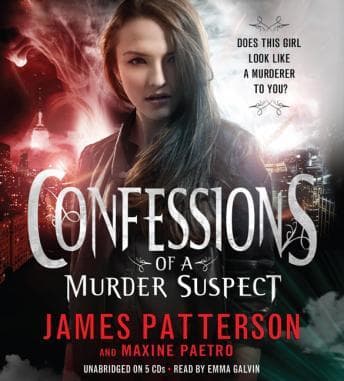

James Patterson is the literary equivalent of hospital cafeteria coffee. Is it gourmet? No. Is it subtle? Absolutely not. But at 4 AM, when I've just spent twelve hours dealing with a multi-car pileup and a patient who thinks his appendix is on the left side, it's exactly what I need to function.
I picked up Confessions of a Murder Suspect because I needed something that wouldn't make my brain hurt. I deal with real trauma all night—broken bones, broken lives. Sometimes, I just want the fictional, glossy version where the rich kids have secrets and the biggest problem is a murder mystery that wraps up in a few hundred pages.
So, let's talk about the Angel family.
The Voice of Teenage Detachment
Emma Galvin narrates this, and honestly? She nailed the specific tone of a teenager who thinks she's smarter than every adult in the room. You know the type. I see them in the ER all the time—arms crossed, rolling their eyes while I'm trying to take their blood pressure.
Tandy Angel, the protagonist, is supposed to be this emotionless, hyper-logical prodigy. Galvin plays her with this flat, almost robotic affect that eventually starts to crack. It works. It really does. Because if she'd played it with too much emotion right out of the gate, I would've turned it off before I hit the freeway on-ramp.
(Fair warning: Galvin can get a little... theatrical. There were moments where I thought, "Okay, dial it back, we aren't performing Shakespeare here, it's a YA thriller." But considering the family is basically a cult of personality, maybe the drama fits.)
When the Mystery is Comfort Food
Here's the thing about Patterson—and especially his collaborations like this one with Maxine Paetro—you know the rhythm. You can feel the beat drop before it happens. I got that same predictable-but-satisfying rhythm from Kill Alex Cross, where Patterson's formula actually works in his favor.
The parents turn up dead. The kids are suspects. The police are incompetent (as a nurse who works with cops, I always laugh at this trope, but whatever). It's formulaic. Super formulaic. But that's why I listened.
I guessed the "twist" probably three chapters in. Seriously. It wasn't hard. But watching Tandy figure it out while I navigated traffic on the I-10 was satisfying in a weird way. It's like watching a suture heal. You know what it's supposed to look like, but it's satisfying to watch the process.
The medical details? Deep sigh. Look, I promised myself I wouldn't yell at the dashboard for this one. But the way they handle the toxicology and the "mystery drugs"? Let's just say my mom, who still wishes I went to med school, would be shaking her head. It's Hollywood medicine. Just go with it. If you start analyzing the pharmacology, you'll ruin the fun.
The Vitals on Production
One thing that actually woke me up—literally—was the production value. They threw in some sound effects and music cues that caught me off guard. Usually, I hate that stuff. I want a book, not a radio play. But here? It added to the creepy, gothic vibe of the Angel family apartment.
There's a specific sound cue during a tense scene that made me check my mirrors because I thought my car was making a noise. So, kudos to the sound engineer for giving me a mini heart attack. Keeps the adrenaline going after the shift ends.
Who's This For?
If you want a brain-off commute listen after a brutal shift, this delivers. Patterson fans who don't mind YA will feel right at home. But if predictable twists and privileged protagonists make you want to throw your phone out the window? Skip it.
Shift Change
Is this messy? Yes. Melodramatic? Absolutely. The characters are so privileged I kind of wanted to shake them. But did it keep me awake and entertained for the 45-minute drive home? Yes. And honestly, that's the only metric that matters when your feet hurt and you smell like antiseptic.
(Carlos asked me what I was listening to, and when I tried to explain the plot, he just handed me a coffee and said, "So, rich people problems?" Exactly, babe. Rich people problems.)