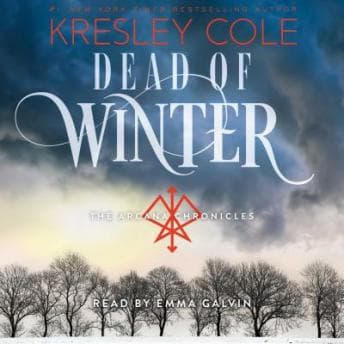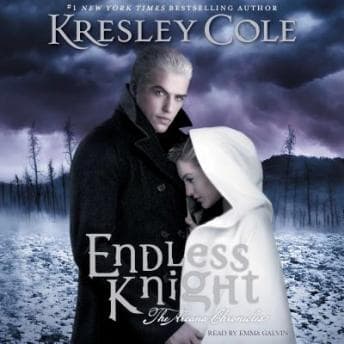

What happens when you give a teenager apocalyptic powers and then ask her to choose between the boy who saw her become a monster and the literal personification of Death who claims they were lovers in a past life?
I was stress-cooking biryani at midnight—the kind of elaborate, unnecessary project that happens when you're avoiding grading papers—when Emma Galvin's narration pulled me so deep into Evie's impossible triangle that I nearly burned the onions. Twice.
The Psychology of Impossible Choices
Here's what Kresley Cole understands that so many YA authors don't: trauma doesn't make you noble. It makes you messy. Evie has just killed someone, fully embraced her powers as the Empress, and the boy she loves witnessed the whole thing. She's exhibiting classic dissociative coping—simultaneously accepting her role as a tarot card come to life while desperately clinging to her pre-apocalypse identity. Fascinating case study in cognitive dissonance, and Cole doesn't let her off easy.
And then there's Death. Not a metaphor. An actual gorgeous teenage boy who goes by the Endless Knight and carries centuries of memories about their shared romantic history. Memories Evie doesn't have. The power imbalance here is genuinely unsettling in ways the narrative acknowledges rather than romanticizes. He knows everything about who she was. She's working with nothing but instinct and attraction she can't explain.
Psychologically, this tracks. Past life romance tropes usually frustrate me because they shortcut actual relationship development—why bother building connection when you can just declare "destiny"? But Cole uses Evie's memory gap as genuine conflict. She's drawn to Death but doesn't trust the pull. Is this love or manipulation? Is she choosing him or being chosen by some cosmic force that erased her agency centuries ago?
My therapist would have thoughts about this character. Several, probably.
Galvin's Vocal Tightrope
Emma Galvin has to do something genuinely difficult here: voice a love triangle where both options are viable. Jack's Cajun drawl carries warmth and earthiness—he's human, grounded, the last connection to who Evie was before. Death gets something colder, more measured, ancient patience wrapped in a teenager's voice. The contrast works because Galvin commits fully to both.
The pantry scene with the cannibals and Tad? I had to stop stirring and just stand there in my kitchen, wooden spoon suspended, because Galvin's emotional delivery made the horror land without melodrama. That's the thing about post-apocalyptic YA—it can veer into grimdark performance art so easily. Galvin keeps it grounded in character rather than spectacle.
She handles the tonal whiplash well too. This book swings from genuinely disturbing violence to teenage romantic angst to dark humor, sometimes within the same chapter. Lesser narrators would make that feel disjointed. Galvin makes it feel like Evie's actual emotional experience—fractured, contradictory, very seventeen.
Galvin does something similar with Tris in Divergent—that same trick of making a teenager's contradictory emotional logic feel completely earned rather than just inconsistent characterization.The Jungian Framework (Yes, Really)
Here's where I put on my academic hat for a moment: the Arcana Chronicles does something interesting with its tarot framework. These aren't just powers assigned randomly. Each card carries archetypal weight—the Empress represents fertility, nature, creation. Death represents transformation, endings, rebirth. Cole is playing with Jungian archetypes in a YA wrapper, and the past-life romance becomes a vehicle for exploring how identity persists (or doesn't) across incarnations.
Does the book fully explore these implications? Not really. It's more interested in the love triangle and the kill-or-be-killed tournament structure. Cole's earlier work shows this same pattern—big mythological architecture used primarily as romantic scaffolding—and I wrote about it at length in my review of Kiss of a Demon King, which handles the power-imbalance-as-courtship dynamic with even less restraint. But the framework is there, and it gives the supernatural elements more psychological weight than your average paranormal romance.
What makes Evie compelling is that she isn't just discovering powers—she's discovering that she's been someone else. Multiple someone elses. The existential horror of that gets somewhat buried under the romance, but it surfaces in moments that genuinely unsettle.
Who Should Listen (And Who Should Run)
Look, the genre tags say "Kids & Family" and "Self-Help" and I'm going to need someone to explain that to me because this book contains cannibalism, violence, sexual content, and a body count. It's dark YA paranormal romance for readers who want their apocalypse with a side of complicated feelings.
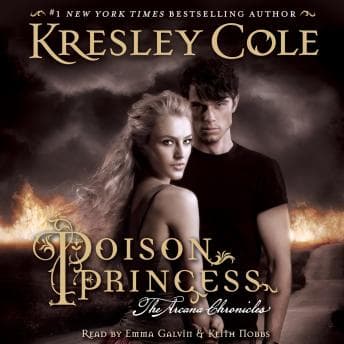
If you need your protagonists to make good decisions, skip this. Evie makes terrible decisions constantly. But they're psychologically consistent terrible decisions, which is honestly more than I can say for a lot of fiction. If you're coming in cold, start with Poison Princess—this is book two, and while Cole does some recap, you'll miss crucial context for why Evie's transformation matters.
Case Study Complete
I kept asking myself: why does the past-life romance trope work here when it usually annoys me? I think it's because Cole treats it as a problem rather than a solution. Evie doesn't trust her attraction to Death. She questions whether her feelings are even hers. That skepticism makes the romance more interesting than "destiny says we belong together."
Eleven hours is a commitment, and the middle section drags slightly when the tournament mechanics take over from character development. But Galvin's performance carries you through the slower stretches, and the emotional payoffs land.
Worth the credit if you're already invested in the series. If you're new to Cole, maybe start with a library copy of book one and see if the voice works for you. The darkness is real, the romance is complicated, and the psychology—while not always foregrounded—holds up better than most.