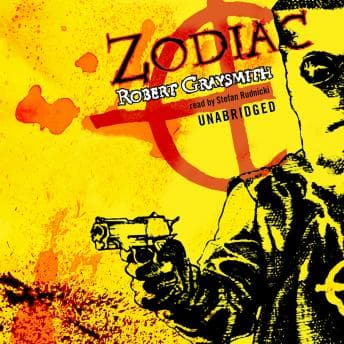

So there I was, 4:17 AM, the unit eerily quiet after a brutal trauma that had us running for three hours straight. I'd finally sat down to chart, earbuds in, and Stefan Rudnicki starts describing how the Zodiac stalked a couple at Lake Berryessa - the hood, the pre-cut lengths of clothesline, the deliberate, methodical way he bound them before attacking. And I just... stopped typing. Stared at my screen. Because the clinical precision of this killer's preparation hit different when you're sitting in a hospital where people come in broken by exactly this kind of violence.
This book got under my skin in a way most true crime doesn't.
When the Case File Becomes the Story
Let me compare this to other true crime I've consumed: most of it - your Ann Rules, your Michelle McNamaras - balances the procedural with the emotional. Graysmith doesn't really do that. This is closer to reading an actual police file that someone organized into chapters. Anthony Horowitz pulls off something structurally similar in Word Is Murder, where the case file quality feels so authentic it blurs the line between fiction and document — though Horowitz, unlike Graysmith, actually knows when to stop. You get dates, times, ballistics reports, handwriting analysis, cipher breakdowns, and suspect after suspect after suspect. The level of detail is almost pathological - which, honestly, tracks, because Graysmith was obsessed with this case for years while working as a cartoonist at the Chronicle.
And here's where I have to be honest: sometimes that obsession makes the book drag. There are stretches in the middle - maybe hours five through seven - where you're drowning in suspect comparisons and timeline cross-references. It feels like sitting in on a detective's briefing that's gone forty minutes too long. I actually bumped my playback to 1.25x during some of those sections and didn't feel like I missed anything crucial.
But when the book is locked in? When Graysmith is walking you through the actual Zodiac letters, the ciphers, the taunting phone calls to police? That's when you understand why this case consumed an entire generation of investigators. The full text of those letters is included, and hearing Rudnicki read them out loud - "This is the Zodiac speaking" - gave me actual chills. There's something about hearing those words spoken aloud in a dark room that reading them on a page can't replicate.
Rudnicki's Voice Does Half the Heavy Lifting
Let me put it this way: if a less skilled narrator had read this book, I might've bailed during those dense investigative stretches. Stefan Rudnicki has this deep, measured delivery that makes even fingerprint analysis sound like something you need to pay attention to. His voice has this edge to it - not dramatic, not performative, just this low-grade menace that sits underneath everything. One listener said it felt like the Zodiac himself was reading the story, and while that's a stretch, I get what they meant. There's an authority there that makes you trust the material even when part of your brain is going "wait, is this verified?"
And that's the other thing - as someone who works in a field where documentation and accuracy literally determine whether someone lives or dies, I noticed the places where Graysmith presents his theories as near-fact. His prime suspect, Arthur Leigh Allen, gets built up through circumstantial evidence that's compelling but not airtight. Graysmith writes like a man who's already decided and is building his case backward. I've seen doctors do the same thing with diagnoses - anchoring bias, we call it. It doesn't make him wrong, necessarily. But it made me yell at my dashboard more than once. "THAT'S CIRCUMSTANTIAL, ROBERT."
The Zodiac Compared to Its Hollywood Version
If you've seen the Fincher film (and you should), this is its source material, but they're very different experiences. The movie is a thriller that uses the case. The book IS the case. Every rabbit hole, every dead end, every 2 AM phone call Graysmith received from sources - it's all here. The movie streamlined brilliantly. The book refuses to streamline anything, and that's both its greatest strength and its most frustrating quality.
At ten hours and forty-one minutes, this is a commitment. But it's the kind of commitment that rewards you if you're the type who reads Wikipedia rabbit holes about unsolved cases at 3 AM. (I am that type. Night shift does things to you.)
Who Needs This in Their Ears
True crime obsessives who want the deep cut, not the highlight reel. If you liked I'll Be Gone in the Dark but wished McNamara had included more forensic minutiae, this is your book. If you need tight pacing and emotional narrative arcs - skip it. This is a case file with a pulse, not a thriller with a bow on top.
Carlos asked me why I was double-checking the locks on the car doors when I pulled into the driveway. I told him it was nothing. It was not nothing.
Night Shift Rx
Night shift approved, but with a caveat: keep it for charting sessions or long drives, not for the quiet dark moments when you're already a little spooked. Rudnicki's voice in an empty hallway at 3 AM is an experience I didn't need but won't forget. Worth a credit if you're serious about true crime. Just don't expect it to hold your hand through the slow parts.