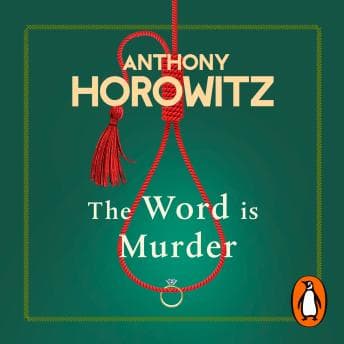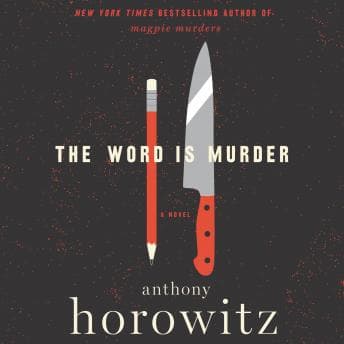

"She walked into a funeral parlor at eleven in the morning to plan her own service. By five o'clock, she was dead."
That opening premise hit me somewhere around hour two of a particularly brutal Saturday night shift. The unit had gone quiet - knock on wood - and I was deep in charting when I realized I'd been staring at my screen for a solid minute just thinking about Diana Cowper walking into that funeral home. Who does that? Who plans their own funeral and then gets murdered the same day? The setup is so perfectly wrong that my brain couldn't let it go.
The Part Where Anthony Horowitz Writes Himself Into His Own Murder Mystery (And It Actually Works)
Look, the meta thing could've gone sideways fast. An author inserting a fictionalized version of himself as the Watson figure in his own crime novel? That's either brilliant or insufferable, and I've read enough thrillers to know which way it usually goes. But Horowitz pulls it off because he's willing to make himself look bad. His fictional self is vain, a little oblivious, and genuinely annoyed by Hawthorne - the disgraced detective who basically conscripts him into the investigation. The dynamic between them is what kept me pressing play during my drive home at 7 AM when I should've been focused on not falling asleep at the wheel.
Hawthorne is the kind of character I recognize from real life - those brilliant, difficult people who are absolutely right about everything and absolutely impossible to be around. We have surgeons like that. You hate them and you also want them in the room when things go sideways. Horowitz captures that tension perfectly: you're drawn to Hawthorne's mind while wanting to shake him for being such an insufferable human being.
Now - fair warning. The book opens with a third-person POV section before switching to Horowitz's first-person narration, and I'll be honest, it threw me. I actually checked my phone at a red light (don't tell Carlos) to make sure I hadn't accidentally started the wrong audiobook. It's intentional, it serves the story, but if you're the kind of listener who needs to settle in right away, that first fifteen minutes might test your patience.
Rory Kinnear Made Me Forget I Was Listening to an Audiobook
This is not hyperbole. Rory Kinnear's narration is the kind where you stop hearing a narrator and start hearing people. His Hawthorne is gruff, pushy, clipped - like a man who's already solved the case and resents having to explain it to everyone else. His Horowitz is slightly indignant, a bit flustered, very British-author-who-didn't-sign-up-for-this. And then there's Diana Cowper - prim, precise, the kind of woman who would absolutely plan her own funeral down to the flower arrangements.
The medical details? Minimal in this one, so I didn't get to yell at my dashboard. But the procedural stuff - the police work, the investigation structure - felt grounded. Horowitz clearly did his homework on how cases actually unfold, which I appreciate because nothing pulls me out of a story faster than a detective doing something no actual detective would ever do. I Am Pilgrim is another one that nails the procedural authenticity — the tradecraft in that book had me genuinely impressed rather than screaming at my windshield.
Kinnear won an Earphones Award for this performance, and yeah. Earned it. There's a reviewer who said listening to him is like watching a movie in your "intercranial theater" and that's honestly the best description I can give. At nine hours, the pacing is tight - no bloated middle section, no filler chapters where the protagonist drinks coffee and contemplates life.
Who's Going to Love This (And Who Should Scroll Past)
If you like your mysteries cerebral - the kind where you're piecing together clues alongside the detective rather than just waiting for the next body to drop - this is your book. I recently listened to Undone, which tries for that same cerebral energy — it doesn't quite reach the same heights, but it scratches the itch. The Sherlock Holmes parallels are obvious and intentional, but it doesn't feel like a gimmick. It feels like a love letter to the genre written by someone who genuinely understands why we read these stories.
If you hate meta-fiction, if the idea of an author writing himself into his own novel makes you roll your eyes, I get it. Some listeners found it distracting. I didn't, but I also spend twelve hours a night in a trauma center where the line between real and surreal gets pretty thin, so maybe my tolerance for weird narrative structures is higher than average.
Perfect for that post-shift decompression. Smart enough to keep your brain engaged, propulsive enough to keep you awake on the drive home. Carlos asked why I was talking to myself in the driveway. I was explaining the plot twist to no one. Blamed the lack of sleep.
Night Shift Stamp of Approval
This is the kind of mystery that respects your intelligence without making you work so hard you lose the thread. Kinnear's narration elevates it from good to genuinely great on audio. I'm already looking at the next book in the series, which is either a recommendation or a warning depending on how you feel about your TBR pile.
My mom would love this. She still thinks I should've been a doctor, but she also burns through British mysteries like I burn through coffee on a Friday night shift. Adding it to her list.