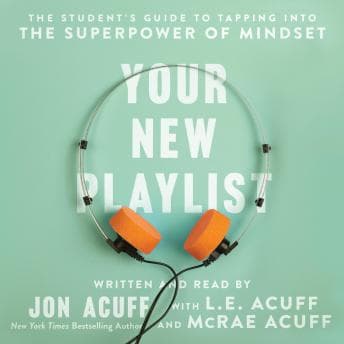

This is the business book I wish existed when I was seventeen and convinced that my brain was broken.
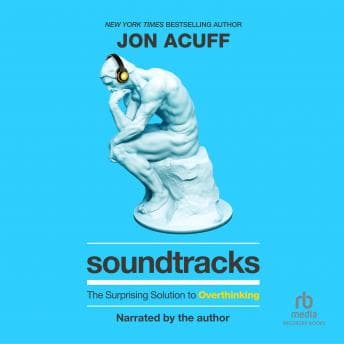
I grabbed this during a flight delay at O'Hare - two and a half hours seemed manageable, and honestly, I was curious. Jon Acuff's adult book Soundtracks is solid (one of the few business-adjacent books I actually finished), so when I saw he'd tagged his daughters to create a teen version, my consultant brain wanted to see how they'd adapt the framework.
The Family Trio Actually Works
Here's what surprised me: the three-narrator setup isn't gimmicky. Jon handles the framework and research, but L.E. and McRae jump in with real teenage perspective that keeps the whole thing grounded. When Jon starts explaining a concept, his daughters will essentially say "yeah, but here's how that actually feels when you're sixteen and your friend group just imploded." It's like watching a McKinsey presentation get interrupted by actual end users. Which, if you've ever sat through client feedback sessions, you know is where the real insights live.
The audio production is clean - no awkward handoffs between narrators, no weird volume jumps. At 2h 35m, Acuff respects your time in a way most self-help authors don't. I bumped it to 1.5x (my usual 2.0x felt too aggressive for a family conversation vibe) and finished before my flight even boarded.
What My Parents Knew Without a TED Talk
The core concept - that repetitive thoughts are "soundtracks" you can choose to keep or replace - is simple. Maybe too simple for adults who've already done the therapy work. But for teenagers? This is foundational.
My parents ran that dry cleaning business in Koreatown for thirty years. They never had language for "mindset" or "limiting beliefs." They just worked. But I watched my mom talk herself through hard days, literally muttering encouragement in Korean while pressing shirts at 6 AM. She was creating new soundtracks before Acuff made it a metaphor.
The difference is my parents figured this out through survival. This book hands teenagers a framework before the stakes get high. That's genuinely valuable.
The Compound Interest Angle
Acuff makes an argument I actually use with my startup clients: mindset work compounds. A thought pattern you fix at 15 doesn't just help you at 15 - it changes every decision downstream. He's not wrong. I've watched founders in their forties still fighting mental battles they should've addressed decades ago. The cost of delayed mindset work is real.
The actionable parts are legitimately actionable. Not "journal about your feelings" vague, but specific exercises for identifying broken soundtracks and replacing them. The bonus Q&A at the end is surprisingly candid - the daughters push back on their dad, which gives the whole thing credibility.
Who Should Hit Play (And Who Should Skip)
If you're an adult who's read any amount of cognitive behavioral therapy-adjacent material, this will feel basic. That's fine. It's not for you.
But if you've got teenagers in your life - kids, nieces, nephews, mentees - this is worth the listen. Actually, listen to it WITH them. The family dynamic models something important: talking about mental patterns isn't weird or weak, it's practical maintenance.
Parents who've read Soundtracks will find this a useful bridge for family conversations. Youth pastors, coaches, teachers - anyone working with teenagers who overthink themselves into paralysis - this gives you shared vocabulary.
For the teens themselves: this is one of the rare self-help books that doesn't talk down to you. L.E. and McRae make sure of that.
The Consultant's Bottom Line
Jenny would tell me I'm being soft on this one. She might be right. But here's the thing: I evaluate business books against my parents' real-world hustle. This one passes. Not because it's revolutionary - the concepts aren't new - but because it delivers them efficiently, to the right audience, at the right time. I've seen that same precision in Men Are From Mars, Women Are From Venus - another book that takes familiar psychology and packages it for people who actually need it.
Two and a half hours to potentially change how a teenager thinks about their own brain? That's an ROI I can get behind. And for once, there's no padding to skip.