
When Your Brain Won't Shut Up (And Neither Will the Narrator)
I was standing in my kitchen at 10 PM, staring at a jar of turmeric that expired in 2019, debating whether keeping it meant I was a hoarder or just optimistic. My brain was doing that thing it does—looping. *You're disorganized. You're wasting potential. You should be writing that paper on narrative identity instead of reorganizing spices.*
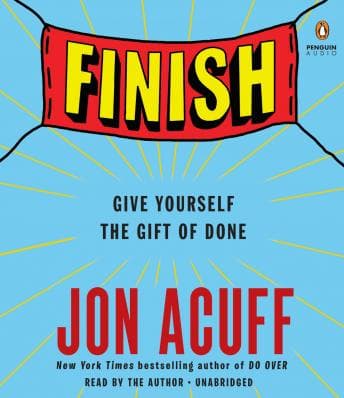
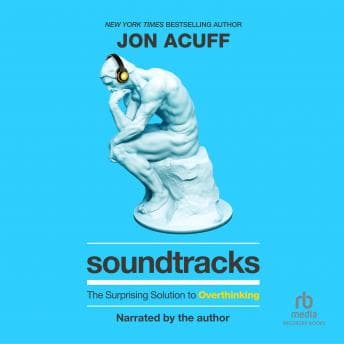
Classic cognitive distortion. My therapist calls it "catastrophizing." Jon Acuff calls it a "broken soundtrack."
And honestly? I think I like his term better.
I put on *Soundtracks* hoping for some background noise while I aggressively labeled jars, but I ended up sitting on the floor with a glass of Shiraz, actually listening. Because here's the thing about self-help books: 90% of them are fluff wrapped in toxic positivity. But this one? This one actually understands how the neurotic mind works.
The "Broken Soundtrack" Metaphor
Psychologically speaking, Acuff is repackaging Cognitive Behavioral Therapy principles—specifically the idea of challenging automatic negative thoughts. But instead of dry clinical terms that remind me of grad school, he uses music metaphors.
He argues that overthinking isn't something you stop; it's something you *replace*. You can't just turn off the brain (believe me, I've tried; meditation just makes me think about my grocery list in a calmer font). You have to "DJ" the thoughts.
It sounds simple. Almost too simple. My academic brain wanted to reject it as pop-psychology nonsense. But then he started talking about how we listen to "old soundtracks"—narratives we picked up in middle school or from a bad boss—and play them on repeat.
And I felt seen. Attacked, but seen.
The Voice of a Fellow Overthinker
Usually, I have a strict rule: Authors should not narrate their own audiobooks unless they are Neil Gaiman.
Most writers have great words and terrible delivery. But Acuff is the exception. He's a public speaker by trade, and it shows. He's not reading to you; he's ranting *with* you.
The vibe is very "friend who had too much coffee explaining a breakthrough he had in the shower." He's funny—legitimately funny, not just "business book chuckle" funny. When he calls himself an "Olympic-level overthinker," you believe him. There's a warmth there.
Plus—and this is huge for the audio format—he includes bonus stories that aren't in the print version. It feels like ad-libbing, but the polished kind. It keeps the energy up.
(My mother would hate how fast he talks sometimes, but for me? It matched the speed of my own anxiety, which was weirdly soothing.)
Is It Actually Helpful Though?
Look, I analyze human behavior for a living. I know *why* we do what we do. Knowing the theory doesn't stop me from worrying if I offended the barista by not smiling enough.
What Acuff offers isn't a cure, but a toolkit.
The section on "borrowing soundtracks" from other people was fascinating. It aligns with social learning theory—we mimic the internal monologues of successful people until they become our own. He gives practical steps:
- Retire the broken tracks.
- Replace them with new ones.
- Repeat them until they stick.
It's basically affirmations for people who hate affirmations.
The Verdict
At 5 hours and 15 minutes, this is a sprint, not a marathon. Unlike the vague platitudes in Secret, this one actually gives you something concrete to work with. I finished it in two evenings of kitchen prep.
Who should listen: Chronic overthinkers who've bounced off traditional self-help, anyone who wants CBT principles without the clinical dryness, and people who need their advice delivered with actual humor. Skip it if: You want deep neuroscience or can't handle a fast-talking narrator.
I actually threw out the expired turmeric. Acuff didn't tell me to do that specifically, but he did tell me to stop listening to the soundtrack that says *"You are wasteful if you throw things away."*
So, progress.
Now, if I could just get him to narrate my inner monologue during faculty meetings, I'd be set.