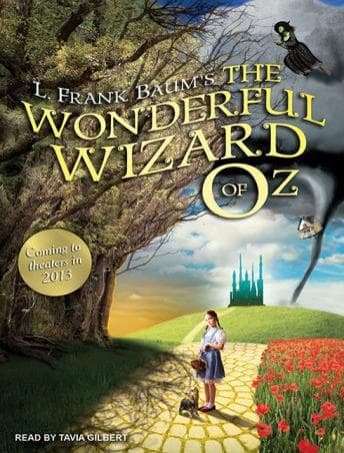

I've spent twenty years teaching teenagers that there's more to American literature than Fitzgerald and Hemingway. And every year, at least one kid asks why we don't read The Wonderful Wizard of Oz. My answer has always been the same: it's a children's book, we have limited time, read it on your own. But here's the thing—I'd never actually read it myself. Not really. I knew the movie. Everyone knows the movie. But Baum's original? Somehow it slipped through the cracks of my supposedly comprehensive literary education.
So when I needed something light for my lakefront walks last week—something that wasn't another faculty email about standardized testing—I figured it was time to finally fill that gap. Four hours later, I'm genuinely wondering why this isn't taught alongside Twain and Alcott.
What Baum Actually Wrote (Versus What MGM Sold Us)
Let me be clear: this is not the movie. The ruby slippers? Silver in the book. The "no place like home" sentimentality? Way more complicated here. Baum was a journalist and a social commentator, and the Oz he created has teeth. The Tin Woodman's backstory alone—a man who slowly replaced every part of himself with tin after a cursed axe kept cutting off his limbs—is genuinely unsettling when you think about it. (Don't tell your kids I said that. Or do. They can handle more than we give them credit for.)
What struck me most is how episodic the structure is. Dorothy and her companions move from one bizarre encounter to the next—the fighting trees, the china country, the Hammer-Heads—and each feels like its own self-contained fable. It's not the tight three-act structure we expect from modern storytelling. It's looser, stranger, more like actual fairy tales from the oral tradition. The kind of thing Bettelheim would have had a field day analyzing.
And the Wizard himself? The great and powerful Oz is exposed as a fraud within the first few chapters of meeting him. Baum doesn't save that reveal for a climactic moment. He just... tells you. The real journey is about the characters discovering what they already had. Which, okay, yes, sounds like the movie. But Baum handles it with less schmaltz and more matter-of-fact practicality. The Scarecrow gets a brain made of bran and pins. The Tin Woodman gets a silk heart stuffed with sawdust. It's absurd and honest about its absurdity.
Tavia Gilbert Gets It
Now, about the narration. Tavia Gilbert is an Audie Award winner, and you can hear why within the first five minutes. She doesn't do that thing some narrators do with children's classics—the overly precious, talking-down-to-the-audience voice that makes adults want to throw their earbuds into traffic. Instead, she treats the material with genuine respect while keeping it playful.
Her Dorothy is earnest without being saccharine. Her Cowardly Lion has this trembling bravado that's actually kind of heartbreaking. And the Wizard—she nails that moment when his booming voice gives way to the small, embarrassed man behind the curtain. The transition is subtle but devastating.
What I appreciated most was her pacing. At just under four hours, this is a quick listen, but Gilbert doesn't rush it. She lets Baum's stranger moments breathe. The silence after the Wicked Witch melts. The quiet dignity of the Tin Woodman crying over a beetle he accidentally stepped on. These beats need room, and she gives it to them.
Who This Is (and Isn't) For
Here's my honest take: if you're expecting the Judy Garland experience, you might be disappointed. This is weirder, darker in places, and more episodic than the streamlined Hollywood version. Skip it if you want pure nostalgia. But if you want to understand why this book launched an entire genre of American fantasy—if you want to hear what Baum was actually saying about brains and hearts and courage—this is the version to get.
It's perfect for commutes. Perfect for walking. Perfect for listening with kids who are old enough to handle a house crushing a witch. (They are. Trust me. I've seen what they watch on YouTube.)
Class Dismissed
My students still won't read this for class. But I'm adding it to my recommended list. And next time one of them asks why we don't study Oz, I'll have a better answer: because you should experience it yourself first. Same goes for Battle of the Labyrinth and Eldest—modern fantasy that works best when you discover it on your own terms, not because some teacher assigned it. Preferably with Tavia Gilbert in your ears.