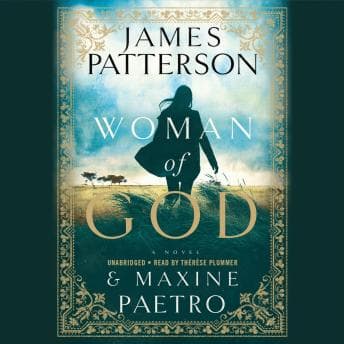

James Patterson wrote a book about a woman becoming Pope, and somehow that's not even the wildest part.
I was elbow-deep in scrambling eggs for the kids when the Sudan chapters hit, and I had to put down the spatula. Not because I was squeamish - fifteen years in a Level 1 trauma center cured me of that - but because the descriptions of Brigid Fitzgerald working as a doctor in a war zone actually got some things right. The triage decisions, the impossible math of too many wounded and not enough supplies. As someone who's actually worked a code, I can tell you that particular flavor of helpless determination is real. Patterson and Paetro nailed that feeling, even if they rushed through it faster than a patient through the ER on a Friday night.
The Brigid Problem
Here's where I need to be honest. Brigid Fitzgerald is... a lot. She survives a warzone in Sudan. She becomes a doctor. She goes through devastating personal loss - multiple times. She challenges the entire Catholic Church. She's basically positioned as a saint-in-the-making from page one, and the story never really lets her be messy enough to feel human. I kept waiting for the moment where she'd doubt herself in a way that felt ugly and real, not cinematically beautiful. That moment of deep anguish everyone talks about? Plummer sells it hard in the narration, but the writing around it feels like it's already auditioning for the movie adaptation.
My mom would love this. She still thinks I should've been a doctor, and Brigid is basically her dream daughter - a Filipina nurse's nightmare, honestly. A doctor AND she's basically becoming Pope? Mom would never let me hear the end of it.
The melodrama is real. Brigid doesn't just face one trial - she faces ALL the trials. Drug-addled parents, Sudan, Boston law firms, the Holy Land, romance, loss, more loss, theological warfare, assassination attempts. In nine hours and fifteen minutes. Patterson's signature rapid-fire chapter style means you're whipping through locations and life events so fast you barely process one tragedy before the next one lands. It's less a novel and more a highlights reel of someone's entire extraordinary life. Patterson actually paces himself better when he's working within a tighter thriller framework - I gave Kill Alex Cross four stars partly because the breakneck speed works when you're chasing a single plot instead of an entire lifetime.
Thérèse Plummer Doing the Heavy Lifting
Plummer is the reason this audiobook works as well as it does. She's got eighteen AudioFile Earphones Awards for a reason. Her emotional delivery during Brigid's worst moments - the gut-punch losses, the crises of faith - adds weight that the prose sometimes doesn't earn on its own. She differentiates characters well enough that you're never confused about who's speaking, which matters when the book globe-trots from Boston to Sudan to Rome without much warning.
But here's the thing - even a great narrator can't fix pacing issues that are baked into the writing. Patterson's chapters are so short they feel like text messages. Plummer barely gets to settle into a scene's emotional register before she's yanked into the next continent, the next crisis, the next decade of Brigid's life. It's like watching someone speed-run a biography.
This Is Not How Hospitals Work. Kind Of.
The medical scenes in Sudan are the strongest part of the book, and I'll give credit where it's due - the field medicine feels grounded enough that I only yelled at my dashboard twice. That's practically a record for a Patterson medical scenario. The Boston hospital scenes later are more generic, but they don't commit any sins egregious enough to pull me out of the story.
The Catholic Church politics, though? I'm Filipina-American and was raised Catholic. I know this world. The book treats the idea of a female Pope as both revolutionary (which it would be) and somehow... inevitable? Like the Church just needs the right woman to show up and suddenly two thousand years of institutional tradition will bend. It's aspirational fiction dressed up as a thriller, and whether that works for you depends entirely on how much you're willing to suspend your disbelief. Quiet Retreat does something similar with faith and tension, but it earns its atmosphere by staying in one place long enough to let the dread actually settle in your bones.
Who's Going to Love This, Who Should Walk Away
If you want a fast, emotionally charged listen that covers big themes - faith, feminism, institutional power - without getting too bogged down in any of them, this will scratch that itch. It's perfect for post-shift decompression when you want something that moves fast and feels important without requiring you to hold seventeen plot threads in your exhausted brain.
If you need your protagonists to have actual flaws, or if you want a thriller with genuine unpredictability, you might find yourself frustrated. And if you're expecting classic Patterson mystery plotting, this is a completely different animal - closer to Christian fiction with thriller seasoning than a whodunit.
Carlos asked why I was crying in the car. I blamed allergies. But honestly? It was only half the book's doing. Plummer's voice during the loss scenes just... gets in there. Even when the writing is moving too fast for its own good.
Night Shift Prescription
Three stars. Plummer elevates the material. The premise is bold. But Brigid needed to be a person, not a symbol, and nine hours wasn't enough runway to make her both.