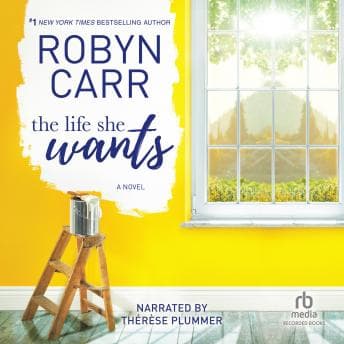

I was three hours into this book, elbow-deep in a rebrand project for a boutique winery, when I had to pause because I was crying too hard to see my screen. Frida looked at me like I'd lost my mind. Diego didn't even bother looking up. But here's the thing - I wasn't even at a sad part. It was just this moment where Emma realizes she has literally nothing left, and Thérèse Plummer delivered that line with such quiet devastation that my whole chest caved in.
Abuela would have eaten this book UP. The whole rags-to-riches-to-rags thing? The complicated female friendships? The way shame and pride get all tangled together? That's telenovela energy, just set in Sonoma instead of Mexico City. Nine Perfect Strangers has that same vibe—messy people with secrets, all trapped together trying to fix themselves.
When Your Life Falls Apart in Public
So Emma's husband steals everyone's money, then kills himself, and suddenly she's the villain even though she didn't do anything. The court of public opinion doesn't care about nuance. Robyn Carr gets this SO right - the way people look at you differently, the way your old friends disappear, the way you have to rebuild yourself from scratch when everyone's already decided who you are.
I kept pausing to text my best friend Maria things like "OKAY BUT THIS IS TOO REAL" because we've both been through versions of this. Not the Ponzi scheme thing, obviously. But that feeling of having to start over when you thought you had everything figured out? Yeah. That hit different.
The Riley and Emma dynamic is where this book really shines. Two women who loved each other like sisters, who hurt each other deeply, who have to figure out if forgiveness is even possible. It's messy and uncomfortable and neither of them handles it perfectly. Which is exactly how it would go in real life.
Thérèse Plummer Is a National Treasure
Okay, I need to talk about this narration because WOW. Plummer has this way of making each character sound distinct without ever going into cartoon territory. Emma sounds tired and proud and fragile all at once. Riley sounds defensive but also hopeful. The supporting cast - the cleaning crew ladies, the family members, the small-town characters - they all feel like real people you might actually know.
There's this rhythm she captures that matches the emotional beats perfectly. When things are tense, her pacing gets tighter. When there's a moment of grace or connection, she lets it breathe. I listened at my usual 1.0x and honestly wouldn't change a thing. This is a book meant to be savored.
The emotional delivery is chef's kiss. She won an ALA Listen List Award in 2018 and honestly they should just keep giving her awards forever. When Emma finally breaks down about what happened with her husband - not the money, but the betrayal of trust, the realization that she never really knew him - Plummer's voice cracks just slightly and I was DONE. Mascara everywhere. Frida finally looked concerned.
The Slow Burn That Paid Off
This is not a fast-paced book. If you're looking for plot twists and action, you're gonna be disappointed. But if you want to spend eleven hours with characters who feel real, watching them make mistakes and try to fix them and sometimes fail and sometimes succeed? This is your book.
The romance elements are there but they're not the main event. This is really about Emma figuring out who she is when everything she thought defined her is gone. It's about Riley learning that holding onto anger doesn't protect you from anything. It's about two women in their thirties realizing that the friendship they had as teenagers might be worth fighting for.
I ugly-cried at least four times. Added it to my spreadsheet. (Yes, I still keep the spreadsheet. No, I will not apologize for this.)
The vibes are immaculate for a rainy Sunday. Or a slow workday. Or honestly any time you need to feel your feelings and remember that starting over is possible, even when it seems impossible.
Who This Is For (And Who Should Skip)
If you love character-driven women's fiction, if you've ever had a friendship fall apart and wondered if it could be fixed, if you appreciate a narrator who can make you feel everything - this is for you. It's warm and hopeful without being saccharine. The characters earn their happy endings. Skip it if you need constant action or if you're not in a headspace for heavy emotional themes. There's suicide in the backstory (not graphic, but present) and a lot of processing of grief and shame.
Abuela Would Have Loved This One
My heart. MY HEART. She would have made me pause it every twenty minutes so she could comment on the characters' choices. I miss that.