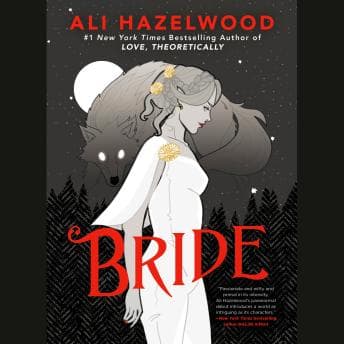
Is there actually a limit to how many times we can recycle the whole "Vampires hate Werewolves" trope before we all just collectively groan and move on?
(Okay, don't answer that. I know the answer is no. I checked the circulation numbers at my library today. You guys are obsessed.)
I went into Bride expecting to hate-listen. Honestly. I'm a horror guy. I want dread. I want The Haunting of Hill House. I want the monster to actually be, you know, a monster. That same craving for creature-feature authenticity is why I loved Shape of Water—it treats its monster with actual reverence. But Ali Hazelwood—who usually writes those STEM rom-coms with the cartoon covers—decided to pivot to paranormal. And since my brain needed a break from a heavy splatterpunk binge, I gave it a shot.
Spoiler: I didn't hate it. In fact, I might have accidentally enjoyed it. (Don't tell the horror subreddit.)
The Voice That Saved Me From Eye-Rolling
Here's the thing—paranormal romance lives or dies on the narrator's ability to not make the word "Alpha" sound cringe. It's a fine line. One wrong inflection and you're in bad fanfic territory.
Thérèse Plummer is the MVP here. Seriously. She brought that same sharp energy to Promise, where her delivery elevated what could've been a standard romance into something with real bite. She voices Misery (our vampire bride) with this dry, exhausted sarcasm that I deeply related to. Misery isn't a damsel; she's just over it. Plummer captures that specific vibe of "I'm surrounded by idiots and political maneuvering and I just want a nap."
If this had been narrated by someone who takes themselves too seriously—like those breathy gothic narrators who whisper every line—it would've been unbearable. But Plummer plays it smart. She leans into the humor. When the dialogue gets snappy, she's right there. She made Misery feel like a real person who just happens to have fangs, rather than a caricature.
Then there's Will Damron. He plays the Alpha werewolf, Lowe. His voice? Great. Deep, gravelly, exactly what you want for a guy who can turn into a wolf. The problem? He's barely in it.
(I mean, literally. I'd settle in for a chapter, hear his voice, and then—boom—back to Plummer. It felt like a cameo. Why hire a second narrator if you're gonna give him five minutes of airtime?)
When The Dread Is Actually Just Tension
Let's compare this to actual horror for a second. In a real creature feature, the werewolf is a source of terror. Here? He's just... emotionally unavailable and really good at tracking scents.
But here's where Hazelwood surprised me. She respects the lore enough to play with it. The world-building isn't Tolkien, but it's fun. It's basically The Love Hypothesis but with blood-drinking and knotting. (Yes, the knotting is implied. If you know, you know. If you don't, keep your innocence.)
The pacing is way snappier than the slog of traditional gothic romance. There's no three-page description of a velvet curtain here. It moves. It's banter-heavy. It's the kind of book you listen to while aggressively cleaning your apartment because the energy is high.
Who Gets Bitten (And Who Should Run)
If you're burnt out on dark, depressing narratives and just want something that feels like a warm hug (from a cold vampire), this works. It's a palate cleanser. It's monsters, but make it cozy. Skip it if you're looking for actual horror—my cat Shirley sat on my lap the whole time and didn't even twitch an ear, and she usually senses evil.
The Horror Guy's Reluctant Blessing
I listened to most of this during my commute, not in the dark. It feels like a daylight book. It's funny, the tension pays off, and Thérèse Plummer is frankly doing the Lord's work carrying the narrative.
(I'm still taking points off for the short male chapters though. Give the wolf the mic, Ali.)