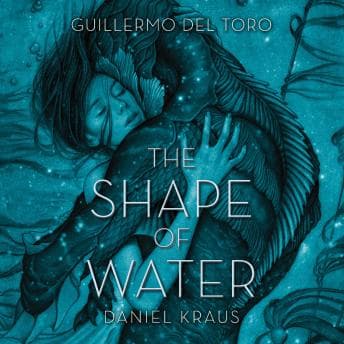

Okay, I need to rant for a second about how unfair it is that this book made me cry at my desk while I was trying to finish a logo redesign. My cats were staring at me like I'd lost my mind, and honestly? Maybe I had. Because here I am, sobbing over a love story between a mute janitor and a fish man, and I have zero regrets.
Look, I saw the movie when it came out. Loved it. But something about experiencing this story through Jenna Lamia's voice hit different. Like, way different. I wasn't just watching Elisa fall in love—I was inside her loneliness, her ache, her desperate hope that someone would finally see her.
The Voice That Wrecked Me
Jenna Lamia. That's it. That's the review. (I'm kidding, I have more to say, but seriously—this woman's voice is velvet and honey and heartbreak all wrapped together.)
The thing about Elisa is she doesn't speak. She signs. And in a movie, you can see that. But in an audiobook? Lamia has to make you feel Elisa's silence through her narration, and she does it with this vulnerable, almost fragile tone that had me holding my breath. There's this quality to how she voices Elisa—like she's always on the edge of something, always reaching for connection. It's not sad exactly. It's tender. Raw.
And then she switches to the other characters—Giles with his aging actor melancholy, Zelda with her sharp warmth, even the villain Strickland with his cold menace—and each one is so distinct. I never once got confused about who was speaking. That sounds basic, but you'd be surprised how many narrators fumble ensemble casts.
Why This Hit Me Like It Did
Here's the thing about being raised by my abuela: she taught me that love stories don't have to make sense to be real. She'd watch her telenovelas with impossible plots and forbidden romances, and she'd cry and clutch her heart, and I'd roll my eyes as a teenager. But now? Now I get it.
This book felt like a fairy tale my abuela would have loved. The lonely woman who finds her person in the most impossible place. The creature who sees her—really sees her—when the whole world has looked past her. It's Beauty and the Beast but wetter and sadder and more beautiful. Abuela would have loved this one. She would have cried harder than me, probably.
The writing itself is lush. Like, almost too lush? Del Toro and Kraus don't rush anything. They let you sit in the descriptions, the Cold War paranoia, the grime of Occam Aerospace, the quiet moments in Elisa's apartment above the movie theater. If you're someone who needs plot to move fast, you might get antsy. But I listen at 1.0x because I'm savoring, not speedrunning, and this book rewards that pace.
The Gut-Punch Moments
I ugly-cried at least three times. The spreadsheet doesn't lie. (Yes, I track my book cries. We've established I'm unhinged.)
Without spoiling anything—there's a moment toward the end involving water and hands and choice, and I had to pause my work because I literally could not see my screen through the tears. Lamia's delivery in that section is devastating. She doesn't oversell it. She just... lets the words land. And they land hard. That same kind of earned emotional payoff wrecked me in There There: A novel, where the narrator lets devastating moments breathe instead of forcing them.
The romance itself is slow. Slow burn doesn't even cover it—this is a simmer, a gentle heat that builds until suddenly you realize you're fully invested in whether these two impossible beings can find a way to be together. The chemistry is chef's kiss. Even when one of them is, you know, an amphibian creature from the Amazon.
Who Should Listen (And Who Should Skip)
This is a rainy Sunday book. It's for when you want to feel something deep and strange and beautiful. If you loved the movie, the audiobook gives you more—more backstory, more interiority, more time with these characters.
But fair warning: there's some violence in here. Strickland is genuinely awful, and some scenes are hard to listen to. There's also some spicy content (my abuela would have gasped and then kept listening, let's be honest). Skip this one if you need action and fast pacing—the slow, dreamy rhythm will frustrate you.
But if you want a love story that feels like a poem, one that makes you believe in connection across every possible barrier? My heart. MY HEART.
Jenna Lamia turned this into something I'll think about for a long time. The vibes are immaculate. The emotion is earned. And I'm adding another tally to my crying spreadsheet.