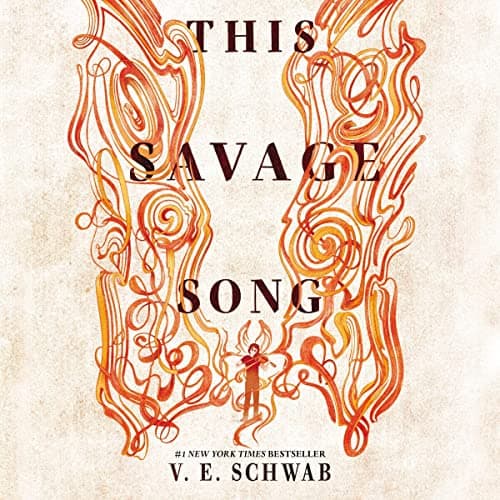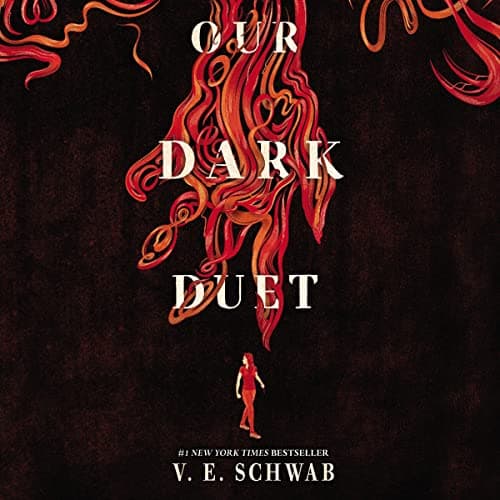

This is a sequel that earns its darkness. Our Dark Duet picks up six months after This Savage Song left off, and V. E. Schwab wastes no time establishing that both Kate Harker and August Flynn have been fundamentally changed by what came before. That shift in tone—from characters struggling with identity to characters who've made brutal choices about who they are—gives the entire book a weight that surprised me.
What struck me first is how Schwab handles the dual-perspective structure. Kate is out in Prosperity, hunting monsters with a cold efficiency that feels earned rather than edgy. August is back in Verity, leading the Sunai with a detachment that's genuinely unsettling when you remember the boy who wanted so badly to be human. The tension between who these characters were and who they've become is the engine driving everything forward, and it works because Schwab never lets either of them off the hook. There's no easy redemption arc here, no convenient moment where they snap back to their softer selves. The story demands they reckon with what they've become, and it's messy.
The new monster—the one that feeds on chaos and draws out inner demons—is a fantastic addition to this world. It's the kind of antagonist that forces the story inward, turning the external war between humans and monsters into something deeply personal. When Kate gets pulled back to Verity, the collision of her personal demons with literal ones creates some genuinely harrowing sequences. Schwab's worldbuilding in this duology has always had this musical, almost lyrical quality to it (the Sunai are born from violence and sustained by music, after all), and the prose in those darker moments hits with real force.
Now, about Therese Plummer's narration: she's excellent here. Her character differentiation is sharp—Kate sounds hardened and clipped, August carries this quiet heaviness, and the supporting cast each have distinct voices that never blur together. What impressed me most was her emotional delivery during the story's pivot points. There are moments where August's internal conflict could easily read as mopey on the page, but Plummer threads the needle between vulnerability and resolve in a way that kept me invested. Her pacing matches the book's rhythm well too—measured during the quieter character moments, urgent when the action kicks up.
I listened to this during a stretch of late-night runs, and the atmosphere was almost too effective in that context. The horror elements are real—this isn't sanitized YA. There's genuine violence, psychological tension, and a few sequences that made me glance over my shoulder on a dark trail. The content warnings (violence, abuse, some language) are worth noting if you're picking this up expecting something lighter.
Where the book stumbles slightly is in its middle section. The parallel storylines—Kate in Prosperity, August in Verity—take a while to converge, and there are stretches where you're waiting for the narrative threads to collide rather than being pulled forward by them individually. Not a dealbreaker, but at just over ten and a half hours, there are moments where the pacing could be tighter. Once the threads do come together, though, the final act delivers with force.
The ending is going to divide people. Schwab makes some bold choices that feel true to the story she's been telling but won't satisfy everyone looking for a neat resolution. Without spoiling anything, I'll say this: the conclusion is earned. It fits the world. It honors the characters. And it left me sitting in silence for a good minute after the final line, which is about the highest compliment I can give a story's ending.
As a conclusion to the Monsters of Verity duology, Our Dark Duet does what second books rarely manage—it raises the stakes without losing the emotional core that made the first book work. The question of what makes someone a monster versus what makes them human isn't new territory for fantasy, but Schwab approaches it with enough specificity and emotional honesty that it feels fresh. Renegades wrestles with that same question—heroes and monsters separated by perspective more than action—though it lands somewhere considerably less bleak. The musicality of the Sunai, the brutal logic of the Corsai and Malchai, the fractured politics of Verity—it all coheres into something that feels lived-in and consequential.
Who Should Listen (And Who Should Skip)
If you finished This Savage Song and need to know what happens to Kate and August, Plummer's narration makes this the definitive way to experience it. Listeners who want dark YA fantasy that doesn't flinch—real violence, real psychological weight, an ending that prioritizes honesty over comfort—this is your book. Skip it if you haven't read book one (this is not a standalone), or if you need your YA wrapped up with a bow. This one leaves marks.
Plummer's narration elevates an already strong text into a genuinely immersive audio experience. If you listened to This Savage Song in audio, continuing with Plummer here is a no-brainer.
This is dark YA fantasy that respects its audience enough to not pull its punches. It's not perfect, but it's honest, and that counts for a lot.