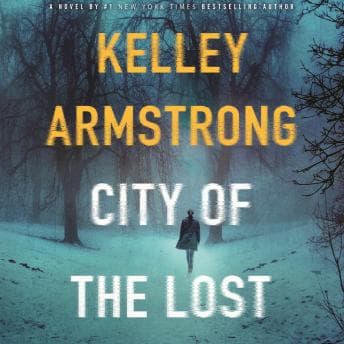

Kelley Armstrong built a town where the monsters aren't supernatural — they're the neighbors who applied to live there. And that's more unsettling than any haunted house.
I came to City of the Lost sideways. Armstrong's been on my radar forever as an urban fantasy writer — the Women of the Otherworld series was everywhere in the mid-2000s — but I never expected her to pivot into crime fiction and absolutely nail the thing that makes isolated-community horror work: the slow erosion of trust. Rockton isn't haunted. It's worse. It's a town full of people who are all hiding something, located so deep in the Canadian wilderness that there's no cell service, no internet, and no way out without permission. That's not a fresh start. That's a cage with nice scenery.
A Town That Shouldn't Exist (But You'll Wish It Did)
Here's what got me: Casey Duncan isn't your typical mystery protagonist with a dark past that amounts to "she drinks too much" or "her partner died." She killed someone. In college. And she's a homicide detective. Armstrong doesn't treat this as a gotcha twist — she hands it to you in the first chapter and then lets it color every single interaction Casey has in Rockton. When she's investigating the town's first murder, you're constantly aware that she's the same kind of person she's hunting. That tension is the engine of this book, and it never stalls.
The setup is deceptively simple — woman on the run finds hidden town, hidden town has a murder problem — but Armstrong layers it. Diana, Casey's best friend fleeing an abusive ex, is the emotional anchor early on, but the relationship shifts as Rockton reveals itself. The town council controls everything: who gets in, who leaves, what resources are available. And the residents? Some are victims. Some are criminals. You don't always know which is which, and Armstrong is smart enough not to draw clean lines.
I will say — and this is where the podcast host in me can't shut up — this understands that horror isn't about gore, it's about dread. Armstrong isn't writing horror per se, but the wilderness sections, the sense that something is out there beyond Rockton's borders, the way the town's rules start feeling less protective and more controlling? That's dread. That's the slow realization that safety was always an illusion.
Thérèse Plummer Doesn't Just Read — She Inhabits
The narrator commits. That's rare. Plummer gives Casey this low, steady confidence that cracks at exactly the right moments — not melodramatic breaks, but small shifts in register when Casey's composure slips. Her Eric Dalton voice has this rough warmth that immediately tells you he's dangerous but not threatening (there's a difference, and Plummer understands it). And the way she voices the town's sheriff, a character who could easily be a stereotype of small-town authority, is pitch-perfect — clipped, wary, just a little bit tired.
I was shelving returns at the library — yes, my actual day job — with my earbuds in during a scene where Casey confronts a suspect alone in the woods, and I stopped moving. Just stood there in the 900s section holding a book about watercolor techniques, completely frozen, because Plummer's pacing shifted. She slowed down. Let the silence between sentences do work. That's an actor who trusts the material.
At thirteen and a half hours, this is a substantial listen, and Plummer carries every minute. I never needed to rewind because I'd zoned out, which is my personal benchmark for narrator quality.
Where It Stumbles (Slightly)
Look, the romance subplot arrives on schedule. You know it's coming. Armstrong handles it better than most — there's genuine chemistry and the power dynamics are interesting given Rockton's structure — but if you're here purely for the mystery, there are stretches in the middle where the investigation takes a back seat to relationship development. Not a dealbreaker, but I noticed.
Also, some of the supporting characters blur together early on. Rockton has a lot of residents and Armstrong introduces them quickly. By hour six I had them sorted, but the first few hours require some patience.
Who Gets a Ticket to Rockton
If you love isolated-setting mysteries — The Sanatorium, The Guest List, that whole locked-room-but-make-it-wilderness subgenre — this is your next obsession. Only If You're Lucky runs in the same dark current — closed social world, everyone hiding something, trust as a weapon — and it wrecked me in similar ways. If you scare easily, skip. If you don't, you need this. Crime fiction readers who want their protagonist morally compromised in ways that actually matter will find Casey Duncan refreshing. And if you're an Armstrong fan from the urban fantasy days, prepare to be surprised by how well she handles procedural pacing without a single werewolf in sight.
Skip if: you need fast plotting from page one, or if romance subplots in your mysteries feel like filler.
The Closing Shelf
My podcast listeners are going to love this — it's the kind of book that generates arguments about whether Rockton is salvation or prison, and those are my favorite episodes to record. Shirley (my cat) was unimpressed. I was hooked. Armstrong's built something here that's part mystery, part survival story, part examination of what happens when you strip away every system people use to define themselves. And Plummer's performance is the reason I'll be doing the rest of this series exclusively in audio. Finally, crime fiction that respects the genre and doesn't flinch.