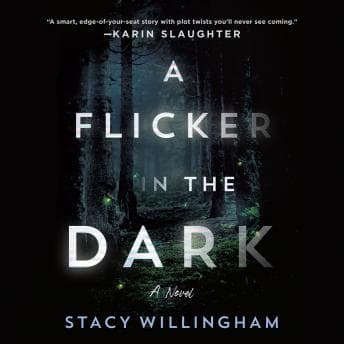

"You don't know someone until you've lived with them."
Somewhere around hour three, that line hit me different. I was driving home after a brutal twelve-hour shift—we'd had a code that didn't end well, and I was doing that thing where you replay everything in your head, wondering if you missed something. And here's Margot, doing the exact same thing with Lucy. Obsessing over the small details. Trying to figure out what she missed. What warning signs she ignored.
This book got under my skin in ways I wasn't expecting.
The Friendship That Feels Like A Fever
Stacy Willingham understands something about toxic female friendships that most thriller writers get wrong. Lucy isn't just "the cool girl"—she's specifically the kind of person who makes you feel chosen. Special. Like you've been selected from a crowd. And Margot's desperation to keep that feeling? As someone who's watched plenty of patients make terrible decisions because they wanted approval from the wrong people, it rang painfully true.
The sorority house dynamic with Lucy, Sloane, and Nicole felt less like a thriller setup and more like a sociology experiment I was eavesdropping on. Willingham nails how women in close quarters develop their own language, their own hierarchies, their own unspoken rules. The way Margot studies Lucy's habits, her moods, her approval—it's unsettling because it's so recognizable. We've all been Margot at some point. We've all wanted to be chosen.
But here's the thing—and this is where I yelled at my dashboard—the pacing in the first half is slower than a night shift when the census is low. Willingham takes her time building the atmosphere, layering in Margot's backstory with Eliza, establishing the house dynamics. If you're expecting a body in chapter three, recalibrate. This is a slow burn that earns its twists.
Karissa Vacker Knows These Women
I've listened to Vacker in Willingham's other books, and she's consistent in the best way. Her Margot is all hesitation and second-guessing—you can hear the self-doubt in every syllable. Her Lucy? Confident. Magnetic. The kind of voice that makes you understand why Margot would follow her anywhere.
The differentiation between the four housemates is solid. Sloane's sarcasm comes through with this slightly bored edge, while Nicole's "nice girl" energy has just enough tension underneath to make you wonder. Vacker's not doing dramatic accent work here—it's more subtle than that. She's capturing personality through rhythm and inflection. The way Lucy's voice drops when she's being manipulative versus when she's genuinely connecting with Margot. That's the good stuff.
Clean production, no weird audio issues, easy on the ears during those 3 AM charting sessions when my brain is mush.
When The Twists Land (And When They Don't)
Without spoiling anything—the reveals in the back half are worth the slow setup. There's a particular moment around hour eight where everything you thought you understood about Margot shifts, and I literally said "Oh, come ON" out loud in my car. Carlos asked why I was so worked up when I got home. I blamed the traffic.
That said, some of the twists rely on information being withheld in ways that felt a little convenient. Margot's an unreliable narrator, which is fine, but there were moments where I felt manipulated rather than surprised. As someone who's actually worked with trauma patients, I know how memory works—and some of Margot's convenient gaps felt more like plot devices than psychology.
But the core mystery—what happened to the frat boy next door, and where is Lucy—kept me hooked through my entire commute rotation.
Who's Going To Love This (And Who Should Skip)
If you're into dark academia vibes, obsessive friendships, and psychological suspense that takes its time? This is your book. If you loved The Secret History or In My Dreams I Hold a Knife, you'll find familiar territory here. Ceremony in Death explores similar dark obsessions, though with a supernatural twist that somehow makes the human darkness feel even more real.
Skip if you need fast pacing or can't handle ambiguous morality. Margot isn't always likeable, and the book doesn't apologize for that. Let Me Go has a similarly flawed protagonist who makes questionable choices under pressure—the kind of messy decision-making I recognize from watching people in crisis.
Content-wise: there's violence, some sexual content, and heavy themes around grief and loss. Night shift approved, but maybe not for your first listen after a rough code.
End of Shift Assessment
Ten hours and seventeen minutes of slow-building tension that pays off in the end. Willingham's becoming one of those authors I'll listen to automatically, and Vacker's narration is a big part of why. This isn't a perfect thriller—the pacing will test some listeners—but the psychological insight into female friendship and the need to belong? That's the real horror here.
Perfect for that post-shift decompression when you want something that'll keep your brain occupied without requiring you to think about work. Just don't expect to feel great about humanity when it's over.
My mom would probably hate this one. She doesn't understand why I listen to "such dark things." But she also still thinks I should've been a doctor, so.