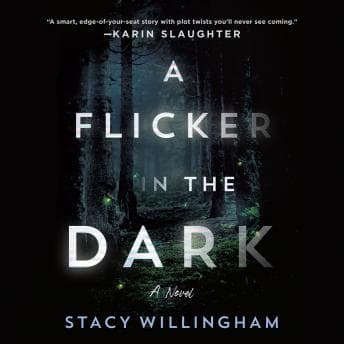

The Case Study I Didn't Expect
I started this one on a Tuesday morning jog through Cambridge, which in retrospect was a mistake. Not because the book is bad—it's not—but because I kept slowing down to process what was happening. My pace tracker looked like a heart monitor during a horror movie. Peaks and valleys. Mostly valleys.
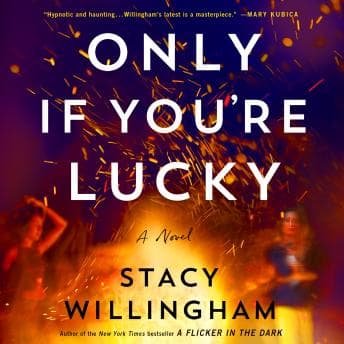
Here's the thing about Flicker in the Dark: Stacy Willingham understands something fundamental about trauma psychology that a lot of thriller writers get wrong. Chloe Davis isn't just "damaged protagonist #47" with a tragic backstory stapled on for sympathy points. She exhibits classic hypervigilance patterns—the constant scanning for threats, the intrusive memories triggered by sensory details, the way she simultaneously craves and fears intimacy. The research actually shows that children of violent offenders often develop these exact coping mechanisms. Willingham did her homework, and it shows.
But let's talk about why you're really here: the audiobook experience.
Karissa Vacker Gets Inside Chloe's Head
I found myself asking: why does this narration work so well for an unreliable narrator? And I think I figured it out somewhere around hour four, while I was making dal that I'd definitely eat alone (don't feel sorry for me, I prefer it).
Vacker uses this slightly breathy, almost conspiratorial tone that puts you directly inside Chloe's anxiety spiral. It's not just reading—it's performing a psychological state. When Chloe starts questioning her own perceptions, Vacker's voice gets this wavering quality that made me genuinely uncertain whether to trust what I was hearing. Which is exactly the point.
Now. Fair warning. That same breathy quality that I found effective? Some listeners apparently find it like nails on a chalkboard. Totally valid. Voice preference is deeply personal, and if whispery narration isn't your thing, sample first. Seriously. Don't power through eleven hours of something that irritates you.
The male voices are... fine. They're serviceable. Vacker uses deeper inflections to differentiate, but honestly, I occasionally lost track of which man was speaking. In a book where there are multiple suspicious male characters (because of course there are—it's a thriller), this matters. Not a dealbreaker, but I noticed.
The Psychology Actually Tracks
Okay, so here's where I get professionally excited. (Don't tell my students I said that.)
Chloe is a psychologist treating troubled teens while simultaneously being a psychological case study herself. Willingham gets something right here—the way Chloe uses her clinical training to intellectualize her own trauma rather than actually processing it. It's a fascinating study in compartmentalization. She can diagnose her patients' attachment disorders while being completely blind to her own patterns. I see this constantly in my practice. The helpers who can't help themselves.
What makes this character compelling is that her unreliability isn't random. It follows the exact cognitive distortions you'd expect from someone with her history. She catastrophizes. She pattern-matches obsessively. She trusts the wrong people and suspects the wrong people, and both behaviors stem from the same wound.
Willingham also nails the family dynamics. The way Chloe's mother copes through denial, her brother through distance. The research on families of incarcerated individuals shows exactly these divergent strategies. Some family members become hypervigilant truth-seekers. Others build elaborate walls of "we don't talk about that." The tension between these approaches drives so much of the emotional core here.
Where It Gets Wobbly
Look, I'm not going to pretend this is perfect. The ending felt rushed to me—like Willingham spent so much time carefully constructing the psychological architecture that she ran out of room for the demolition. The final revelations come fast, and while I won't spoil anything, I will say that one major twist didn't quite land psychologically. The motivation was there, but the execution felt like it needed another chapter to breathe.
Also, Chloe makes some choices that had me muttering "no, absolutely not" while chopping onions. But here's the thing—her bad decisions are psychologically consistent bad decisions. She's not being stupid for plot convenience. She's being exactly the kind of reckless that trauma survivors often are when their triggers get activated. My therapist would have thoughts about this character. Many thoughts. Billable hours worth of thoughts.
Who Should Listen (And Who Should Skip)
This is basically perfect for commutes. The pacing is deliberate but never boring—Willingham knows how to end chapters on hooks without being manipulative about it. I burned through the middle section during a weekend of grading papers, and honestly, the grading suffered. Worth it.
If you're into psychological thrillers that actually understand psychology, this is your jam. If you loved Gone Girl but wished the protagonist was more sympathetic and the psychology more grounded, start here. All Good People Here scratches a similar itch—small-town secrets, unreliable memories, and that slow-burn dread that builds until you can't stop listening.
Skip if: breathy narration makes you twitchy, you need your male characters vocally distinct, or you want a thriller that moves at breakneck speed. This one builds. It earns its payoffs.
I went in expecting competent genre fiction and came out genuinely impressed by the character work. Willingham's a debut author, and I'm now weirdly invested in what she does next. The audio production is clean, Vacker brings real emotional intelligence to the performance, and at eleven hours, it's substantial without overstaying its welcome.
My only regret is that I can't unhear it and experience those twists fresh again. That's the best compliment I can give a thriller.