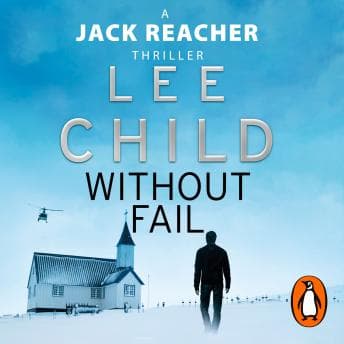

Look, I'll be honest - I started this one at 2 AM because I couldn't sleep and my thesis proposal was staring at me from across the room like a disappointed parent. Fourteen hours later, I'd finished Without Fail and still hadn't touched my thesis. Worth it? Absolutely. Dr. Patel would disagree.
Here's the thing about Jack Reacher books that fantasy nerds like me don't always admit: they scratch the same itch as a good progression fantasy. Reacher doesn't level up or gain new abilities, but watching him systematically dismantle problems with that terrifying competence is basically the same dopamine hit as watching a LitRPG protagonist optimize their build. Golden Lion gave me that same rush—watching skilled operators execute under pressure is its own kind of magic system. This one puts him up against protecting the Vice President, and the puzzle-box nature of figuring out who wants the VP dead kept my brain engaged way past when I should've been sleeping.
The Narrator Wars Are Real (And I Have Thoughts)
So there's this whole faction war in the Reacher audiobook community between Dick Hill loyalists and Jeff Harding defenders. It's giving Sanderson vs. Martin energy, honestly. Harding narrates this one, and I get why people have opinions.
His voice for Reacher works - there's this low, methodical quality that fits a guy who's basically a human calculator for violence. The pacing is tight, keeps you moving, never drags. But then he'll pronounce "Nissan" weird or do something funky with "room" and it pulls you right out. My D&D group would call this a minor but persistent irritation - like a party member who keeps forgetting their spell slots.
The character differentiation is... fine? Not Steven Pacey level (but honestly, what is). You can tell who's talking, mostly, but Harding's not doing full theatrical voice changes. It's workmanlike. Gets the job done.
Lee Child Writes Fight Scenes Like a DM Who Actually Knows Combat
This is what keeps me coming back to Reacher. Child breaks down confrontations with this almost mechanical precision - positioning, timing, the physics of violence. It's like reading a really well-run combat encounter where the DM actually understands action economy. Road has that same methodical approach to action—every move matters, nothing's wasted. Reacher doesn't just win fights; you understand exactly WHY he wins them.
The plot itself is solid thriller fare. Secret Service agent tracks down Reacher (who's basically off-grid, no ID, no address - the man is a walking OPSEC tutorial) because she needs help identifying threats to the VP. The investigation unfolds methodically, and Child does this thing where he gives you enough information to theorize but keeps twisting just when you think you've figured it out.
Is it Sanderson-level world-building? No. But that's not what it's trying to be. This is a tightly wound thriller that knows exactly what it is and executes without apology.
Who's Going to Love This (And Who Should Skip)
If you want 14 hours of competence porn with a side of procedural investigation, this is your jam. It's perfect for long drives or grinding through code - engaging enough to keep you alert but not so complex you'll miss critical details if you zone out for thirty seconds.
If you're a Dick Hill purist, Harding might bug you. The pronunciation quirks are real, and if that stuff pulls you out of a story, you've been warned. And if you need elaborate magic systems or epic world-building to stay interested, Reacher might feel too grounded. This is military thriller territory, not secondary world fantasy.
The content warnings are standard for the genre - violence (obviously), some language, brief sexual content. Nothing that'll shock anyone who's read thrillers before.
My Thesis Can Wait (It Always Does)
Without Fail isn't going to change your life or make you rethink the nature of storytelling. But it's a really solid thriller audiobook that does exactly what it promises. Harding's narration is good enough, the plot moves, and Reacher continues to be weirdly satisfying to spend time with.
I burned through this in basically one sitting when I should've been writing about procedural generation algorithms. The progression is satisfying, the puzzle clicks together nicely, and sometimes that's all you need from a book. Now if you'll excuse me, I have a thesis to pretend to work on while I queue up the next Reacher.