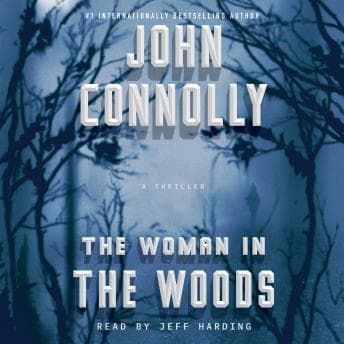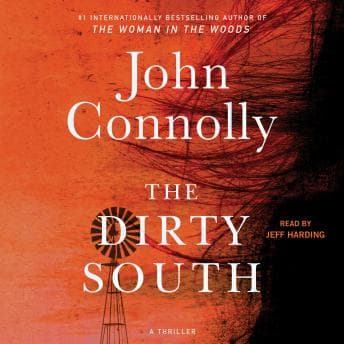

It was pushing midnight, stack of sophomore essays on The Great Gatsby still untouched beside me, and I'd told myself I'd just listen to one more chapter. That was four hours ago. Denise had long since given up on me coming to bed, and I was sitting in the dark kitchen, coffee gone cold, completely transported to 1997 Arkansas.
Connolly did something here that I didn't expect. He went backward. After eighteen books of Charlie Parker as this haunted, almost supernatural figure who walks between worlds, he strips everything away and shows us the wound. The raw, bleeding wound. And it's devastating.
Before the Hunter, There Was Just a Broken Man
What struck me most—and this is what I kept thinking about while pretending to pay attention to Principal Martinez's curriculum meeting the next day—is how Connolly refuses to romanticize grief. Parker in 1997 isn't the cool, composed investigator we know. He's a mess. He's sitting in an Arkansas jail cell because he's been drinking himself into oblivion, picking fights, doing anything to feel something other than the hollow where his wife and daughter used to be.
This reminds me of what Hemingway said about writing true sentences. Connolly writes true grief. The kind that makes you stupid. The kind that makes you dangerous—not in a cool way, but in a sad, self-destructive way.
Then young Black women start dying in Burdon County, and nobody with power seems particularly interested in stopping it. Parker, even broken as he is, can't look away. And watching him find purpose—not healing, not closure, just purpose—that's the real story here.
Harding's Voice Carries Forty Years of Cigarettes and Regret
Jeff Harding has been narrating Parker for years, and there's a reason fans call him definitive. His rough voice is perfect for this world—it sounds like someone who's spent too long in small-town diners and roadside bars. When he shifts into the Southern characters, there's this subtle drawl that never tips into caricature.
But I'll be honest: there were moments where I lost track of who was speaking. The cast is large—local cops, FBI agents, townspeople with secrets—and sometimes the distinctions blurred. I had to rewind a few times during a particularly dense scene with multiple investigators. (My students would find this hilarious. Mr. Williams, who lectures them about paying attention, rewinding his audiobook because he got confused.)
When Harding locks into Parker's internal monologue, though, it's something else. There's a weariness there that feels earned. He understands that pause is punctuation, and he uses silence the way Connolly uses it on the page—to let the weight of things settle.
The Dirty South Isn't Just a Setting
Connolly isn't from Arkansas. He's from Dublin. And yet he captures something true about small towns that protect their own darkness. The way power works in places where everyone knows everyone. The way certain deaths matter less than others to certain people.
This is why we still read—and listen to—the classics of crime fiction. My Absolute Darling operates on that same principle, using violence as a lens to examine power and survival. Because the best crime novels aren't really about solving murders. They're about exposing the systems that allow murders to happen. That look the other way. That decide some victims aren't worth the trouble.
At fifteen hours, this is a commitment. It's not a breezy thriller you can half-listen to while grading papers. (Trust me, I tried. Failed spectacularly.) The plot has what the Wall Street Journal called "cliffhangers within cliffhangers," but the pacing is deliberate. Connolly wants you to sit with the discomfort. To understand why this particular case, in this particular place, at this particular moment, transforms Parker into something new.
Who Should Press Play—And Who Should Wait
If you've never read Connolly, this is actually a fascinating entry point. You're meeting Parker at the beginning, so you don't need eighteen books of context. You just need to be ready for darkness. Longtime fans? This is essential. It fills in gaps you didn't know you needed filled.
But if you're looking for something light for your commute, skip this one. This is dedicated listening—the kind where you need to pay attention, where you might need to pause and process. It's not background noise. It's literature dressed in thriller clothing.
My students would hate this. The slow burn, the literary pretensions, the way Connolly lingers on landscape and psychology instead of rushing to the next body. I love it.
Mr. Williams Says: Worth the Lost Sleep
Look, I've listened to a lot of crime fiction. Most of it I forget within a week. This one stayed with me. I found myself thinking about Parker during my morning walk along the lakefront, wondering how Connolly would eventually connect this broken man to the almost mythical figure he becomes.
The prose deserves to be savored. Harding delivers it with the gravity it requires. I had a similar experience with Hotel on the Corner of Bitter and Sweet—another narrator who understood that emotional weight requires careful pacing. And if you occasionally lose track of which deputy said what—well, that's a small price for fifteen hours in the company of a genuine literary craftsman working at the height of his powers.
Just maybe don't start it at 8 PM on a school night. You won't stop when you should.