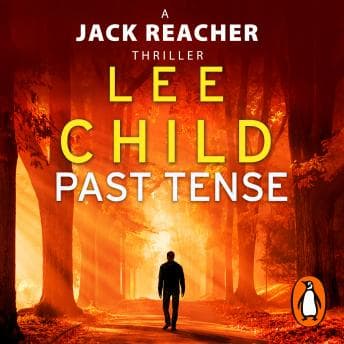

"No one named Reacher ever lived in that town."
That line hit me somewhere around hour two, while I was chopping onions for a dal that would take three hours to make. I actually stopped mid-chop. Because here's the thing about Jack Reacher—he's this impossibly certain man, right? He knows exactly who he is, what he's capable of, how many seconds it'll take to incapacitate someone. And then some clerk in a tiny New England town just... erases his entire family history with one sentence.
The protagonist exhibits classic identity disruption patterns, and I was genuinely fascinated by how Lee Child handles it. Reacher doesn't spiral. Doesn't have an existential crisis. He just gets curious. And that restraint? Actually more psychologically interesting than if he'd gone full emotional breakdown.
The Dual Timeline That Actually Works
Look, I'm usually suspicious of parallel storylines in thrillers. They often feel like the author couldn't commit to one idea. But Past Tense does something clever—it runs Reacher's genealogical mystery alongside this increasingly creepy situation with two young Canadians stuck at a motel that's giving serious "you're not leaving alive" energy.
Readers were split on this structure. Some found it complicated. I found it brilliant from a psychological standpoint. Child is essentially running two case studies simultaneously: Reacher confronting the past he never knew, and these kids confronting a present that's about to get very, very dark.
The motel scenes are where the book earns its thriller credentials. There's something about being trapped—physically, psychologically—that Child understands intimately. That same claustrophobic dread permeates Seven H.P. Lovecraft Stories, though Lovecraft's traps are more cosmic than criminal. The escalation is slow. Methodical. By hour seven, I'd burned the dal because I forgot to stir it. Worth it.
Jeff Harding's Steady Hand
Okay, so here's where I need to be honest. I couldn't find much about Jeff Harding's background or awards, but based on this performance, he gets Reacher. His voice has that flat, observational quality that matches how Reacher thinks—like he's constantly calculating threat assessments while having a conversation about the weather.
Some listeners apparently wanted more vocal variety for different characters. I get that. Harding doesn't do dramatic voice switches. But—and my therapist would have thoughts about this character—Reacher himself doesn't really distinguish between people emotionally. Everyone's a potential problem or a non-problem. Harding's consistent delivery actually mirrors that worldview.
The pacing is steady. Maybe too steady for some. If you're used to narrators who punch up action scenes with urgency, this might feel flat. But I found it worked for the slow-burn tension Child was building. The horror of the motel situation doesn't need vocal theatrics. The facts are horrifying enough.
Twenty-Three Books In, and Reacher Still Surprises
This one's about roots—or the lack of them. Reacher's entire identity is built on being rootless, unattached, free. So what happens when he discovers his roots might be a lie?
Psychologically, this doesn't just track—it's fascinating. The man who needs nothing suddenly needs to know something. And that vulnerability, however small, makes him more human than a dozen fight scenes could.
The historical flashbacks to his father's era add texture without dragging. We see patterns—family patterns, survival patterns—that echo across generations. It's a case study in how trauma and resilience get passed down, even when the people involved never discuss them directly.
Who's This For?
Reacher fans who want something a little different. It's slower than some entries in the series. The action comes, but it takes its time arriving. If you're here for wall-to-wall violence, you might get impatient. Skip this one and grab one of the earlier, punchier entries.
Best for commutes, honestly. The steady pacing works well when you're stuck in traffic. I found myself looking forward to my morning jogs just to get back to the motel storyline. (Don't tell my therapist I was using a thriller as cardio motivation.)
Content-wise: violence, language, some sexual content. Standard Reacher fare.
Case Notes, Over Reheated Dal
Past Tense isn't the most explosive Reacher novel. It's something more interesting—introspective without being slow, mysterious without being confusing. Child understands that after 23 books, we don't just want Reacher to punch people. We want to understand why he is the way he is.
Jeff Harding delivers a solid, unflashy performance that serves the material well. Is it different from Dick Hill or Scott Brick? Yes. Is that a problem? Only if you can't adapt.
I found myself asking: why does Reacher really care about a town he's never visited? The answer Child provides is quietly devastating. And that's enough for me.