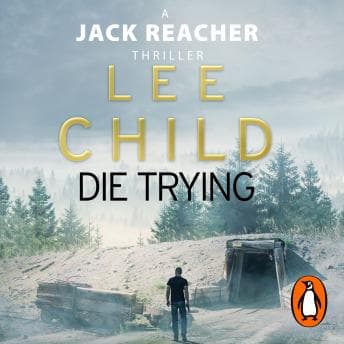

I was grading a stack of junior year essays on The Great Gatsby - you know, the ones where every student discovers that the green light is a symbol - when I realized I needed something to keep me from losing my mind. Sixteen hours of Jack Reacher seemed like the antidote to adolescent literary analysis. And honestly? It worked.
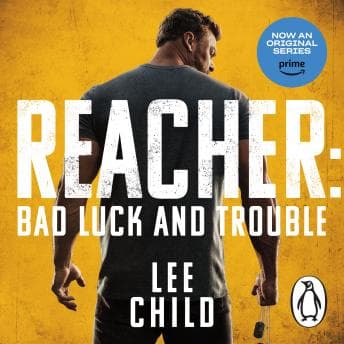
Look, I'll admit something. I came to Lee Child late. My colleague Dave has been pushing these books on me for years, and I kept waving him off with some pretentious comment about "plot-driven fiction." (Don't tell him I said this, but he was right.) Die Trying is my second Reacher, and I'm starting to understand why these books have sold a hundred million copies. It's not Faulkner. It's not trying to be. It's something else entirely - a kind of pure narrative momentum that reminds me why people fell in love with reading in the first place.
The Hemingway of Highway Rest Stops
Here's what struck me about Child's writing, even filtered through audio: the prose is lean. Almost aggressively lean. Short sentences. Declarative. Punchy. It reminded me of what I tell my students about Hemingway's iceberg theory - everything that matters is happening beneath the surface. Except where Hemingway was writing about existential despair in Paris cafes, Child is writing about a giant ex-military cop getting kidnapped in broad daylight.
The setup is deliciously simple. Reacher helps a woman on crutches. Turns out she's FBI. Turns out they're both about to be thrown in a van and driven across America by militia types with very bad intentions. What follows is basically a 16-hour exercise in tension and release, with Child doling out information like a poker player who knows exactly when to show his cards.
Is it implausible in places? Sure. Some of the tactical stuff made me raise an eyebrow, and there's a conspiracy element that requires you to just... go with it. But that's the deal you make with this kind of fiction. You suspend disbelief, and in return, you get a story that actually moves.
Jeff Harding Gets Reacher Right
Now, here's where it gets interesting for audiobook people. There's apparently a whole debate in Reacher circles about narrators - Dick Hill versus Jeff Harding versus the newer guy, Johnathan McClain. I've only heard Harding, so I can't compare. What I can say is this: he understands the character.
Reacher is supposed to be laconic. Observant. Slightly detached from normal human concerns. Harding captures that without making him robotic. There's a dryness to his delivery that works perfectly for the internal monologue sections, where Reacher is calculating odds and assessing threats like some kind of human computer.
The villain voice work is particularly good. One listener I came across said Harding made the bad guy "sound unlikable," which - yes, that's the point, and he nails it. The militia leader comes across as genuinely unhinged, which matters because the book spends a lot of time building up this compound and its inhabitants.
I will say - and this is minor - Harding has a slightly list-like rhythm when he's moving through descriptive passages. Sentence. Pause. Sentence. Pause. It's not a dealbreaker, but after a few hours you start to notice the pattern. Some folks apparently find his pronunciation of certain words annoying too. Didn't bother me, but I'm the guy who listens to student presentations about "Gats-bee" all day, so my tolerance is high.
The Slow Burn That Pays Off
What surprised me most was the pacing. At nearly 16 hours, I expected padding. What I got instead was a slow build that actually earns its climax. Child takes his time establishing the militia compound, the power dynamics, the secondary characters. It's world-building, basically, just applied to a thriller context.
The middle section does drag slightly - there's a lot of sitting around in captivity, a lot of Reacher observing and calculating. But even that serves a purpose. By the time things finally explode, you've been wound so tight that the release is genuinely satisfying.
I listened to most of this during my lakefront walks with Denise. She kept asking why I was walking faster during certain sections. That's probably the best endorsement I can give.
Who's This For (And Who Should Skip It)
If you want lean, propulsive thriller writing and don't mind a 16-hour commitment, this delivers. Skip it if you need literary complexity or can't stomach some tactical implausibility - this is pure genre fiction, and it knows it.
Class Dismissed
Is this great literature? No. Will my AP Lit students ever read it? Probably not. Though honestly, they'd probably get more out of something like Secret Garden, which at least has the literary pedigree I'm supposed to care about. But there's something to be said for a book that does exactly what it promises and does it well. Lee Child knows how to construct a thriller. Jeff Harding knows how to deliver one. The combination works.
My students would absolutely hate this review. They'd say I'm being hypocritical - all year I push them toward "challenging" texts, and here I am recommending airport fiction. But here's the thing: good storytelling is good storytelling. And sometimes, after a long day of explaining symbolism to teenagers, you just want someone to tell you a story about a big guy punching bad guys.
Dave, if you're reading this: fine. You win. I'm in for book three.