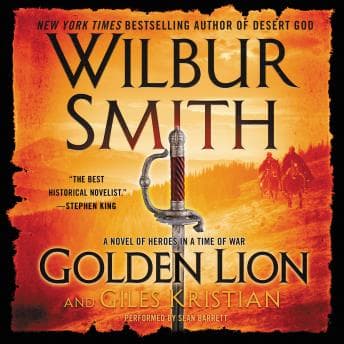

Okay, so here's my complaint: I was supposed to be grading papers. That was the plan. But then Sean Barrett started narrating the opening scene of Golden Lion and suddenly I'm twelve chapters deep, my coffee's gone cold, and I'm emotionally invested in a 17th-century sea captain's quest to rescue his pregnant wife from slavers. This is not how productive Sundays are supposed to work.
Look, I came into this expecting a straightforward swashbuckler. Wilbur Smith and Giles Kristian writing about pirates and revenge? Sure, sounds like beach reading for the ears. But here's the thing - the protagonist exhibits classic trauma-response patterns that actually make psychological sense. Hal Courtney watched his father get executed. He spent his formative years consumed by vengeance. And now, just when he's built something resembling stability - a ship, a crew, a wife, a child on the way - fate rips it away again.
This is a fascinating case study in how repeated loss shapes decision-making under pressure.
The Voice That Lived in My Head for Two Weeks
Sean Barrett. I need to talk about Sean Barrett. The research actually shows he's won over twenty Earphones Awards and two Audies, and honestly? I get it now. The man doesn't just read characters - he becomes them. Every sailor has a distinct voice. The villains drip with menace without going cartoonish. And Hal himself... Barrett captures this particular brand of controlled desperation that I found genuinely affecting.
One listener said the narration was so vivid they could cast it as an HBO series. That's not hyperbole. I found myself mentally assigning actors during my morning jogs through Cambridge, which is either a sign of excellent storytelling or a sign I need to get out more. (Probably both.)
What makes this performance compelling is the pacing. Twelve and a half hours is a commitment, but Barrett knows when to let scenes breathe and when to accelerate into action. The chase sequences genuinely got my heart rate up. My therapist would have thoughts about using audiobooks as cardio motivation, but here we are.
Where Psychology Meets Piracy
I keep coming back to the character motivations because - and I mean this as a compliment - they actually track. Hal isn't just a revenge machine. He's a man processing grief while simultaneously trying to prevent more grief. The way he leads his crew, the decisions he makes during the pursuit across Zanzibar and the African coast... there's a coherent internal logic.
Judith, the abducted wife, is described as a "fearless warrior," and the book doesn't forget that. She's not just a damsel waiting for rescue. Psychologically, this doesn't track in a lot of adventure novels - they set up strong female characters and then sideline them. Smith and Kristian at least attempt to give her agency even in captivity.
The villains are perhaps less nuanced. Classic antagonists doing antagonist things. But honestly? In a story this action-packed, I didn't need a deep dive into their childhood trauma. Sometimes you just need someone to root against.
The Slow Burn That Paid Off
I'll be honest - there are stretches where the plot development slows down. The middle section has some pacing that felt deliberate rather than urgent. If you're coming in expecting non-stop thriller energy, you might get a little restless.
But here's what I found myself asking: why does this slower pacing actually work? Because it lets you sit with Hal's anguish. It builds the stakes. By the time the climactic sequences hit, you're invested in ways that a constant adrenaline rush wouldn't allow.
Also, content warning for those who need it: violence, enslavement, abduction, murder, arson. This is not a cozy listen. The historical setting means the book doesn't shy away from the brutal realities of the slave trade. It's handled as part of the narrative rather than gratuitously, but it's there.
Would I Listen Again?
Probably not immediately - I have those papers to grade, remember - but I'd absolutely recommend this to anyone who loves historical adventure with actual emotional stakes. Fans of Ken Follett's epic scope or Clive Cussler's action will feel right at home. Though if you're looking for something wildly different, 1986 - Book 3: At the End of Time offers a completely different flavor of adventure—less swashbuckling, more existential.
Best listened to during commutes, long drives, or (apparently) while procrastinating on academic responsibilities. Barrett's narration is clean enough for background listening but engaging enough that you'll want to pay attention.
The Courtney series has multiple books, and I'm already eyeing the next one. Don't tell my dissertation committee.