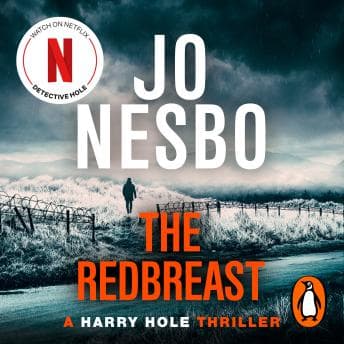

What happens when you give a brilliant detective a serial killer who's been hiding in plain sight for years - and the detective is too drunk, too broken, and too stubborn to let it go?
I started this one on my drive home after a particularly rough night. Three traumas back to back, the kind of shift where you don't sit down for twelve hours and your scrubs look like a crime scene by 4 AM. So maybe I wasn't in the best headspace for a book about women being murdered and dismembered in Norway. Or maybe I was in exactly the right headspace. The exhaustion stripped away my ability to overthink, and I just... fell into it.
Harry Hole Makes Every Other Crime Fiction Detective Look Like He's Trying Too Hard
Here's what Nesbø gets right that so many thriller writers get wrong: Harry Hole isn't cool. He's not a charming antihero. He's a mess. An alcoholic who keeps making the same mistakes, who pushes away the people who care about him, whose obsessive dedication to his work isn't romanticized - it's shown as the destructive compulsion it actually is. That same portrait of a brilliant, self-sabotaging legal mind shows up in Rogue Lawyer, though Grisham's version has considerably more bourbon and considerably less snow. I've worked with doctors like Harry. Brilliant, impossible, the ones you want on your case but wouldn't want at your dinner table. Sean Barrett captures this perfectly. His Harry sounds tired. Not Hollywood-tired where you add some stubble and a gravelly voice. Actually tired. The kind of tired where the words come out slower because the brain is three steps ahead but the body can't keep up.
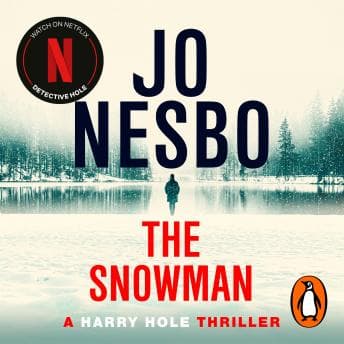
Now, I've listened to a fair number of Scandi noir audiobooks, and most narrators either lean too hard into the "cold Nordic atmosphere" thing or ignore it entirely. Barrett threads this needle where Harry's world feels genuinely bleak without becoming a parody. When Harry's investigating the first disappearance - that opening scene where the boy finds his mother's scarf wrapped around a snowman's neck - Barrett reads it with this quiet dread that made me grip my steering wheel harder than necessary at 7:45 AM.
The Medicine and the Murder - Getting the Details Right (Mostly)
Okay, look. This is not a medical thriller. But there are autopsy scenes and forensic details, and Nesbø doesn't embarrass himself. The descriptions of the victims, the crime scene analysis - it's brutal, yeah, but it's grounded. I didn't yell at my dashboard once about medical inaccuracies. I did yell at my dashboard when Harry makes a spectacularly stupid personal decision around hour eight, but that's different.
Here's where I have to be honest though: some listeners say the gore is excessive, and I get it. I have a higher tolerance than most people because - well, Level 1 trauma center, you do the math. But there were moments where the violence felt like it was there for shock value rather than narrative purpose. Nesbø walks right up to that line and occasionally stumbles over it.
And the pacing. At nearly fifteen hours, this book takes its time. There's a stretch in the middle where Harry's chasing leads that circle back on themselves, and I could feel the story spinning its wheels. I almost wished I'd bumped it to 1.25x during those sections. When it's on though? When the pieces start clicking together in the final third? I drove past my house. Just kept driving. Carlos texted asking if I'd been in an accident.
The Killer Question
So here's the thing people argue about: is the killer too obvious? I've seen reviews where people figured it out early, and... yeah, I had my suspicions. Fourteen years of watching people lie to me in triage has given me an unfair advantage in spotting who's hiding something. But I don't think guessing the killer ruins this book, because the real tension isn't whodunit - it's watching Harry self-destruct while trying to prove it. That's where Nesbø is operating at a different level than your average airport thriller. The snowman isn't just a calling card; it's a mirror for Harry's own frozen emotional landscape. (Listen, I'm running on four hours of sleep, I'm allowed one poetic observation.)
Compared to earlier Harry Hole books, this one feels like Nesbø finally letting his darkest impulses run free. It's bigger, meaner, and more ambitious. Whether that's a good thing depends on your stomach for it.
Who Should Grab This
If you like your crime fiction unflinching and your detectives deeply flawed - not quirky-flawed, but genuinely difficult human beings - this is for you. If you're squeamish about violence against women as a plot device, this might not be your book, and that's a completely fair boundary.
Skip it if you need a fast-moving plot with no detours. This is a slow burn that rewards patience but tests it too.
Night Shift Prescription
Sean Barrett's narration elevates this from a good crime novel to an excellent audiobook experience. His voice becomes Harry Hole's voice in a way that's going to make it weird if I ever try reading the print version. The book itself is imperfect - bloated in places, occasionally gratuitous - but when it works, it works like a perfectly run code. Everything clicking, everyone in sync, the outcome still uncertain but the effort undeniable. Carlos asked why I was crying in the car. I blamed allergies. (It wasn't allergies. That ending just hits different at 8 AM when you're already emotionally raw from a twelve-hour shift.)