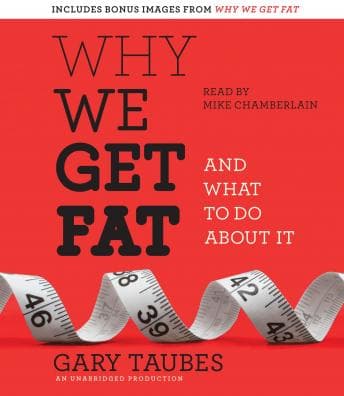

What if everything you learned about weight loss in the last 40 years was wrong?
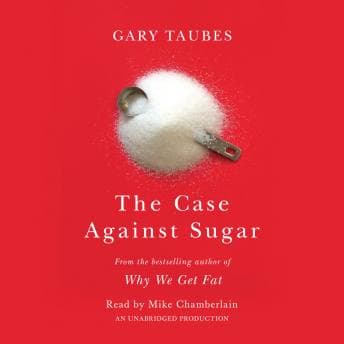
That's not a rhetorical question. Gary Taubes genuinely wants you to sit with that discomfort for about 8 hours. And honestly? He makes a compelling case. I listened to this during a consulting engagement with a healthcare startup, which felt almost too on-the-nose. Their CEO kept talking about "disrupting wellness" while I was hearing Taubes systematically dismantle the calories-in-calories-out model that most of the industry still treats as gospel.
The Consulting Pitch That Actually Delivers
Here's the thing about business books and health books - they share the same disease. It's the same inflated-insight problem I noticed in Game of Life and How to Play It - one good idea stretched thin. Pad a 45-minute insight into 8 hours of repetition. Taubes is guilty of this, but less so than most. The core thesis lands in the first third: it's not about eating too much or moving too little. It's about insulin, carbohydrates, and how your body regulates fat storage. Everything after that is evidence stacking.
And the evidence is solid. Taubes isn't some wellness influencer with a podcast and a supplement line. He's an investigative journalist who's been digging into nutrition science for decades. The way he traces how the "eat less, move more" dogma became entrenched - despite weak evidence - reads like a case study in institutional failure. (I've seen this exact pattern at three different companies. The wrong idea gets adopted early, then everyone builds on top of it because admitting the foundation is broken is too painful.)
The book is essentially "Good Calories, Bad Calories" for people who don't want to read 600 pages of dense scientific argumentation. Skip to the practical stuff if you're impatient. Thank me later.
Mike Chamberlain's Mostly Clean Delivery
Mike Chamberlain reads this like a competent NPR correspondent - clear, steady, professional. He handles the scientific explanations well, making insulin resistance and lipogenesis sound almost conversational. The pacing is appropriate for the material. Not exciting, but you're not here for excitement. You're here to understand why your body stores fat.
But - and this is a real but - there's a pronunciation issue that drove me slightly insane. Chamberlain repeatedly says "casual" when the text clearly says "causal." In a book about cause and effect in nutrition science, mixing up "causal" and "casual" is... not great. It's like a finance audiobook where the narrator keeps saying "principle" instead of "principal." You know what he means. It still grates.
I listened at 1.5x (couldn't quite do my usual 2.0x because the science requires some processing time), and the mispronunciations became a kind of drinking game. Not ideal, but not a dealbreaker.
What My Parents Would Say
My parents didn't read nutrition books. They ate Korean food - rice, vegetables, fermented things, small portions of meat. They stayed lean into their 60s working 14-hour days at the dry cleaner. Taubes would probably say it was the relatively lower refined carbohydrate load compared to the Standard American Diet. My mom would say it was because they were too busy to snack.
Both are probably right.
The practical takeaway here is straightforward: cut the refined carbs, don't fear fat, stop counting calories like they're the only variable that matters. It's not revolutionary advice at this point - low-carb has gone mainstream - but Taubes gives you the scientific framework to understand why it works. That matters if you're the type who needs to know the mechanism before you trust the prescription. (I am that type. Jenny says it's exhausting. Jenny is right.)
The Repetition Problem
Look, I'll be honest. By hour six, I was getting the point. Insulin regulates fat storage. Carbohydrates spike insulin. Eating fat doesn't make you fat. Got it. The book hammers this home with study after study, population after population, historical example after historical example.
For some listeners, this builds an airtight case. For others - probably the consulting types who just want the executive summary - it feels like sitting through a presentation where the speaker keeps adding "one more thing" after the conclusion slide.
The core insight is worth the listen. The other 3-4 hours of reinforcement? Your mileage may vary.
Who Should Listen (And Who Should Skip)
This is for anyone who's tried calorie restriction, failed, and wondered if they just lacked willpower. Taubes makes a strong argument that the problem wasn't you - it was the model. Skip it if you already know the low-carb science cold or if you need a narrator who nails every pronunciation.
The Bottom Line
The science is accessible, the narrator is competent (pronunciation issues aside), and the practical advice is actionable.
Best listened to during commutes or workouts - something where you can zone out during the repetitive sections and tune back in when he introduces new evidence. At 1.25x-1.5x speed, you'll finish in a reasonable timeframe.
Would I recommend it to a client? Depends on the client. If they're in the health space and still operating on outdated nutritional assumptions, absolutely. If they just want to lose weight, I'd tell them to listen to the first third, take notes, and apply the principles.
A health book that respects your intelligence. Mostly.