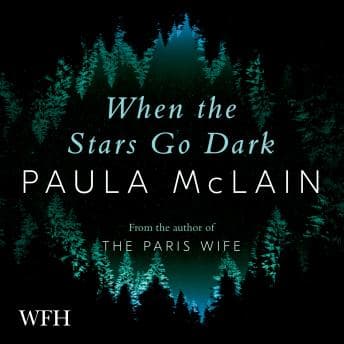

Couldn't sleep last night. Linda was out cold, Ranger was twitching through some dream where he's probably chasing squirrels, and I was staring at the ceiling at 0200 with Marin Ireland's voice in my ears, walking me through the fog-choked streets of Mendocino. That's the kind of book this is - the kind that keeps you up not because something's about to explode, but because something already has, and you can't look away from the wreckage.
Let me cut to the chase: When the Stars Go Dark is not a thriller in the way most people mean it. If you're expecting a missing-girl case with a ticking clock and tactical breaches, recalibrate. This is a grief story wearing a detective novel's clothes, and whether that works for you depends entirely on what you came here for.
Mendocino Fog Gets Inside Your Head
Paula McLain - known for historical fiction like The Paris Wife - made a hard left turn into mystery territory here, and honestly, the move is gutsy. Anna Hart is a San Francisco missing persons detective who's been gutted by personal tragedy (I won't spoil what, but it's bad), and she retreats to Mendocino, the coastal village where she grew up in foster care. Then a teenage girl vanishes, and the case starts rhyming with an unsolved murder from Anna's childhood.
The Mendocino setting does serious work. McLain writes that coastline like she's lived there through every season - the redwoods, the cliffs, the way fog rolls in and makes everything feel like it's dissolving at the edges. On audio, Ireland's delivery leans into that atmosphere hard. She's got this noir-adjacent cadence, almost hushed, like she's telling you something she's not sure she should be saying. It creates genuine unease.
But here's where it lost me at times: the pacing. At 11 and a half hours, this book takes its sweet time. And I don't mean slow-burn-that-pays-off slow. I mean scenes where Anna is processing her trauma through internal monologue that reads more like a therapy transcript than a detective working a case. There are stretches - particularly in the middle third - where the dialogue between Anna and other characters feels like two people reciting psychology textbook entries at each other. "You're projecting your childhood abandonment onto this case, Anna." That kind of thing. I've sat through Army counseling sessions with more subtlety.
I bumped it to 1.25x around hour four, and that helped considerably. The book found its rhythm again once the parallel timelines - Anna's childhood and the current investigation - started converging. McLain knows how to lay down breadcrumbs, I'll give her that.
Ireland Carries the Weight (Mostly)
Marin Ireland's narration is the reason this audiobook works as well as it does. She doesn't do wildly different voices for each character - this isn't a full-cast production by any stretch - but she doesn't need to. What she does is modulate emotion with real precision. The worried parents sound different from the frightened teenagers, and both sound different from the weary law enforcement types, all through tone and tempo rather than accent tricks.
Where Ireland really earns her paycheck is in the grief scenes. Anna's trauma isn't just backstory decoration; it's the engine of the whole book. And Ireland delivers those moments with the kind of restraint that makes them hit harder. She doesn't oversell the emotion. She lets the silence do work. That takes skill.
The flip side? When the writing gets too psychoanalytical - and it does - Ireland can't save it. No narrator could. You can only make "I realize now that my attachment style was formed by early abandonment" sound so riveting, no matter how good your voice is.
Who Should Gear Up For This
If you're a thriller reader who needs body count and plot velocity, this isn't your mission. Skip it. You'll be frustrated by hour three.
But if you appreciate a crime novel that's actually about the people crime breaks - the families, the investigators who carry every case home with them, the communities that never fully recover - this is worth your time. I've seen this scenario play out in real life, the way a missing person case cracks open every fault line in a small town, and McLain gets that part right.
Women who've survived trauma will probably connect with this book on a level I can't fully access. We Are All the Same in the Dark works that same territory - a woman carrying damage through a cold case, a community fractured at its roots - and it hit Linda just as hard when she got to it last spring. Linda picked it up after I finished, and she's already two hours in. She told me to stop asking if anything's happened yet.
Content note: this book deals with sexual abuse, child abduction, and domestic violence. Not gratuitously, but directly. Know that going in.
Mission Debrief
Worth your time? Here's the debrief: When the Stars Go Dark is a flawed but emotionally serious book that prioritizes atmosphere and character damage over plot mechanics. McLain's first thriller isn't really a thriller at all - it's literary fiction that happens to involve a missing girl. Ireland's narration is the right match for the material, even when the material sags. At 1.25x, it's a solid listen for a quiet weekend when you're in the mood to feel something heavy. Not Ranger approved - he fell asleep during the slow middle stretch - but I stayed up until 0300 to finish it. That counts for something.