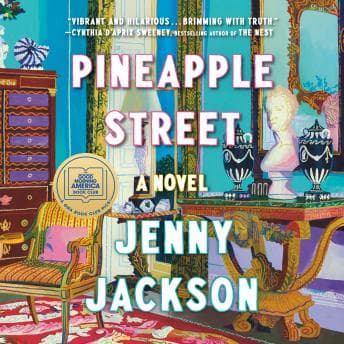

Look, I need to confess something. I started this audiobook at 3 AM during a quiet stretch on the unit, and within twenty minutes I was so invested in these ridiculously wealthy Brooklyn Heights people that I almost missed an alarm. Almost. (Don't worry, I didn't. But still.)
Here's the thing about Pineapple Street - it's basically a sociological study wrapped in cashmere and served with a side of family dysfunction. Jenny Jackson gives us three women orbiting the Stockton family fortune: Darley, who traded her inheritance for love and is now quietly losing her mind; Sasha, the middle-class outsider who married in and can't stop being horrified by her in-laws' casual wealth; and Georgiana, the baby sister making spectacularly bad romantic decisions.
The Voice That Carried Me Home
Marin Ireland. This woman. She won an Audie for Best Female Narration, and honestly? She earned every bit of it here. The way she captures these characters - you can hear the difference between old money entitlement and new money anxiety. Sasha's barely-contained frustration when her mother-in-law casually mentions the family "limestone" (that's a brownstone to us regular people) had me laughing out loud in my car.
Now, some listeners complain that a few characters sound similar, and okay, fine, when you've got this many wealthy white women in one story, there's only so much vocal variety you can create. But Ireland nails the important distinctions - the attitudes, the origins, the little vocal tells that separate someone born into money from someone who married into it. That's the stuff that matters.
There's this slightly ditsy quality she gives some of the characters that apparently annoyed some people. Didn't bother me. These are women who've never had to worry about a hospital bill or whether their insurance covers a procedure. A little vocal airiness felt... accurate, honestly.
When Privilege Becomes the Plot
I'm not gonna lie - there were moments I wanted to reach through my phone and shake these people. The casual way they discuss multiple properties. The horror they express at Sasha using a fabric shower curtain liner instead of a proper one. (I had to pause the audiobook to text Carlos about this. He didn't understand why I was so worked up. Men.)
But that's kind of the point, right? Jackson isn't asking us to love these characters unconditionally. She's asking us to watch them, to understand them, to maybe recognize some uncomfortable truths about money and family and the stories we tell ourselves about both.
The plot meanders - I'll give the critics that. This isn't a thriller with a ticking clock. It's more like sitting in on a year of family dinners, watching the small betrayals and quiet resentments pile up. For some people, that's boring. For me, driving home after watching actual life-and-death drama all night? It was perfect. Low stakes. Rich people problems. Exactly the kind of escapism I needed.
Perfect for the Post-Shift Decompress
At 8 and a half hours, this is a solid week of commutes. The pacing is steady - not rushed, not dragging. I found myself sitting in my driveway more than once, waiting for a chapter to end before going inside.
The production quality is clean. No weird audio glitches, no background noise. Just Ireland's voice and these messy, privileged, surprisingly human characters.
Who Should Listen (And Who Should Skip)
This one's for anyone who enjoys watching family dynamics unfold. Anyone who's ever felt like an outsider at their in-laws' table. Anyone who wants to feel better about their own family by comparison. (My mom may drive me crazy, but at least she doesn't have opinions about my shower curtain liner.)
Skip it if you need plot momentum, if you can't stand characters with more money than self-awareness, or if you want your fiction to have higher stakes than "will they sell the beach house."
But me? I loved it. It was like a really good reality show, except everyone's literate and the drama is all subtext. That same observational humor about class dynamics and family absurdity is what drew me into Club: A Novel, which also dissects privilege through a sharp, character-driven lens. Carlos asked why I kept chuckling during my drive home. I tried to explain the shower curtain thing again. He still didn't get it.
Some books are meant to challenge you. This one's meant to entertain you while making you slightly uncomfortable about wealth inequality in America. I got that same uncomfortable-but-hooked feeling with Their Eyes Were Watching God, where the character dynamics pull you in so completely that you're forced to sit with harder truths about power and belonging. Pineapple Street does both well.