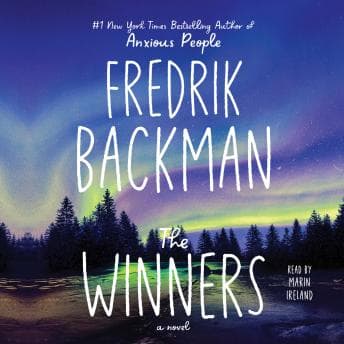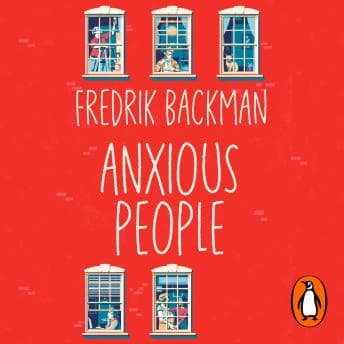

What happens when you put seven strangers in a room with a bank robber who's worse at crime than they are at their own lives?
I finished this one during a faculty meeting about standardized testing protocols. Principal Martinez was explaining something about data-driven outcomes, and I was genuinely tearing up over a fictional hostage situation in Sweden. (If anyone noticed, I blamed allergies. In December. Nobody bought it.)
The Trick Backman Keeps Pulling
Here's the thing about Fredrik Backman - he writes books that sound absolutely ridiculous when you describe them. A grumpy old man befriends his neighbors. A hostage situation becomes group therapy. And somehow, every single time, he makes you feel things you weren't prepared to feel.
This one starts as a comedy. A bank robber walks into a cashless bank - because of course Sweden has cashless banks now - and ends up taking hostages at an apartment viewing. The police are bumbling. The hostages are more annoyed than scared. It's funny. Really funny.
But Backman is doing something sneaky. While you're laughing at the absurdity, he's quietly laying groundwork. Every character has a story. Every story has a wound. And by the time you realize what he's actually writing about - depression, suicide, the desperate ways we try to save each other - you're already invested in people you thought were just comic relief.
My students would call this a bait-and-switch. I call it what Chekhov was doing a hundred years ago. Show them the gun in act one, but make them forget it's there.
Why Marin Ireland Works
I'll be honest - I was skeptical about an American narrator for a Swedish story. The translation already removes one layer of authenticity. Would the performance strip away another?
Ireland surprised me. She doesn't try to do Swedish accents, which is the right call. Instead, she focuses on something harder: making each character's voice distinct through rhythm and emotional register rather than affectation. The anxious bank robber sounds different from the bitter banker sounds different from the elderly couple still in love after decades.
Her pacing is deliberate. Some reviewers have called it slow, and I understand that criticism - there are introspective passages where she really sits in the silence. But this is Backman. The prose deserves to be savored. Those pauses aren't empty; they're punctuation.
Where Ireland really shines is the tonal shifts. This book whiplashes between comedy and genuine heartbreak, sometimes in the same paragraph. She navigates those transitions without making them feel jarring. When Backman delivers a gut-punch line after three pages of jokes, Ireland lands it.
The one caveat - and this is minor - is that her intensity occasionally tips into melodrama during the heavier emotional scenes. It's not enough to pull you out, but I noticed it. Maybe that's just me. I've been reading Hemingway with my juniors, and his restraint has recalibrated my ears.
What Backman Is Really Saying
Let's talk about the title. "Anxious People" isn't just a description of the characters - though they are, all of them, in various states of psychological distress. It's a thesis statement.
Backman is arguing that anxiety - about money, about relationships, about whether we're doing life right - is the defining condition of modern existence. And more importantly, that it connects us. The bank robber and the hostages aren't opposites. They're the same person in different circumstances.
This reminds me of what Hemingway said about courage - that it's grace under pressure. The same kind of moral complexity shows up in Brothers Karamazov, where Dostoevsky strips away any pretense of easy answers about how to be good. But Backman inverts it. He's interested in what happens when there is no grace. When people break. And how, in breaking, they sometimes finally become honest with each other.
The book's structure - jumping between the hostage situation and police interviews afterward - keeps you guessing about what actually happened. But the mystery isn't really the point. The mystery is just the engine that drives you through these people's lives.
Worth Pausing the Faculty Meeting For
I've recommended this to three colleagues and my wife. Denise listened to it on our lakefront walks and kept stopping to tell me about characters like they were real people she'd met. That's the Backman effect.
Who should skip it? If you need plot momentum, this might frustrate you. Backman is more interested in character than action. The hostage situation is almost beside the point - it's just a device to trap these people together long enough to reveal themselves. Who should listen? If you loved A Man Called Ove, if you appreciate writers who can make you laugh and cry in the same chapter, if you're the kind of person who thinks the best literature is about ordinary people trying to survive ordinary pain - this is for you.
The Netflix adaptation exists, and it's fine. But Ireland's narration adds something the screen can't capture: the interiority. Backman's narrator voice - wry, compassionate, occasionally breaking the fourth wall - needs to be heard, not watched.
Almost ten hours. Felt like four. That's the highest compliment I can give.