
Nineteen hours. Nineteen hours of Jack London, and not a single sled dog or frozen tundra in sight.
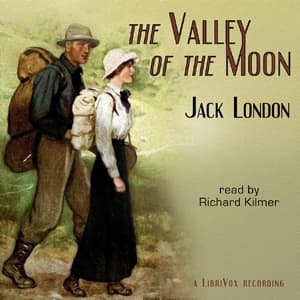
I'll admit, I was grumpy about this at first. It's 11 PM, I'm halfway through a stack of sophomore essays on The Great Gatsby (no, Tyler, the green light does not represent Gatsby's favorite color), and I put on Valley of the Moon expecting some White Fang energy to keep me awake. Instead I get... a married couple arguing about whether to buy a farm in Sonoma County. Jack London wrote a 19-hour audiobook about real estate decisions.
When London Traded Wolves for Plows
Here's the thing—once I stopped being annoyed about what this book isn't, I started appreciating what it is. Billy and Saxon Roberts are working-class Oakland folks at the turn of the century, and London is absolutely obsessed with showing you exactly how the industrial grind crushes people. The strike scenes in the early chapters hit different when you've spent two decades watching kids from families working three jobs just to stay afloat. Saxon watching Billy come home beaten and broken from labor disputes—that's not adventure fiction. That's social documentation dressed up as a novel.
And London can't help himself. The man wants to lecture you about scientific farming, about land ownership, about the dignity of manual labor done right. If you loved Steinbeck's agrarian romanticism, this is its spiritual predecessor. That same romanticized struggle shows up in Catch of the Day, though with a completely different setting. London was doing this fifteen years before The Grapes of Wrath, just with more optimism and less devastation.
Richard Kilmer Understands That Pause Is Punctuation
Let me tell you about Richard Kilmer. The man reads at a pace that respects the prose. No rushing through London's descriptive passages about the California landscape, no stumbling over the period-specific dialogue. When Billy gets philosophical about what it means to be a "real American" versus the new immigrant workers—and yes, we need to talk about that—Kilmer delivers it straight, letting you hear the character's convictions without editorializing.
This is a LibriVox recording, which means it's volunteer work, and honestly? It's better than half the professional narrations I've paid full credit for. Clear audio, consistent pacing, genuine engagement with the material. Kilmer sounds like someone who actually read ahead and knows where the emotional beats land. By hour twelve (yes, I was still grading—Denise found me asleep at the kitchen table with my earbuds still in), his voice had become comfortable company.
The Elephant in the Valley
I can't write this review without addressing it: this book contains racism. Period-typical, early 20th century, Anglo-Saxon supremacy nonsense that London apparently believed. Billy and Saxon's quest for their perfect farm involves a lot of hand-wringing about who the "real Americans" are, and London's conclusions are... not great. My students would hate this. They'd be right to hate parts of it.
But here's what I tell my AP Lit kids when we read Huckleberry Finn or Heart of Darkness: you can learn from a text while holding its failures accountable. London is showing you exactly what a certain class of white Americans believed in 1913. That's historical data. It's uncomfortable data. Anna Karenina requires the same kind of dual engagement—appreciating Tolstoy's genius while recognizing his era's limitations. The prose deserves to be savored, but some of it deserves to be interrogated too.
The Long Road to Sonoma
The middle third drags. I won't pretend otherwise. Billy and Saxon wander through Central California having conversations with farmers and philosophers and—in one genuinely strange section—hanging out with the artists' colony in Carmel. (London basically cameos his own bohemian friends into the novel. It's weird. It's also kind of charming.) But at 19 hours, there's simply too much travelogue. I found myself grading faster during some stretches, which is saying something.
But the ending? The ending is worth the journey. When they finally find the Valley of the Moon—Sonoma, London's own adopted home—there's this quiet satisfaction that builds. Not triumphant, not dramatic. Just two people who fought their way out of the industrial meat grinder and found something sustainable. Something human-scaled.
Who This Is Actually For
If you want adventure London, read The Call of the Wild. If you want to understand what London actually believed about labor, land, and the American dream—if you want to see a famous adventure writer attempt social realism and mostly succeed—this is your book. Listeners who love historical fiction about the working class, who don't mind a slow burn with didactic tendencies, who can engage critically with dated racial attitudes: you'll find something valuable here. If you need plot momentum or can't handle 19 hours of agrarian philosophy, skip it. No shame in that.
Worth Pausing the Faculty Meeting For?
Almost. Valley of the Moon isn't London's best work, but it's a fascinating window into his thinking beyond the wilderness tales. Richard Kilmer's narration elevates what could have been a slog into something genuinely listenable. At 19 hours, it's a commitment—but for the right listener, it's a satisfying one. Just go in knowing you're getting a meditation on land and labor, not a wolf fight.