
The 11 PM Grading Slump
Okay, picture this. It's Tuesday night. I've got a stack of sophomore essays on The Great Gatsby that aren't going to grade themselves. (Why do fifteen-year-olds think Nick Carraway is the hero? We need to talk about unreliable narrators, people.) My brain is mush. I need something heavy to cleanse the palate, but I've listened to the Maggie Gyllenhaal version of Anna Karenina like three times. I had the same urge to revisit a classic when I listened to Anna Karenina (Dole translation)—sometimes you just need a different lens on the same story.
So, I did something weird. I decided to try the Dutch version.
Don't ask me why. Maybe I'm trying to impress my mother-in-law (she's from Utrecht), or maybe I just wanted to hear how Tolstoy sounds in a language that feels like a throat-clearing contest. (I kid, I kid. I actually love the language.) But here I am, thirty-eight hours deep into a LibriVox recording, and I have some thoughts. Mostly about how hard it is to make adultery sound boring.
The "Designated Driver" of Narrators
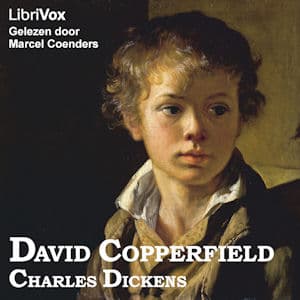
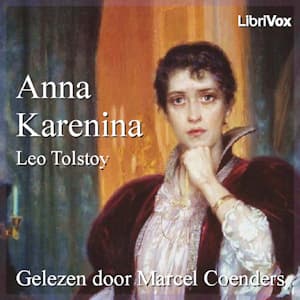
Let's talk about Marcel Coenders.
Look, narrating a classic is terrifying. I tell my students that reading aloud is an act of interpretation. You have to be Vronsky. You have to be Anna spiraling into madness.
Marcel? Marcel is... polite.
He has this very clear, somewhat neutral delivery. If you're learning Dutch, this is actually gold. Seriously. You will hear every single syllable. He doesn't mumble, he doesn't whisper-shout, he just reads the text. It's the audio equivalent of Helvetica font.
But here's the problem—Tolstoy isn't Helvetica. Tolstoy is a messy, handwritten scrawl of passion and social critique. There were moments in the story—big, heavy, emotional pivot points—where I was waiting for the voice to crack, or the tempo to speed up. I wanted the angst. Instead, I got the same tone you'd use to read a grocery list.
It's not bad. It's just... safe. It reminds me of when I ask a student to read Shakespeare and they just want to get to the end of the sentence without tripping. I appreciate the effort—especially for a volunteer recording—but Anna Karenina is a melodrama. It needs a little more scenery-chewing.
Abridged? Really?
Can we talk about the runtime for a second? The description says this is an "ingekorte" (abridged) version.
It is thirty-eight hours long.
Thirty. Eight.
If this is the abridged version, I'm terrified to see the full Dutch manuscript. (Though, to be fair, maybe Dutch words just take longer to say? I don't know.) Usually, when I see "abridged," I cringe. It feels like cheating. Like watching the movie trailer and saying you saw the film. But in this case, the pacing is so deliberate that I wonder if the abridgment was just cutting out the pauses between chapters.
The pacing is consistent, though. If you need something steady to fall asleep to—and I mean that as a compliment for insomniacs—this is it. There are no sudden shouts to wake you up. It's a flat line of narration.
Who Should Listen (And Who Should Skip)
I've been thinking about this while walking the dog along the lakefront (where the wind is currently trying to kill me, by the way). Who do I recommend this to?
If you're one of my students trying to cheat on a book report: No. You won't understand it, and the lack of emotional cues means you'll miss the sarcasm.
If you're a Dutch learner: Yes. 100%. The clarity is super helpful.
If you're a Tolstoy purist looking for a new interpretation: Eh. You might find it a bit dry. It lacks the psychological depth that professional actors bring to the table. You don't feel the weight of the social scandal. You just hear the words describing it.
It's a clean, serviceable recording. It gets the job done. But for a book about passion that destroys lives? I kind of wanted a little more destruction.