
Look, I need to get something off my chest. I've been teaching Ivanhoe and Robin Hood adaptations for two decades, and every time a student asks me why medieval fiction feels so... stiff, I have to bite my tongue. Because the answer is usually that the author was more interested in showing off their research than telling a story.
Edgar Rice Burroughs didn't get that memo. And thank goodness for it.
The Burroughs Surprise
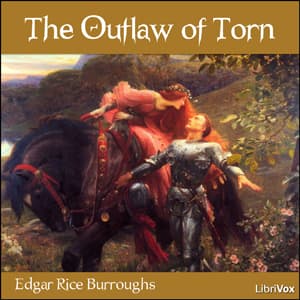
Here's what caught me off guard: I came to this expecting Tarzan-in-chainmail. You know, swinging from castle turrets, grunting monosyllabically at damsels. But The Outlaw of Torn is actually doing something more interesting. It's a revenge story wrapped in a coming-of-age wrapped in a political thriller. The premise—a French fencing master kidnaps the king's son and raises him to be a weapon against England—sounds like pulp nonsense. And it kind of is? But Burroughs commits to it with such earnestness that I found myself completely invested.
The dual nature of Norman of Torn is what kept me walking an extra mile along the lakefront. That split identity thing—the monster who's also capable of goodness—gets explored even more intensely in Strange Case of Jekyll and Hyde, though obviously with a darker outcome. He's been trained as a killing machine, but there's this priest character, Father Claude, who secretly teaches him letters and chivalry. So you've got this young man who can cut down a dozen knights before breakfast but also quotes scripture and treats women with genuine respect. It's not subtle—Burroughs wasn't exactly known for subtlety—but it works.
Richard Kilmer Gets the Assignment
I couldn't find much background on Richard Kilmer online, but based on this performance, he understands something crucial about reading period fiction: you can't be embarrassed by it. Medieval dialogue is inherently theatrical. You're saying things like "Methinks" and "Prithee" and if you deliver them with even a hint of irony, the whole thing falls apart.
Kilmer plays it straight. His de Vac is genuinely menacing—there's this cold, clipped quality to the French accent that made me uncomfortable in exactly the right way. And when Norman speaks, you hear the conflict. The brutality his father taught him versus the gentleness the priest cultivated. Susan Umpleby handles the female characters with similar care, though honestly her role is smaller than I expected from a dual-narrator credit.
The pacing is solid throughout. Seven hours is just about right for this story—long enough to develop the political intrigue between Henry III and Simon de Montfort, short enough that it never drags. I finished it over three grading sessions and one very long faculty meeting. (Principal Martinez, I was absolutely paying attention to the budget allocations. The narrator just happened to be discussing the Battle of Lewes at the same time.)
What Burroughs Actually Does Well
Here's what I tell my students about early 20th-century adventure fiction: these writers understood momentum. Burroughs published this in 1914, and you can feel him racing from scene to scene. A duel here, a rescue there, political machinations in between. He's not interested in making you wait for the good stuff.
But—and this is the teacher in me talking—he's also doing something sneakily thoughtful about nature versus nurture. Norman was raised to hate England, to be a monster. And yet. The goodness finds a way through. It's not sophisticated philosophy, but it's sincere. And sincerity counts for a lot when you're listening to swordfights while pretending to review lesson plans.
The historical accuracy is... let's call it "enthusiastic approximation." If you're a medieval history buff, you'll probably wince at some of the liberties. But Burroughs isn't writing a textbook. He's writing entertainment, and he's very good at it.
Who This Works For (And Who Should Skip)
If you loved Ivanhoe but wished it moved faster, this is your book. If you're a Burroughs completist who's only done the Tarzan and Mars stuff, this shows a different side of him. If you're looking for something to make your commute feel like an adventure rather than a slog, the narration delivers.
Skip it if you need historical precision. Skip it if you're bothered by violence—Norman earns his outlaw reputation. And maybe skip it if you're looking for complex female characters, because this is very much a product of 1914 in that regard.
Class Dismissed
I went in skeptical and came out charmed. My students would absolutely hate this—too old-fashioned, too earnest, not enough irony. Which is exactly why I loved it. Sometimes you want a story that believes in itself completely. Sometimes you want a hero who's both a killer and a gentleman, a villain with a genuine grievance, and a narrator who treats the whole thing like it matters.
Richard Kilmer made me believe in 13th-century England for seven hours. That's worth something.