
This is basically Honey, I Shrunk the Kids but in reverse, written in 1954, and way more brutal.
I grabbed Forgotten Planet for a particularly brutal on-call week - figured giant bugs fighting humans would be mindless enough to follow while monitoring dashboards at 2AM. What I got instead was this weirdly hypnotic survival narrative that's almost entirely internal monologue and environmental description. And somehow? It works.
The Premise Is Beautifully Stupid (Compliment)
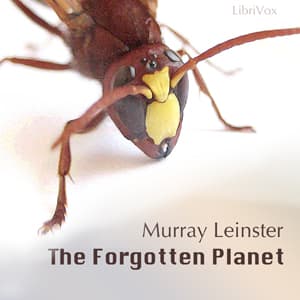
Murray Leinster's setup is gloriously pulpy: a terraforming project seeds a planet with microbes, plants, and insects. The third expedition - the one with actual animals - never shows up. Fast forward millennia, and you've got wolf-sized ants, flies the size of chickens, and wasps that could carry off a small car. Then some unlucky humans crash-land and their descendants have to survive in this nightmare ecosystem.
The science doesn't hold up. At all. Insects that size would collapse under their own weight due to how their respiratory systems work. But Leinster wrote this before we fully understood those limitations, and honestly? I didn't care. The ROI on this audiobook isn't scientific accuracy - it's watching humans rediscover fire and tools while fighting creatures that treat them as prey.
Almost No Dialogue - And That's The Point
Here's what makes this audiobook fascinating from a structural standpoint: there's barely any dialogue. The story follows Burl, a primitive descendant of the crash survivors, and most of the narrative is him thinking, observing, and reacting to his environment. One listener nailed it - the book is "so well written that you don't care" about the lack of conversation.
This creates an interesting audio experience. Richard Kilmer doesn't need to differentiate between twelve characters with distinct voices. He just needs to carry you through Burl's world, and the narration is... serviceable? Clear, steady, gets the job done. But I can't call it exceptional. Another listener described it as "painstaking," and while I wouldn't go that far, there's definitely a monotony that sets in around hour four. The lack of vocal variety means your brain has to do more work to stay engaged.
I bumped it to 1.5x around the midpoint. Helped considerably.
Best at 2AM, Worst on the 6AM Train
I finished this across three late-night monitoring sessions, and that turned out to be the ideal context. The pacing is slow-burn in the extreme - long descriptions of fungal forests, detailed accounts of ant behavior, methodical explanations of how Burl figures out that fire is useful. It's almost meditative.
But on my actual morning commute? I kept losing the thread. There's no dialogue to snap you back in, no dramatic scene breaks, just this continuous flow of survival narrative. If you're half-asleep on a packed train surrounded by other zombies, you'll zone out and miss Burl's entire character arc.
This is a dedicated listening book, or a background book if you're okay missing chunks. Not a commute book. Classic sci-fi completists and survival narrative fans should queue it up. Anyone who needs dialogue and character dynamics to stay engaged? Skip this one.
Leinster Was Doing Something Interesting Here
Murray Leinster won a Hugo, and you can feel the ambition in this novel even when the execution feels dated. He's essentially writing a story about human evolution compressed into one lifetime - Burl starts as barely more than an animal, reacting on instinct, and gradually becomes something like a leader and innovator. The giant bugs are almost secondary to this psychological journey.
The problem is that 1954 prose can feel dense to modern ears. Sentences run long. Descriptions pile up. And without a narrator who really leans into the drama, it can feel like listening to a very detailed nature documentary about fictional creatures.
The Credit Calculation
At 7 hours, this is a modest time investment. The story is genuinely creative - I haven't listened to anything quite like it. But the narration is merely adequate, and the pacing requires patience.
If you're a classic sci-fi completist or you love survival narratives, this is worth streaming through Libby or your library app. Though if you want something with actual dialogue and character dynamics, Dead in the Family offers a completely different flavor of supernatural survival. If you're spending an Audible credit, there are better options in the golden age sci-fi catalog. Try Asimov's Foundation if you haven't - the audiobooks are excellent and the ROI is much higher.
But for a free LibriVox-style listen during a late night? Forgotten Planet scratches a very specific itch. Just don't expect it to keep you awake on the 6AM train.