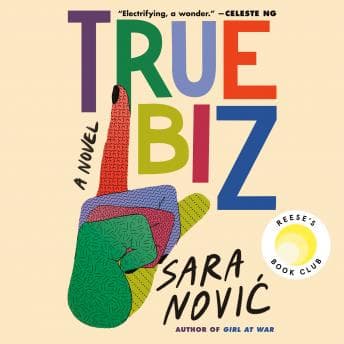
True biz? I didn't expect to spend my post-shift drive home pulling into my driveway and just... sitting there. Engine off. Kids inside. Carlos probably wondering why I wasn't coming in. I needed another five minutes with these characters. That doesn't happen to me often.
I started this one during breakfast cleanup after a brutal twelve-hour stretch - scrambled eggs on the stove, half-listening, and then suddenly I was fully there, in River Valley School for the Deaf, and the eggs were slightly overdone because I forgot to stir.
What This Book Does That Most Novels Won't Even Try
Novic doesn't ease you into Deaf culture like it's a foreign country you need a tour guide for. She drops you in. Charlie's chapters hit different because she's the outsider too - twenty-something years old, grew up oral, mainstreamed, never signed, and suddenly she's at a boarding school where ASL is the first language and she's the one who doesn't speak it. That specific kind of isolation - being disabled in a community built for people like you, and still not belonging - I've seen that in my unit. Patients who fall between categories. Too sick for one floor, not sick enough for another. Nobody claiming them. Novic gets that feeling exactly right.
Austin's storyline is where I had to pause and breathe. His baby sister is born hearing, and instead of that being a simple joy, it fractures something in his family's identity. The politics of cochlear implants, of oralism versus ASL, of parents making permanent decisions for children who can't consent yet - I work in a Level 1 trauma center. I have watched families make impossible medical decisions in the worst moments of their lives. The way this book handles bodily autonomy and who gets to decide what counts as a disability that needs fixing? I wasn't yelling at my dashboard. I was gripping my steering wheel.
February, the hearing headmistress who grew up with Deaf parents, is the most complicated character here. She's neither fully in nor fully out of the Deaf community, and Novic doesn't let her off the hook for that. Her marriage is falling apart in the background of everything else, and the way those two crises - personal and institutional - mirror each other without the book ever making it too neat? That's the craft I notice. When a writer trusts the reader enough not to explain the metaphor.
The Audio Piece, Because I Have Opinions
Kaleo Griffith handles Charlie's school assignments - including the sections on Gallaudet University protests and Deaf history - and there's something right about the choice to give those a different voice. It creates a textural shift, like flipping between a patient's chart and their actual face. I've heard Griffith in thrillers like Never Game, and he's just as effective there—though the subject matter is a different kind of intense. Lisa Flanagan carries the main narration and she's solid, present, not showy. What genuinely surprised me: the sound design for the ASL passages. Sign language rendered in audio is a problem with no clean solution, and they made actual choices - sounds accompanying the sign language dialogues that give you a physical sense of movement without being gimmicky. It's not perfect. But it's honest. I'll take honest over polished any day.
One critique I kept circling back to: some of the secondary characters felt like they existed to carry plot rather than weight. A few of the students at River Valley blur together by the midpoint. For a book this invested in community as a concept, I wanted more of those individual faces.
If You're Still Sitting in Your Driveway
This is not a medical thriller. There's no procedure I got to yell about. But there IS a scene involving a medical decision about a child's cochlear implant that made me set down my coffee and stare at the wall for a minute, because I've been in rooms where versions of that conversation happened and I never had the right words for it. Novic does.
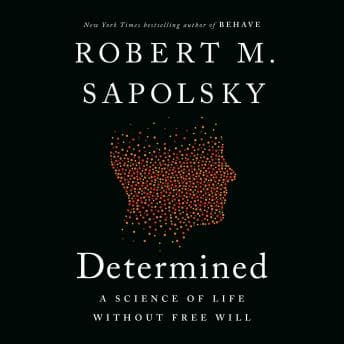
That same feeling—of a book articulating something I couldn't—came back when I read Determined: A Science of Life Without Free Will, which grapples with whether any of those decisions are truly ours anyway. Kaleo Griffith narrates that one too, and his voice is perfectly matched to the weight of the questions.Carlos asked why I was quiet at breakfast. I said I'd been listening to a book. He said 'good quiet or bad quiet.' I said both. That's the only review that matters.
If you want something that treats Deaf culture as a full world rather than a backdrop, that handles disability politics without being a lecture, and that will make your commute home feel too short - this is it. If you need plot momentum above everything else, the pacing is deliberate and you'll feel it. But the slowness is doing work. Give it room.