
"Anxiety is one of the world's oldest cons."
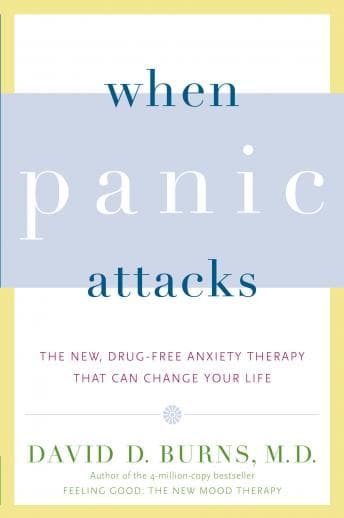
I was stirring dal at 10 PM when that line hit me, and I actually stopped mid-stir. Because that's exactly how a cognitive behavioral therapist would frame it. Not as a disease to be managed, not as a chemical imbalance to be medicated into submission, but as a con. A trick your own brain plays on you. And suddenly I understood why Dr. David Burns has sold millions of copies of his books.
I've read the research on CBT. I've taught undergrads about cognitive distortions. But hearing Burns walk through his forty-plus techniques over thirteen hours? That's a different experience entirely. The same gap between theory and practice shows up in QBQ! The Question Behind the Question, though Burns is far more methodical about bridging it. This is a fascinating case study in how to translate clinical methodology into something a person can actually use at 2 AM when their brain won't shut up.
Cognitive Distortions as Software Bugs
What makes Burns compelling as an author is his refusal to be precious about his methods. He doesn't present cognitive therapy as mystical or complex. He presents it as a skill set. The distortion categories he outlines—all-or-nothing thinking, fortune telling, mind reading, should statements—these aren't just clinical labels. He treats them like bugs in your mental operating system. Identify the bug, apply the patch, move on.
The structure is methodical in a way my academic brain appreciated. Each technique gets explained, demonstrated, and then—critically—he shows you how to actually implement it. The PDF supplement with worksheets isn't an afterthought. It's essential. I found myself pausing the audiobook to work through his cost-benefit analysis exercises. (My therapist would have thoughts about me doing CBT homework while cooking. Probably approving ones, actually.)
Burns also takes a pretty aggressive stance against medication as a first-line treatment for anxiety. He's not anti-medication entirely, but he makes a strong case that drugs often address symptoms while leaving the underlying cognitive patterns intact. The research he cites is solid, though I'd note it's from the mid-2000s when this was published. Still relevant, but not cutting-edge.
Kaleo Griffith: Competent But Not Electric
Here's where I have to be honest. Griffith is a trained actor, an Earphones Award winner, and his narration is perfectly clear. His delivery has warmth. But—and this is a significant but—over thirteen hours of self-help content, I needed more energy than he gave me.
The pacing is measured. Deliberate. Which works fine for the first few hours when you're absorbing new concepts. By hour eight? I was bumping the speed to 1.25x just to maintain engagement. The material itself isn't dry—Burns actually has a decent sense of humor and genuine compassion in his writing. But Griffith's delivery doesn't always capture that. He reads it professionally rather than conversationally.
Some listeners describe his narration as "dry." I'd say it's more... clinical. Which is ironic, given that Burns explicitly tries to make clinical concepts accessible. The mismatch isn't fatal, but it's noticeable.
Who Should Queue This Up (And Who Shouldn't)
This is for you if: You want a systematic, evidence-based approach to managing anxiety. You're willing to do the work—the actual written exercises, the self-monitoring, the uncomfortable process of examining your own thought patterns. You appreciate structure over inspiration. You're skeptical of medication-first approaches and want alternatives.
Skip it if: You want someone to hold your hand and tell you everything will be okay. You're looking for quick fixes. You need a narrator who's going to perform the material rather than read it. You're already deep in CBT and know these techniques—this is comprehensive, but it's not advanced.
The thirteen-hour runtime is substantial. This isn't background listening. You need focus, probably a notebook, and the willingness to pause and actually think about what you're hearing. I listened over two weeks, mostly during cooking and late-night insomnia (the irony of lying awake listening to an anxiety book was not lost on me).
Dr. Sharma's Diagnosis
Burns has been refining these techniques since Feeling Good in the 1980s, and When Panic Attacks feels like the more mature, more comprehensive version of that work. The protagonist here—and yes, in self-help, you're the protagonist—exhibits classic patterns of catastrophic thinking. Burns sees you. He knows you're doing it. And he's remarkably patient about walking you through why it's happening and what to do about it.
Psychologically, this tracks. The methodology is sound. The application is practical. The narration is adequate but not exceptional. Worth the credit if you're serious about doing the work. Just know you're signing up for a course, not a comfort read.