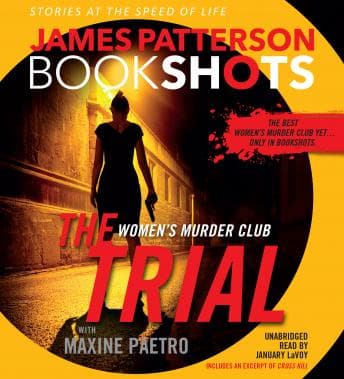

"I'm not on trial. San Francisco is."
That line hit me about fifteen minutes in, and I actually paused my dishwashing to appreciate the audacity. Look, I know Patterson's BookShots aren't meant to be deep literary horror—they're literary espresso shots. But there's something genuinely unsettling about a villain so confident in his control over an entire city's justice system that he can make that statement and mean it.
When the Villain Actually Delivers
Kingfisher is the kind of antagonist I wish more crime thrillers would attempt. Not just violent—calculated. The way he orchestrates chaos against lawyers, jurors, police... it's less "crime boss" and more "domestic terrorist with a law degree." Patterson and Paetro don't have time for slow psychological buildup in two and a half hours, so they just... show you. Violence erupts. The Women's Murder Club scrambles. Lindsay Boxer is doing her best while the city literally falls apart around her.
Is it subtle? God, no. But neither is a haunted house that grabs you by the throat. Sometimes horror—and yes, I'm calling this horror-adjacent, fight me—works best when it's relentless.
The courtroom shocker they promise? I won't spoil it, but I genuinely didn't see it coming. And I've consumed enough crime fiction to usually spot the twist three chapters out. Patterson's machine-gun plotting actually works in his favor here. You're so busy trying to keep up that the gut-punch lands clean.
January LaVoy Commits
Here's the thing about narrating Patterson—you have to match his energy or you'll sound like you're reading a grocery list really fast. January LaVoy gets it. She's a Golden Voice narrator for a reason, and she brings this urgent, almost breathless quality that mirrors how the book reads. She brings that same intensity to 20th Victim, another Women's Murder Club entry where the stakes feel equally personal. When things go sideways in the courtroom, her pacing shifts. When Lindsay's internal monologue kicks in, she softens just enough to feel human.
Now. The male voices. Some listeners have issues with them, and I get it—I've heard narrators absolutely butcher male characters before. LaVoy's aren't perfect, but they're functional. She differentiates them clearly enough that I never lost track of who was speaking, but they're not going to fool anyone into thinking a man is narrating. For a two-and-a-half-hour sprint, though? It worked fine for me. I was too busy being stressed about whether Kingfisher was going to blow up another witness to nitpick voice timbre.
If you're coming from earlier Women's Murder Club audiobooks with different narrators, yeah, the transition might feel jarring. That's a valid complaint. But LaVoy on her own merits? She nails the assignment.
The BookShot Problem (And Why It's Actually Not)
I'll be honest—I was skeptical about the BookShot format. Horror works best when it has room to breathe, to build dread. But this isn't horror. It's thriller. And thrillers? They can absolutely work as concentrated doses of adrenaline.
This is basically a podcast episode's worth of content. I listened during a late-night library closing shift (yes, alone, yes, the building was creaking, yes, Shirley Jackson would be proud of my choices). Perfect length for that. Perfect pacing for staying alert while I was reshelving and locking up.
The production is clean—no weird audio artifacts, no jarring transitions. Just crisp, professional, exactly what you'd expect from a Patterson machine release.
Who Gets the Shot, Who Passes
Already invested in the Women's Murder Club series? This is a quick hit that'll satisfy your fix. Never read Patterson? Honestly, this isn't a bad entry point—self-contained enough that you won't be lost, short enough that you're not committing to a fifteen-hour investment to see if you vibe with his style.
If you need your crime fiction to be literary, with prose you want to savor? Skip this one. Patterson writes like he's being chased, and you either appreciate that or you don't.
My podcast listeners who want actual horror should probably look elsewhere. But the ones who like their thrillers fast and mean? They should start with Four Blind Mice—it's got that same relentless momentum but with more room to breathe. They're going to tear through this on their morning commute and immediately text me asking what else Patterson has done.
The Whiskey Verdict
Sometimes you want a seven-course meal. Sometimes you want a shot of whiskey that burns going down. This is the whiskey. And it's decent whiskey.