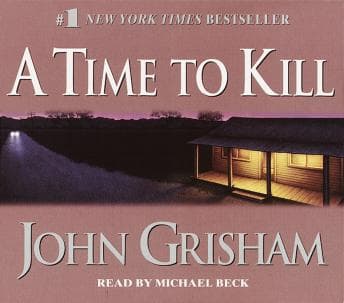

Let's be real for a second. If someone hurt my kid... well. I'm not saying I'd grab an M-16 like Carl Lee Hailey, but I'm not saying I wouldn't.
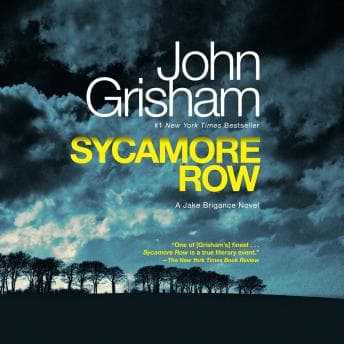
I picked this up because I wanted to see where Grisham started. Before the polished blockbusters, before the movies. This is his debut. And man, you can feel the raw anger in it. It's messy. It's ugly. It's about a black father in Mississippi taking justice into his own hands after the legal system fails his ten-year-old daughter.
(Linda told me the premise and said, "James, that sounds too heavy for a Tuesday." She wasn't wrong. But I don't listen to audiobooks for sunshine and rainbows.)
Sweat, Bourbon, and Gunpowder
Here's the thing about Southern thrillers—if the narrator sounds like he's from Connecticut, the whole mission fails. Immediate DNF.
Michael Beck? The guy sounds like he's been drinking sweet tea and whiskey on a porch in Clanton, Mississippi for forty years. Beck brings that same authenticity to Sycamore Row, another Grisham novel set in the same town. He's got that slow, thick drawl that makes you feel the humidity. It's sticky.
I listened to this mostly while walking Ranger in the evenings, and Beck's voice is so immersive I actually forgot I was in Austin. He does the voices without going cartoonish. The lawyers sound like lawyers. The drunks sound like drunks. And when the tension ramps up—especially during the riots and the cross-burning scenes—his pacing is dead on. He doesn't rush it. He lets the dread sit there.
Tactical Assessment of the Courtroom
I usually hate courtroom dramas. Too much talking, not enough doing. I'd rather be in the field. Time for Mercy pulled me in the same way—Grisham knows how to make legal maneuvering feel tactical. He treats the courtroom like a battlefield. Strategy. Flanking maneuvers. Psy-ops.
Jake Brigance (the defense attorney) is basically fighting a war on two fronts: the jury box and the KKK outside the courthouse. I respect that. The stakes felt real.
Fair warning though—it's long. 16 hours and change. There were moments in the middle, mostly legal maneuvering, where I definitely bumped the speed up to 1.5x. (Life's too short to listen to jury selection in real-time, folks.)
The language is rough. Accurate for 1980s Mississippi, sure, but it's jarring. And the description of the crime at the beginning? Brutal. I had to pause it for a minute. It's not gratuitous, exactly, but it's a gut check.
Mission Complete
This isn't a "fun" listen. It's heavy. It makes you mad. It makes you think about what you'd do if the law turned its back on you.
Grisham clearly knew this world inside and out before he wrote it. The legal details are sharp (no "clips" vs "magazines" errors here, thank God). By the end, I was exhausted. Satisfied, but exhausted.
Ranger didn't seem to mind the long walks, though he did perk up during the sniper fire scenes. Good boy.
Who's this for: If you want a slow-burn moral crisis that sounds like the deep South, this is it. Skip it if you need fast-paced or light—this one's a 16-hour gut punch that doesn't apologize.