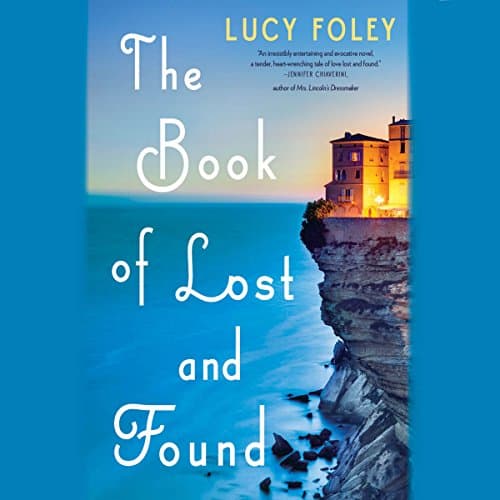

My daughter was already asleep, and I was sitting on the back porch with a beer, listening to the cicadas compete with Fiona Hardingham's voice through my earbuds. I'd just wrapped a fourteen-hour day framing a two-story in Pflugerville, and my shoulders were screaming. Figured a story about a ballerina's secrets and the Corsican coast would be about as far from stud walls and nail guns as I could get. I was right about that - maybe too right.
A Blueprint With Too Many Layers
Lucy Foley built this one like a house with four different architects who never talked to each other. You've got Kate in present-day London dealing with her mother's death, a grandmother handing her a mysterious portrait, and then the timeline jumps back to 1920s Corsica, wartime France, bohemian Paris. The structure alternates between Kate's detective work and voices from four generations of women - and sometimes men - and the switches come fast. I'm used to juggling subcontractors on a build site, and even I lost the thread a couple times around hour five. There'd be a chapter unfolding some detail about a painter's life in Corsica, beautiful stuff about rocky coastline and salt air, and then we'd snap back to Kate wandering around London being sad, and I'd think - wait, which timeline had the thing I actually cared about?
The rambling is real. Certain chapters meander through descriptions and backstory that feel like they're padding the frame instead of supporting it. You know how sometimes a crew will over-engineer a non-load-bearing wall? Same energy. The bones of the love story - the 1920s romance disrupted by war - are genuinely good. But Foley buries them under information that doesn't earn its place.
Hardingham Carries the Load
Here's where I give credit where it's due. Fiona Hardingham is an Audie Award winner, and you can hear why. She shifts between Kate's modern British voice and the older characters from different decades without it ever feeling like a gimmick. The French and Corsican settings get subtle vocal texture - not full-on accents that would sound cartoonish, but enough warmth and formality to place you in the right era. When she reads the wartime passages, there's a tightness in her delivery that made me stop scrolling my phone and actually grip the armrest of my porch chair.
At 11 and a half hours, this is a commitment. I bumped it to 1.4x (my usual pace between job sites) and the narration held up fine - Hardingham's pacing is steady enough that the speed doesn't clip her emotional beats. The final hour, when the family secrets actually land and the threads pull together, hit harder than I expected. I won't say I teared up on my back porch. But my beer got warm because I forgot about it.
Not the Foley You Know
If you came here from The Guest List or The Paris Apartment expecting a twisty thriller with a body count - pump the brakes. This is early Foley, before she found her thriller groove, and it reads more like historical romance with a mystery wrapper. The mystery itself - who's the woman in the portrait? - isn't exactly a white-knuckle ride. You'll probably figure out the broad strokes by hour three. The pleasure here is in the journey through these European settings and watching how love and secrets ripple through a family across decades.
Kate as a protagonist is... fine. She's grieving, she's searching, she's a little passive. The historical characters - the dancers, the painters, the people surviving actual wars - carry the real weight. I kept wanting to spend more time in their world and less in Kate's modern-day wandering. That imbalance is the book's biggest structural flaw, like a house where the guest rooms are nicer than the master bedroom.
Who Gets the Keys (And Who Should Walk Away)
If you're the type who curls up on a Sunday afternoon and wants to be transported to the Corsican coast in the 1920s, with a love story that stretches across generations and a narrator who makes every era feel distinct - this'll do the job. If you need plot momentum, if you listen while running a table saw or driving through Austin traffic and can't afford to zone out, skip it. This one will lose you. It demands your attention during the quiet stretches, and there are plenty of quiet stretches.
My daughter would not call this one scary. She'd call it boring, honestly - she's seven, she wants dinosaurs. But sitting on that porch with the Texas heat finally breaking and Hardingham's voice guiding me through a French countryside I'll probably never see, I found something worth the hours. Not every book needs to be a thriller. Sometimes a slow build is the one that holds. Beach Read gave me that same slow-burn satisfaction - different setting, but the same sense that the journey mattered more than any twist.
Construction Foreman's Final Walkthrough
Solid foundation, beautiful finish work in the historical sections, but the floor plan needed editing. Hardingham's narration is the load-bearing wall holding the whole thing up. Worth your time on a lazy weekend - not worth burning a credit when you could grab one of Foley's tighter thrillers instead.