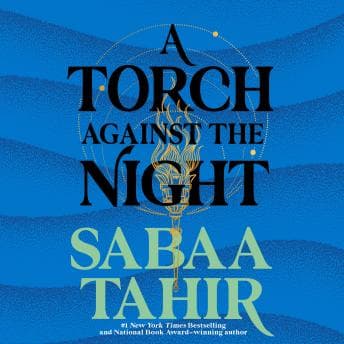

"I am the Soul Catcher. I am the Chosen of Death."
That line hit me somewhere around hour 3, on a 6:47 AM Caltrain that smelled like wet jackets and regret. Steve West delivered it with this quiet gravity that made me miss my stop. Not metaphorically. I actually rode to Sunnyvale and had to double back. Worth it.
Five Narrators Is Either Genius or a Distributed Systems Nightmare
TL;DR: Worth your commute. This is the series finale that actually sticks the landing — rare in fantasy, rarer in audio.
Let me talk about the production architecture first, because five narrators is ambitious. This is basically microservices for storytelling — each narrator owns their character's POV, and the handoffs between them are clean. Fiona Hardingham carries Laia with the same fierce vulnerability she's had since book one. Steve West's Elias — now the Soul Catcher — has this worn-down quality, like someone who's been running a background process for too long and is losing threads of who he used to be. That shift from the first book to this one? You can hear it in how West drops his register, strips out the warmth.
But the real upgrade here is Katharine Lee McEwan as Helene. The Blood Shrike sections were my favorite parts of this book, and McEwan is a huge reason why. There's a scene — mid-book, maybe hour 9 or 10 — where Helene is processing grief and political betrayal simultaneously, and McEwan layers this controlled military composure over raw devastation. You can hear her voice tighten on certain words like she's physically holding herself together. I was standing in the Caltrain vestibule gripping the pole way too hard.
Maxwell Caulfield as the Nightbringer was an interesting choice. He gives the villain this almost Shakespearean weight — not mustache-twirling evil, but ancient anguish that's curdled into something monstrous. When he talks about the jinn's imprisonment, there's genuine pain there. It makes him harder to hate, which I think is exactly the point.
The Pacing Problem (and Why It Doesn't Matter at 1.5x)
Okay, real talk: this book has a slow middle. Around hours 6 through 9, there's a lot of setup — political maneuvering with Keris as Empress, Laia's power awakening, Elias navigating the Waiting Place. It's dense. At 1.0x, I could see people zoning out. At 1.5x, it's fine — the narrative threads start converging around hour 11 and then it's a sprint to the finish.
The magic system stuff with Laia's ancient power felt a little hand-wavy compared to the hard rules established in earlier books. Like, the system was well-specified for three books and then suddenly there's a new API with no documentation. I accepted it because the emotional stakes were high enough that I didn't need the mechanics to be perfect, but if you're a hard-magic-system person, you might twitch.
The Keris Veturia stuff though? Chef's kiss. She's one of the most terrifying villains in recent fantasy because she's not supernatural — she's just a deeply competent, deeply broken human being who has optimized for power above everything else. (I may know people like this at work. I will not elaborate.)
17 Hours and I Felt Every One — In the Best Way
At 17+ hours, this is a commitment. I finished it across about 8 commutes plus one late night where Kevin fell asleep on the couch and I just... kept listening in the dark kitchen while eating leftover pad thai. The ending hit hard. Sabaa Tahir does this thing where she doesn't give you a clean happy ending — she gives you an earned one. Characters pay real costs. Some arcs resolve in ways that hurt even though they're right.
The five-narrator format means you never lose track of whose head you're in, which is crucial for a book juggling this many POVs. In print, I imagine the chapter headers do that work. In audio, the voice change is instant context-switching — like switching terminal windows. You hear McEwan and your brain immediately loads the Martial Empire political stack. You hear Hardingham and you're back with the Scholar resistance. It's efficient.
Perfect for: train, roadtrip, any commute over 20 minutes. Skip for: background listening — there's too much happening, you'll lose threads and then be confused when characters reference earlier events.
Who's This For (and Who Should Bail)
If you've listened to books 1-3, this is a must. The narrators reward your investment. If you haven't read the series — do not start here. This is the book 4 payoff and it assumes you know everyone's history, every betrayal, every death. Starting here would be like joining a standup at sprint 47.
If you like Nevernight by Jay Kristoff or the Red Rising audio productions — similar energy. Multi-narrator epic fantasy that doesn't pull punches. I've been chasing that same punch-you-in-the-chest emotional payout in other series lately — Against the Ropes scratched part of that itch, though it's operating in a very different register.
The Commit Message
The ROI on this audiobook is high if you've been along for the whole series. Five narrators, zero wasted voices, an ending that earns its emotional weight. McEwan as Helene alone is worth the credit. I stepped off the Caltrain after the final chapter feeling that specific kind of emptiness you get when a series you've lived with for a while just... ends. Went straight to Audible looking for what Fiona Hardingham narrates next. No regrets.