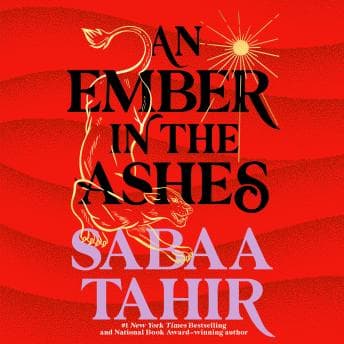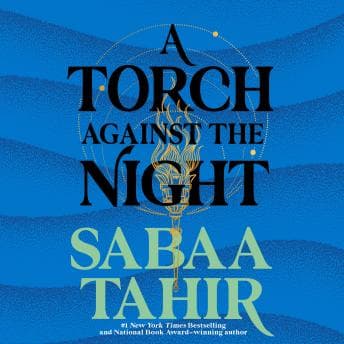

Everyone kept telling me this series was basically Red Rising but for YA. They were wrong.
I mean, I get the comparison—brutal empire, gladiator-esque training, class warfare. But where Red Rising is a power fantasy wrapped in revenge, Ember in the Ashes is something messier. More personal. And this second book? It broke me on a 6AM train while I was surrounded by people trying very hard not to make eye contact with the woman ugly-crying into her coffee.
Three Narrators, Zero Confusion
Here's the thing about multi-narrator audiobooks—they're either genius or a complete disaster. No middle ground. Torch Against the Night lands firmly in genius territory, and I say this as someone who's suffered through some truly chaotic ensemble casts.
Fiona Hardingham handles Laia with this perfect blend of vulnerability and steel. There's a scene where Laia confronts her own fear—really sits with it—and Hardingham's voice drops into something raw and quiet that made me miss my stop. (Worth it. The walk of shame back two stations was character-building.)
Steve West as Elias does this subtle thing where his internal monologue carries this weight of exhaustion and guilt, but his spoken dialogue tries to be lighter. It's like watching someone perform "I'm fine" while clearly not fine. The cognitive dissonance is intentional and it works.
But honestly? Katharine McEwan as Helene is the MVP. The book adds her POV, and McEwan makes you feel every impossible choice Helene faces. She's hunting her best friend. She's serving an emperor she despises. And McEwan voices that conflict without ever making Helene sympathetic in a cheap way—she's just... trapped. Like the rest of them.
The Empire Strikes Back (No, Really)
Sequels have a job: raise stakes, deepen world, don't just repeat book one. Tahir gets this. Where Ember was about survival within the system, Torch is about running from it while the system actively tries to murder you.
The pacing is relentless. I finished this in four commutes—would've been three but I kept pausing to process. There's a sequence in the middle involving the supernatural elements (the Nightbringer, the Soul Catcher) that gets genuinely creepy. Like, I was listening during a late-night debugging session and had to switch to something lighter because my empty office was starting to feel too quiet.
The romance subplot is there but doesn't hijack the plot. It's slow-burn in the way that actually makes sense given, you know, the constant running for their lives. Tahir earns the emotional beats instead of forcing them.
The Grief Engine
What surprised me most: this book is fundamentally about grief and guilt. Elias is dying (not a spoiler—it's established early). Laia is carrying survivor's guilt like a second skeleton. Helene is mourning a friendship while actively destroying it.
The audiobook format amplifies this. When you're hearing three different people voice three different kinds of loss, it hits different than reading it. There's a scene with Elias and his mother—the Commandant, who is terrifying—where Steve West's voice goes flat in a way that communicated more about their relationship than pages of exposition could.
Commute-Worthy, Not Background Noise
Bottom Line: Worth your commute. Actually, worth your full attention.
This is not a background listen. The three POVs require you to track who's speaking, and the plot moves fast enough that zoning out for five minutes means missing something important. Shadow of Night has that same density—multiple timelines that demand your full attention or you'll lose the thread entirely. I tried listening while debugging once and had to rewind twenty minutes.
Perfect for: train, plane, treadmill where you can focus. Skip if: you need something for coding, housework, or anything requiring actual brain function. Also skip if you haven't read book one—this picks up immediately after and doesn't hold your hand.
The ROI on this audiobook is solid—15 hours of genuinely good fantasy with a narrator team that actually sounds like different people. In a genre where multi-narrator productions often feel like a gimmick, this one justifies its casting.
Queuing Up Book Three
Now if you'll excuse me, I have book three loaded and a train to catch.